7 Min Read
Many women start feeling warmer once pregnancy begins, and it can feel unusual at first. Feeling hot during pregnancy is very common, even if no one mentions it beforehand. One moment you may feel fine, and the next you notice a wave of heat, a flushed face, or sweating even when the room isn’t warm. It can make you wonder if something is wrong, but in most cases, it isn’t. Your body is going through hormonal changes, and even the way you sense temperature can shift during this time. So, you may feel quite hot without actually having a fever. Increased blood circulation, a faster metabolism, and the extra work your body does to support the growing baby can all contribute to this constant feeling of warmth.
In this blog, we bring forward clinical insights from top obstetrics and gynaecology doctors in Hebbal, Bengaluru, explaining why feeling hot during pregnancy happens, what symptoms are considered normal, and when it may be a good idea to speak with a doctor.
Synopsis
Causes of Feeling Hot During Pregnancy
Many women notice feeling hot during pregnancy, and it often comes out of the blue. You might be sitting still and suddenly feel warm for no clear reason. It’s not random, though. Your body is adjusting in a few ways at the same time. Here are some of the reasons:
-
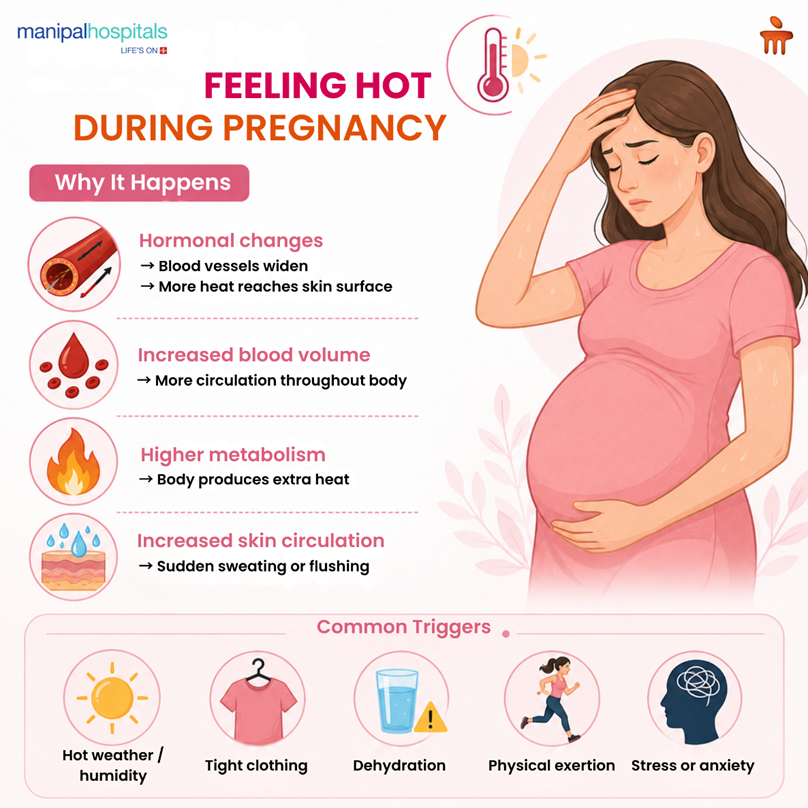
Hormonal Changes: Changes in hormones, such as those involving oestrogen and progesterone, have an impact on the blood vessels and body temperature. When the blood vessels dilate, more heat is brought to the skin surface, resulting in hot flashes.
-
Increased Blood Volume: In other words, there is an increased volume of blood flow in your body to provide for the growth of your child and the placenta. Even when you are resting, your body can feel warmer than before.
-
Higher Metabolic Rate: Your body is doing extra work every day. All that extra activity naturally generates more body heat. It’s a constant warmth that doesn’t always go away quickly.
-
Increased Circulation to the Skin: Blood moves closer to the skin to release heat. That is why sweating can start suddenly, even if the room feels normal. It can feel a bit unpredictable.
-
Environmental and Lifestyle Triggers: Some conditions will exaggerate body heat in pregnant women. Hot climate, exercise, stress, or even eating spicy meals will enhance the sensation of heat.
Symptoms of Feeling Hot During Pregnancy
Many women notice hot flashes during pregnancy as sudden waves of heat that seem to come out of nowhere. It can feel uncomfortable, but the pattern is quite typical once you recognise it:
-
A sudden warmth spreads through the body, often starting from the chest or face and moving upward, giving a quick, intense feeling of heat that was not there a moment before.
-
Flushing over the face, neck, and chest, where the skin may look red or feel warmer to the touch compared to the rest of the body.
-
Sweating that begins quickly, sometimes without any physical activity, and may leave you feeling damp or uncomfortable even in a cool room.
-
A strong feeling of overheating even when the surrounding temperature feels normal, making you want to cool down immediately.
-
Night sweating can interrupt sleep, causing you to wake up feeling hot, sweaty, or needing to adjust clothing or bedding.
Common Triggers That Make It Worse
Some moments feel fine, and then suddenly the heat feels stronger. Here are some common triggers you might notice:
-
Heat and Humidity: If you step into a warm room or go out in humid weather, the heat can get to you almost instantly. What felt manageable before pregnancy can now feel overwhelming, and you would need to cool off instantly.
-
Tight Clothing: If your clothes feel tight or heavy, they can trap heat against your skin. You might notice you start sweating or feeling flushed much sooner in some of your older clothes.
-
Dehydration: If you haven’t been drinking enough water, your body finds it harder to cool itself. You may feel warmer, slightly tired, or just off without a clear reason.
-
Physical Exertion: Even simple things like climbing the stairs to the house or doing small tasks can make you feel warmer faster. It can feel like your body heats up too quickly and takes time to settle.
-
Stress or Anxiety: On days when you feel tense or overwhelmed, you might suddenly feel a wave of heat. It can catch you off guard, even if you’re just sitting still.
How to Tell the Difference: Normal Heat vs Fever
Body heat in pregnancy can feel intense, but it is not the same as a fever. Knowing the difference can help you stay calm and also know when to take things seriously:
|
Feature |
Normal Pregnancy Heat |
Fever |
|
Temperature reading |
Stays within normal range |
Elevated, usually above 38°C |
|
Cause |
Hormonal changes and increased blood circulation |
Infection or an underlying illness |
|
Sweating |
Quite common, especially during sudden heat episodes |
May or may not happen |
|
Other symptoms |
Warmth, flushing, feeling overheated |
Chills, body aches, tiredness |
|
Duration |
Comes and goes, often in short episodes |
Tends to stay and may worsen |
|
Medical concern |
Not serious in most cases |
Needs medical attention |
When Should You Be Concerned?
Most of the time, feeling hot during pregnancy is part of normal body changes. Still, a few signs mean it’s better not to ignore what your body is telling you.
-
A thermometer showing a temperature above 38°C suggests this is more than just pregnancy-related warmth.
-
The feeling of heat staying for a long time without easing, even after resting or moving to a cooler place, is not typical.
-
Sudden dizziness or a lightheaded feeling can mean your body is not handling the heat well.
-
A fast or pounding heartbeat while at rest needs attention.
-
Feeling very thirsty, having a dry mouth, or noticing reduced urination can point towards dehydration.
-
Chills, body aches, or feeling generally unwell, along with the heat, may suggest an infection.
Simple Ways to Stay Comfortable
When hot flashes during pregnancy start bothering you, a few small changes can help you feel a bit more in control.
-
Keep sipping water throughout the day. Waiting till you feel very thirsty can make the heat feel worse.
-
Wear clothes that feel light on your skin. Loose cotton or soft fabrics feel much easier than tight or heavy ones.
-
Try to stay in a cooler space. A fan, some airflow, or even moving to a less warm room can make a difference.
-
Pay attention to what makes the heat come on faster for you. Once you notice it, it gets easier to avoid or manage.
-
Slow down when your body starts feeling warm. Sitting for a bit or taking a break helps it settle.
Conclusion
Feeling warm or having sudden heat episodes during pregnancy can feel uncomfortable, but it is a common part of how your body adapts. Body heat in pregnancy does not mean something is going wrong. Try to manage triggers where you can, and notice what feels different from your usual pattern. Most of the time, it settles on its own.
If symptoms feel unusual or don’t improve, it’s worth getting checked. You can reach out to the best gynaecology doctors near Hebbal, which is recognised as the best obstetrics and gynaecology hospital in Hebbal, Bengaluru, for guidance and the right support during your pregnancy.
FAQ's
Yes, it is. Your body is going through hormonal changes, and there is more blood flowing through your system. That can make you feel warmer than usual, even without any illness.
On their own, they are not harmful. They can feel uncomfortable, but they don’t usually affect the baby. They usually become concerning only if they happen along with fever, dizziness, or feeling generally unwell.
Yes, they can start early. Some women notice them in the first few months, while others feel them later. There is no fixed timing.
The easiest way is to check your temperature. If it is high and you also feel chills, body aches, or unwell, it may be a fever.
It’s better to get checked if you have a high temperature, feel dizzy, notice a fast heartbeat, or if the heat does not settle and feels different from what you’ve been experiencing.
Share this article on: