8 Min Read
A cancer diagnosis often brings many questions and uncertainty. One thing that has changed over time is how doctors understand and approach cancer itself. Today, there is more focus on what is happening inside cancer cells and what is helping them grow. The top-rated cancer care hospital in Hebbal now offers targeted therapy treatments designed around these specific changes designed around these specific changes, such as those in genes, proteins, or the surrounding tumour environment.
This blog brings you expert insights from a top cancer care specialist in Hebbal, Bengaluru, explaining targeted therapy for cancer, how it works, the different types available, and where it may be most effective in cancer treatment.
Synopsis
What Is Targeted Therapy?
Targeted therapy for cancer involves a group of drugs designed to act on specific molecules that help cancer cells grow, divide, and spread. These molecules can be anything from abnormal genes and proteins to parts of the tumour environment that support its survival.
Unlike chemotherapy, which affects all rapidly dividing cells, targeted therapy for cancer works in a more focused way and may have less impact on some normal cells, although side effects can still be significant in certain cases. Treatment is chosen after testing the cancer for specific targets.
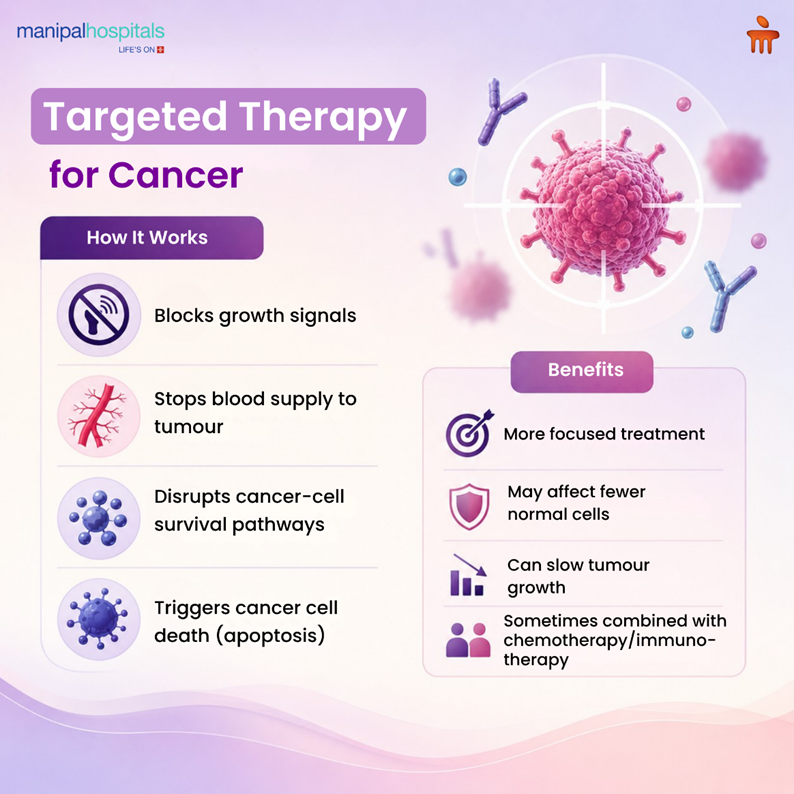
Different drugs work through different mechanisms:
-
Some block signals that tell cancer cells to grow
-
Some trigger the cancer cells to die
-
Others stop the tumour from forming new blood vessels needed for growth
Types of Targeted Therapy
Different drugs work in different ways depending on which part of the cancer is affected.
-
Monoclonal antibodies: These are medicines made in a lab that attach to specific parts of cancer cells. They usually work on the surface of the cell and can block signals or help the body recognise and destroy the cancer cells. These drugs usually work on the surface of the cell. Once attached, they can act in different ways. Some carry medicine directly into the cancer cell. Some help break the cell down. Others help the body’s immune system recognise and destroy the cancer.
-
Angiogenesis inhibitors: Cancer needs a steady blood supply to grow. These drugs prevent the formation of new blood vessels in the tumour. In this way, the tumour will not have enough blood supply and can start to shrink.
-
Signal transduction inhibitors: The cancer cells are receiving signals to divide and grow, and these medications work by stopping these signals. If the signals are blocked, then the growth and division of cancer cells will cease.
-
Proteasome inhibitors: Cancer cells require the removal of their waste products to function. The drugs interfere with this. They inhibit the degradation of the cellular waste, resulting in its accumulation, which causes cell death.
-
Tyrosine kinase inhibitors: These medicines block certain steps that help cancer cells grow. When these steps are blocked, the cancer cells may not be able to grow or spread as easily.
How Targeted Therapy Works in Cancer
You may hear your doctor explain this and wonder, 'What is targeted therapy in cancer, and what actually happens inside the body when this treatment is given. Cancer cells behave differently because of specific changes in their DNA. This results in proteins or signalling abnormalities which enable the cells to continue growing, surviving and spreading. Before starting treatment, doctors test tumour tissue or blood samples to identify the specific targets involved.
-
Changes inside cancer cells: Cancer cells often carry gene changes that make them grow without control. These changes can also help them escape the body’s natural defence systems. Some tumours depend heavily on one specific change, which becomes an important target for treatment.
-
Blocking growth signals: Normal cells divide in an organised manner; however, cancer cells receive signals for continuous division. Some medications can disrupt these signals and halt cell division completely.
-
Affecting protein activity: Proteins inside cancer cells act like switches that control growth and survival. Certain treatments block these proteins or stop them from working properly, making it harder for cancer cells to multiply.
-
Stopping the blood supply: Tumours need a steady blood supply to grow. They send signals to form new blood vessels around them. Some treatments block this process. When the blood supply is reduced, the tumour may shrink or grow more slowly.
-
Acting on or inside the cell: Some medicines act on the surface of cancer cells by blocking signals from entering, while others work inside the cell and interfere with the processes that keep it alive.
-
Making cancer cells die: Healthy cells follow a natural process of death when they are damaged. Cancer cells avoid this process. Some treatments restart this mechanism, leading to controlled cell death, also called apoptosis.
Benefits of Targeted Therapy
Some patients respond better because treatment is directed at specific cancer features. Doctors decide on targeted therapy after checking what is helping the cancer grow in your case.
-
Compared to chemotherapy, it may affect fewer normal cells, though side effects can still occur.
-
Doctors may suggest it when chemotherapy has not worked well or cannot be continued.
-
It can be used alone or with other treatments.
-
The aim is to slow the cancer and control its spread.
-
Some cancers do not show a clear target, so this treatment is not suitable for everyone.
Limitations and Risks
Not every patient can go ahead with this treatment. Doctors first check if the cancer shows something that this treatment can act on.
-
Over time, cancer cells can develop resistance, which may make targeted therapy less effective.
-
Side effects can still occur during treatment.
-
Skin changes such as dryness, itching, or rashes may appear.
-
Some people may notice an increase in blood pressure during treatment.
-
Liver-related changes can occur, so regular monitoring is important.
-
Ongoing tiredness can affect day-to-day activities.
-
Tests are needed before starting to see if this treatment is suitable in your case.
-
The aim is to control the cancer, but complete removal may not always be possible.
Types of Targeted Therapy and How They Work
Targeted therapy is not a single treatment. Different types work in different ways depending on the cancer, the proteins involved, and how the tumour grows or spreads. The comparison below gives an overview of the common types of targeted therapy and how they are usually used during treatmen
|
Type of Therapy |
Where It Works |
What It Does |
How Treatment Is Given |
|
Monoclonal antibodies |
Outside cancer cells |
Block receptors or help the body attack cancer cells |
Given through a drip in the hospital |
|
Small-molecule drugs |
Inside cancer cells |
Block signals that help cancer grow |
Taken as tablets or capsules at home |
|
Angiogenesis inhibitors |
Around the blood vessels of the tumour |
Stop new blood vessels from forming |
Given through a drip or sometimes as tablets |
|
Signal transduction inhibitors |
Inside cells |
Interrupt signals that control cancer growth |
Usually taken as tablets |
|
Apoptosis-related drugs |
Inside cells |
Help cancer cells die in a controlled way |
Given as tablets or through a drip, depending on the drug |
Conclusion
Treatment decisions depend on the type of cancer and the changes seen in it. Targeted therapy focuses on specific changes that help the cancer grow. Because of this, testing becomes an important first step.
Doctors need to confirm that the treatment will actually work for your case before starting it. A detailed discussion with your doctor helps you understand whether this option fits into your treatment plan, what to expect, and how it will be monitored over time.
If you are exploring options for targeted therapy in Hebbal, you can book an appointment at Manipal Hospital Hebbal, where the best cancer specialists near Hebbal are available for a complete evaluation and personalised care plan.
FAQ's
No. Chemotherapy acts on many fast-growing cells in the body. Targeted therapy works more narrowly on changes inside cancer cells. Because of that, people often find that it affects the body differently
In most cases, the goal is control rather than a complete cure. It can slow the cancer down and help keep it from spreading for some time.
Doctors look at your cancer closely before deciding. Tests are done to check if the cancer has the kind of change this treatment can act on.
Side effects vary. Some people notice skin problems, feel more tired than usual, or see changes in blood pressure. Doctors keep a close watch and guide you through it.
Yes, it can happen. Over time, the cancer may stop responding in the same way, and your doctor may need to adjust the treatment plan.
Share this article on: