6 Min Read
In the middle of a busy day, your heart quietly keeps pace with your life. You rarely notice it until suddenly you do. A skipped beat, a sudden flutter, or a racing sensation in your chest can stop you in your tracks. Many people describe it as a moment of panic: “Was that normal?”
These sensations are known as heart palpitations. While they are often harmless, they can sometimes signal an underlying issue that needs attention. At Manipal Hospitals Jaipur, we believe that understanding your symptoms is the first step towards protecting your heart health.
Synopsis
Understanding Heart Palpitations
Heart palpitations are the sensation of becoming aware of your heartbeat. Instead of its usual steady rhythm, it may feel
-
Too fast (racing)
-
Too strong (pounding)
-
Irregular (skipping or fluttering)
Some people feel it in their chest, while others notice it in their throat or neck. It may happen when you’re resting, working, or even trying to fall asleep.
For most individuals, palpitations are temporary and not dangerous. However, studies suggest that around 16% of cases may have a cardiac cause, which makes it important to observe patterns and symptoms carefully.
Common Irregular Heartbeat Causes
There are many irregular heartbeat causes, ranging from stress to serious cardiac conditions. Identifying irregular heartbeat causes early helps doctors recommend the right palpitations treatment.
Lifestyle-Related Irregular Heartbeat Causes
The most common irregular heartbeat causes are linked to lifestyle habits and temporary health conditions.
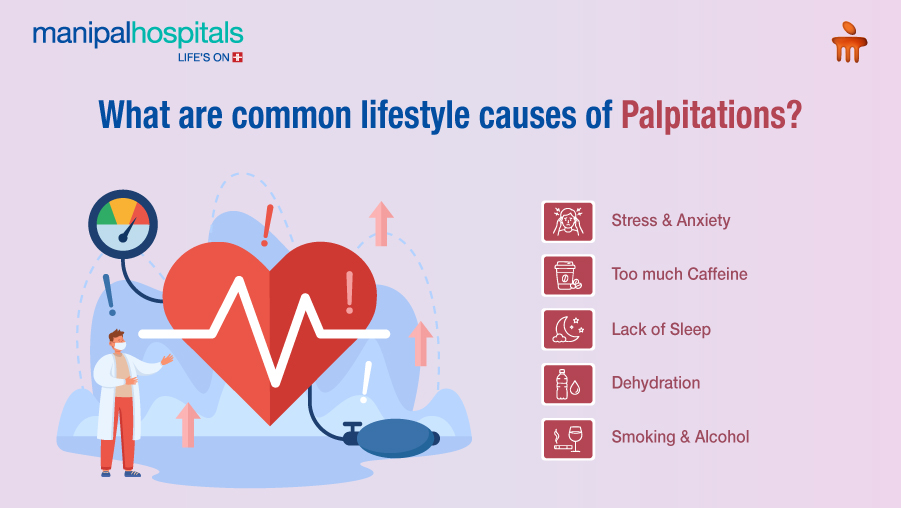
Stress and Anxiety
Stress is one of the leading irregular heartbeat causes. Anxiety releases adrenaline, which may trigger heart palpitations and a heart fluttering feeling.
Excess Caffeine
Too much coffee, tea, soft drinks, or energy drinks can overstimulate the heart. Excess caffeine is among the most common causes of irregular heartbeat in young adults.
Lack of Sleep
Poor sleep habits increase stress hormone levels and can trigger heart palpitations.
Dehydration
Low water intake affects electrolyte balance and may lead to irregular heart rhythms.
Smoking and Alcohol
Nicotine and alcohol are known irregular heartbeat causes and may worsen heart palpitations.
Hormonal Changes
Pregnancy, menopause, and thyroid disorders are common causes of irregular heartbeat among women.
At Manipal Hospitals Jaipur, many patients experience improvement in symptoms after correcting these lifestyle-related irregular heartbeat causes.
Palpitations at Night Causes
Many people experience heart palpitations mainly during bedtime. Palpitations at night are common because the body becomes quieter, making heartbeat sensations easier to notice.
Common palpitations at night include the following:
-
Anxiety before sleep
-
Excess caffeine intake in the evening
-
Alcohol consumption
-
Sleep deprivation
-
Acid reflux
-
Sleep apnoea
-
Dehydration
Palpitations at night may also be linked to sleeping positions, especially lying on the left side. In some individuals, palpitations at night may cause underlying arrhythmias requiring medical evaluation.
If palpitations at night become frequent, disturb sleep, or occur with dizziness or chest discomfort, patients should consult the cardiology experts at Manipal Hospitals Jaipur.
Heart Conditions Behind Heart Palpitations
Sometimes, heart palpitations occur due to underlying heart rhythm disorders. These irregular heartbeat causes require proper diagnosis and timely palpitations treatment.
Atrial Fibrillation (AFib)
AFib causes irregular and rapid heartbeat episodes. Early palpitations treatment helps reduce stroke risk.
Supraventricular Tachycardia (SVT)
SVT causes sudden episodes of rapid heartbeat and a strong heart fluttering feeling.
Premature Heartbeats (PACs/PVCs)
These extra beats are common irregular heartbeat causes and often feel like skipped beats.
Ventricular Tachycardia
This is a more serious rhythm disorder that needs immediate medical attention.
At Manipal Hospitals Jaipur, advanced cardiac investigations help identify irregular heartbeat causes with high accuracy.
When Should You Worry About Heart Palpitations?
Many heart palpitations are harmless, but some symptoms require immediate attention.
Seek medical advice at Manipal Hospitals Jaipur if heart palpitations are associated with:
-
Fainting episodes
-
Frequent heart-fluttering feeling
-
Rapid heartbeat lasting several minutes
Patients with diabetes, hypertension, or previous heart disease should never ignore recurring heart palpitations.
Early diagnosis of irregular heartbeat causes allows doctors to provide timely treatment for palpitations and reduce complications.
Diagnosis of Heart Palpitations
At Manipal Hospitals Jaipur, doctors use advanced cardiac tests to identify irregular heartbeat causes and recommend the best palpitations treatment.
-
Common Diagnostic Tests
-
ECG (Electrocardiogram)
-
Holter monitoring
-
Echocardiography
-
Blood tests
-
Stress testing
Holter monitoring is especially useful when patients experience palpitations at night causes or occasional symptoms not visible during routine ECG.
These investigations help identify irregular heartbeat causes and guide effective palpitations treatment plans.
Palpitations Treatment Options
The ideal treatment for palpitations depends on the underlying cause. At Manipal Hospitals Jaipur, cardiologists provide personalised palpitations treatment plans for every patient.
Lifestyle-Based Palpitations Treatment
Lifestyle modifications are often the first step in palpitations treatment.
Doctors recommend:
Reducing caffeine intake
Managing stress through yoga or meditation
Drinking enough water
Getting proper sleep
Avoiding smoking and alcohol
Maintaining regular exercise
These simple changes can reduce heart palpitations and improve overall heart health.
Medical Palpitations Treatment
If lifestyle changes are insufficient, doctors may prescribe:
-
Medicines to control heart rhythm
-
Beta-blockers
-
Anxiety management therapies
Advanced Palpitations Treatment
For severe arrhythmias, advanced palpitations treatment such as catheter ablation may be recommended. This procedure targets abnormal electrical pathways in the heart.
Modern palpitations treatment procedures have very high success rates and significantly improve the quality of life.
Tips to Reduce Heart Palpitations
Do
-
Stay hydrated
-
Sleep 7–8 hours daily
-
Practice stress management
-
Follow a healthy diet
-
Keep track of symptoms
Don’t
-
Ignore the frequent fluttering feeling
-
Consume excess caffeine
-
Self-medicate
-
Smoke excessively
-
Ignore the causes of palpitations at night
At Manipal Hospitals Jaipur, our specialists encourage early consultation for recurring heart palpitations.
That sudden flutter in your chest might be harmless, but it’s still your body’s way of getting your attention. Listening to it, understanding it, and acting on it when needed can make all the difference.
At Manipal Hospitals Jaipur, our heart care specialist is committed to helping you stay informed, reassured, and healthy. If your heart rhythm feels unusual or concerning, don’t ignore it. A timely consultation can bring both clarity and peace of mind.
Disclaimer
This article is for informational purposes only and does not replace professional medical advice. Please consult a qualified healthcare provider for proper diagnosis and treatment.
FAQ's
No, most are harmless. However, frequent or severe symptoms should be evaluated.
They may occur due to stress, late caffeine intake, dehydration, or simply increased awareness in a quiet environment.
Yes, anxiety is one of the most common causes. Stress hormones can increase heart rate and create a fluttering sensation.
If they last more than a few minutes or occur frequently, it’s best to consult a doctor.
Absolutely. Many patients see significant improvement with simple changes like better sleep and reduced caffeine intake.
Share this article on:


.webp "Arrhythmia Treatment: Medications, Catheter Ablation & Modern Heart Rhythm Therapies")