8 Min Read
Multiple Sclerosis (MS) is a complex and often misunderstood condition that affects millions worldwide. At Manipal Hospitals, we believe in empowering our patients with knowledge and providing compassionate, state-of-the-art care. Understanding multiple sclerosis symptoms, its progression, and the latest treatment options is the first step towards managing this chronic neurological disease effectively. Our expert team is dedicated to guiding you through every stage, ensuring you receive personalised care designed to improve your quality of life.
Synopsis
What is Multiple Sclerosis?
Multiple sclerosis is an unpredictable, often disabling disease of the central nervous system (CNS), which includes the brain, spinal cord, and optic nerves. In MS, the immune system mistakenly attacks the myelin sheath – the protective covering of nerve fibres. This damage disrupts the communication between the brain and the rest of the body, leading to a wide range of symptoms. While it’s a chronic condition, advancements in multiple sclerosis treatment mean that many individuals can lead full and productive lives.
-
Autoimmune Condition: The body's immune system attacks its own tissues.
-
Demyelination: Damage to the myelin sheath, similar to insulation being stripped from an electrical wire.
-
Impaired Communication: Nerve signals are slowed or blocked, causing various neurological symptoms.
-
Varied Progression: MS can present in different forms, from relapsing-remitting to progressive.
Understanding Multiple Sclerosis Causes
The exact cause of MS remains elusive, but scientists believe it results from a combination of genetic predisposition and environmental factors. It's not contagious, nor is it directly inherited, but certain factors increase the risk:
-
Genetic Factors: While MS isn't strictly hereditary, having a first-degree relative (parent or sibling) with MS slightly increases your risk by 2-5%. However, over 90% of people with MS do not have a family history of the disease.
-
Environmental Triggers:
- Vitamin D Deficiency: Lower levels of vitamin D, particularly in childhood, have been linked to a higher risk. Studies suggest that individuals living closer to the equator, with higher sun exposure, have a lower incidence of MS.
- Viral Infections: The Epstein-Barr virus (EBV), which causes infectious mononucleosis, has been identified as a significant risk factor, with a strong association found in various research studies.
- Smoking: Smoking not only increases the risk of developing MS but also accelerates disease progression and symptom severity.
-
Immune System Dysregulation: At its core, MS is an immune-mediated disease where the body's defences mistakenly attack healthy tissue.
Recognising Multiple Sclerosis Symptoms
Multiple sclerosis symptoms are incredibly diverse and depend on the location and severity of nerve damage. They can range from mild to severe and may come and go (relapsing-remitting) or gradually worsen (progressive). Early recognition is key to timely intervention.
-
Fatigue: Affecting up to 80% of people with MS, this is often described as overwhelming and debilitating, not relieved by rest.
-
Numbness or Tingling: Often one of the first multiple sclerosis symptoms, sensations like pins and needles, or a feeling of a limb "falling asleep".
-
Vision Problems: This can include blurred vision, double vision (diplopia), or partial or complete loss of vision, usually in one eye, often accompanied by pain during eye movement (optic neuritis). Over 50% of MS patients experience optic neuritis at some point.
-
Walking Difficulties: Problems with balance, dizziness, vertigo, and spasticity (stiffness or involuntary muscle spasms) can make walking challenging.
-
Muscle Weakness: Weakness in one or more limbs, often on one side of the body.
-
Pain: Both acute (e.g., trigeminal neuralgia) and chronic pain (e.g., neuropathic pain) are common, affecting up to 70% of MS patients.
-
Bladder and Bowel Dysfunction: Frequent urination, urgency, incontinence, or constipation.
-
Cognitive Changes: Affecting over 50% of individuals, these can include problems with memory, attention, information processing, and executive functions.
-
Mood Changes: Depression and anxiety are prevalent, often due to the disease's impact and the neurological changes it causes.
The Journey to Multiple Sclerosis Diagnosis
Diagnosing MS can be challenging because its symptoms mimic those of many other neurological conditions. Our neurologists at Manipal Hospitals employ a comprehensive approach to ensure an accurate and timely multiple sclerosis diagnosis:
-
Neurological Examination: A thorough assessment of reflexes, strength, coordination, balance, and vision.
-
Magnetic Resonance Imaging (MRI): This is the most crucial diagnostic tool, identifying lesions (areas of damage or scarring) in the brain and spinal cord. Over 90% of MS patients exhibit characteristic lesions on MRI scans.
-
Lumbar Puncture (Spinal Tap): Analysis of cerebrospinal fluid (CSF) can reveal elevated levels of certain immune cells or proteins (oligoclonal bands), found in 85-90% of people with MS.
-
Evoked Potentials: These tests measure the electrical activity of the brain in response to sensory stimulation (visual, auditory, or somatosensory) to detect slowed nerve signal transmission.
-
Blood Tests: Used to rule out other conditions with similar symptoms.
An early and accurate diagnosis is vital, as it allows for prompt initiation of multiple sclerosis treatment, which can significantly alter the disease course.
Modern Multiple Sclerosis Treatment Approaches
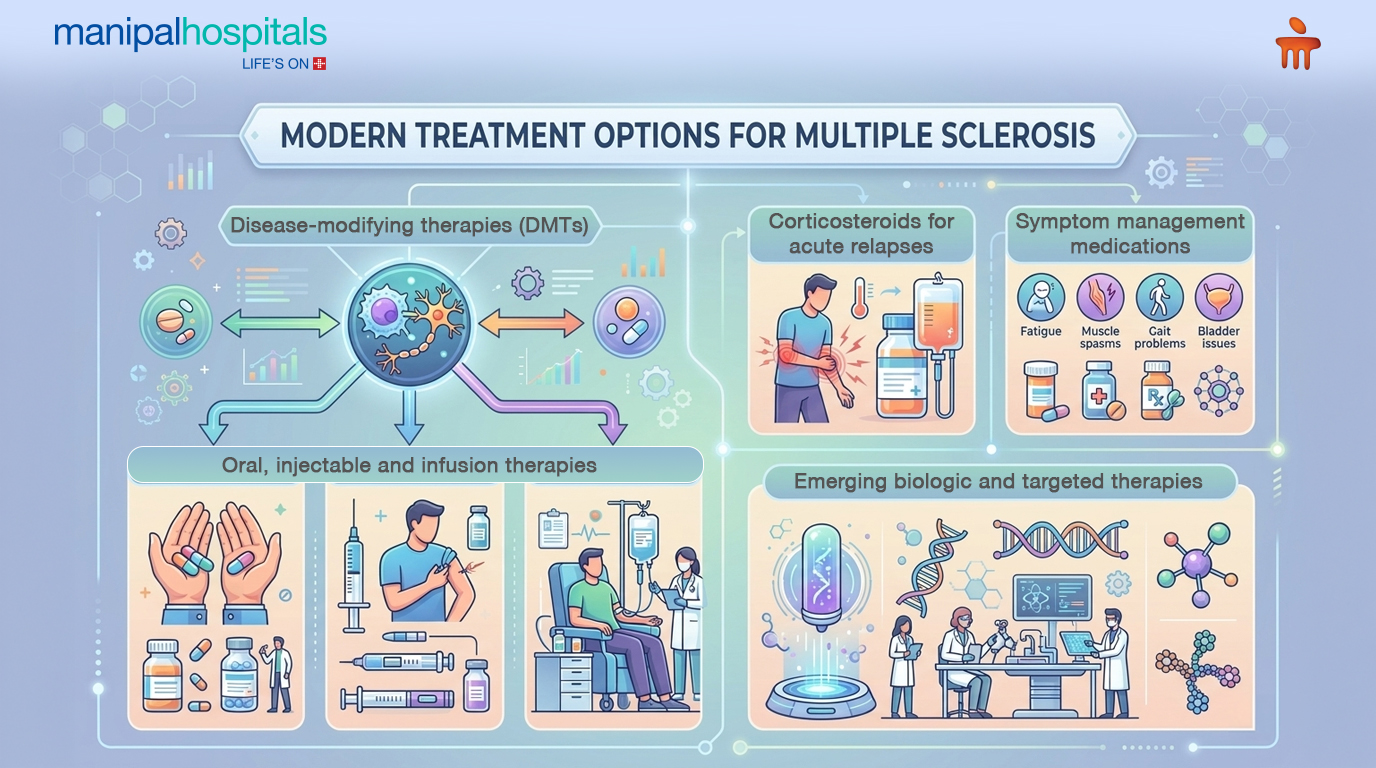
While there is currently no cure for MS, significant advancements in multiple sclerosis treatment have revolutionised its management. The goal of treatment is to slow disease progression, manage symptoms, and improve overall quality of life.
Our integrated team at Manipal Hospitals offers personalised treatment plans:
-
Disease-Modifying Therapies (DMTs): These medications are designed to reduce the frequency and severity of relapses, slow down disease progression, and minimise new lesion formation. Many patients on DMTs experience a 30-50% reduction in relapse rates and a significant slowing of disability progression.
-
Symptomatic Treatment: Medications and strategies to manage specific symptoms such as fatigue, pain, spasticity, bladder dysfunction, and depression.
-
Rehabilitation Therapy:
-
Physical Therapy: To improve strength, balance, gait, and flexibility.
-
Occupational Therapy: To adapt daily activities and environments for easier living.
-
Speech-Language Pathology: For difficulties with speech and swallowing.
-
-
Lifestyle Modifications:
-
Balanced Diet: A healthy diet can support overall well-being.
-
Regular Exercise: Tailored exercise programmes can improve mobility and mood.
-
Stress Management: Techniques like mindfulness and meditation can help manage stress, a known trigger for symptom exacerbation.
-
Avoiding Smoking: Quitting smoking is crucial for slowing disease progression.
-
Care Essentials: Do's and Don'ts
Living with MS involves actively participating in your care. Here are some essential guidelines:
Do's:
-
Do follow your treatment plan diligently: Regular adherence to your prescribed multiple sclerosis medication and therapies is crucial for managing the disease.
-
Do communicate openly with your healthcare team: Report any new or worsening multiple sclerosis symptoms promptly.
-
Do stay physically active: Engage in regular, moderate exercise tailored to your abilities. It can help maintain strength, balance, and mood.
-
Do manage stress: Stress can exacerbate symptoms. Incorporate relaxation techniques into your daily routine.
-
Do prioritise adequate rest: Fatigue is a common symptom; ensure you get enough sleep and rest when needed.
-
Do maintain a healthy diet: A balanced, nutrient-rich diet supports overall health.
Don'ts:
-
Don't ignore new or changing symptoms: Always consult your doctor if you notice any changes.
-
Don't self-medicate: Stick to your prescribed medications and avoid unproven remedies without medical consultation.
-
Don't smoke: Smoking has been linked to faster MS progression and increased disability.
-
Don't overheat: Heat can temporarily worsen MS symptoms for some individuals. Take precautions in hot weather or during strenuous activity.
-
Don't isolate yourself: Seek support from family, friends, or support groups. Mental well-being is vital.
Living Well with Multiple Sclerosis: A Positive Outlook
Despite the challenges, the landscape of MS management is brighter than ever. With dedicated research and advanced care, individuals with MS are living longer, healthier, and more fulfilling lives. At Manipal Hospitals, we are proud to offer a holistic approach, combining expert medical care with supportive therapies, to ensure our patients achieve the best possible outcomes. Our commitment to incorporating the latest evidence-based practices means that over 85% of our patients experience stability or improvement in their condition when adhering to their personalised treatment plans.
Book an appointment with our expert neurologist at Manipal Hospitals, Jaipur, for personalised treatment tailored to your health needs.
FAQ's
Currently, there is no cure for MS, but significant advancements in multiple sclerosis treatment allow for effective management of symptoms and slowing of disease progression.
MS is not directly hereditary, but there is a genetic predisposition. The risk is slightly higher if a close family member has MS, but most people with MS have no family history.
Relapses can be triggered by various factors, including infections, stress, lack of sleep, or even extreme temperatures. Identifying and managing personal triggers is part of comprehensive care.
While no specific "MS diet" exists, a healthy, balanced diet rich in fruits, vegetables, and whole grains is generally recommended. Some studies suggest benefits from diets high in omega-3 fatty acids and antioxidants.
The prognosis for MS varies greatly among individuals. With modern multiple sclerosis medication and comprehensive care, many people can effectively manage their multiple sclerosis symptoms and maintain a good quality of life for many years.
Yes, exercise is generally encouraged for people with MS. Tailored physical activity can help improve strength, balance, reduce fatigue, and enhance mood. It's important to consult with your doctor or a physical therapist to develop a safe and effective exercise plan.
Share this article on: