5 Min Read
Heart problems rarely begin suddenly; they build up quietly over time. One of the most common yet often overlooked conditions is coronary artery disease. Many people only start asking what coronary artery disease is when symptoms begin to interfere with daily life.
In reality, this condition develops slowly and can be managed effectively if detected early. At Manipal Hospital Jaipur, doctors often meet patients who ignore early warning signs, assuming them to be minor issues like acidity or fatigue.
Let’s understand this condition simply and practically.
Synopsis
- What is Coronary Artery Disease?
- Coronary Artery Disease Causes
- Coronary Artery Disease Symptoms
- Who Should Be More Careful?
- How is It Diagnosed?
- Coronary Artery Disease Treatment
- Can It Be Prevented?
- A Simple Real-Life Example
- When Should You See a Doctor?
- Why Choose Manipal Hospital Jaipur?
- Conclusion
What is Coronary Artery Disease?
Coronary artery disease is a condition where the blood vessels supplying your heart become narrow or blocked. This usually happens due to the buildup of fatty deposits, known as plaque.
You can think of it like this: if water pipes in your home get clogged, the flow reduces. Similarly, when arteries narrow, the heart doesn’t receive enough oxygen-rich blood.
Over time, this reduced flow can lead to chest pain, discomfort, or even a heart attack.
Coronary Artery Disease Causes
When we talk about the causes of coronary artery disease, it’s rarely just one factor. It’s usually a combination of lifestyle habits and health conditions that slowly damage the arteries.
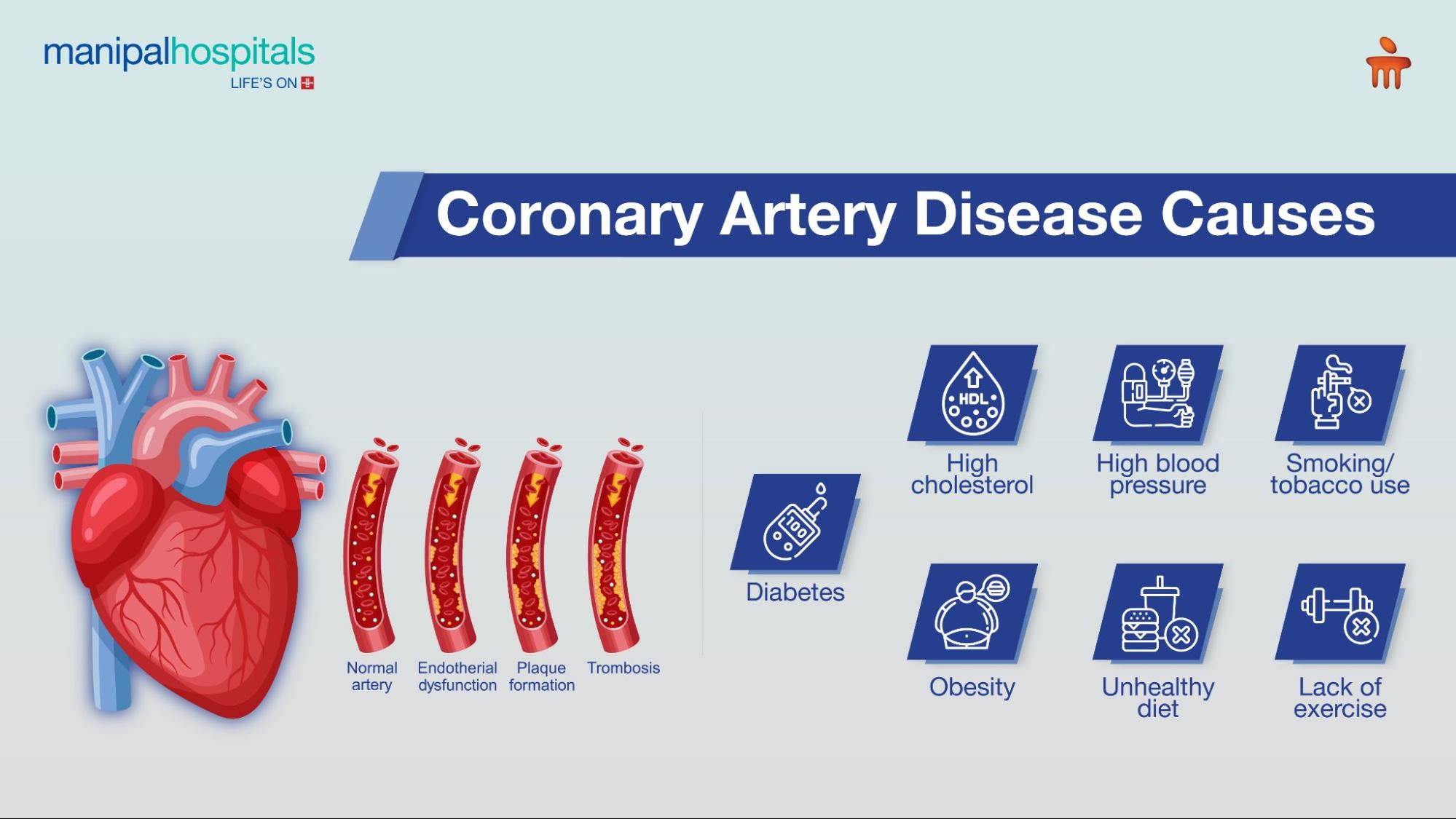
Some of the most common causes include:
-
High cholesterol levels
-
High blood pressure
-
Smoking or tobacco use
-
Diabetes
-
Lack of physical activity
-
Unhealthy eating habits
In cities like Jaipur, busy routines and stress often make people ignore their health. Many patients at Manipal Hospital Jaipur are surprised to learn that their daily habits played a major role in developing this condition.
Coronary Artery Disease Symptoms
One of the biggest challenges with CAD is that symptoms don’t always appear early. And when they do, they can feel mild at first.
Here are some common coronary artery disease symptoms:
-
A feeling of pressure or tightness in the chest
-
Shortness of breath, especially during activity
-
Unusual tiredness
-
Pain in the arms, neck, jaw, or back
-
Dizziness or light-headedness
Some people describe chest pain as a heaviness rather than sharp pain. Others may only feel breathless while climbing stairs.
In a few cases, the first sign is a heart attack, which is why early attention to symptoms matters.
Who Should Be More Careful?
While anyone can develop CAD, certain people are at higher risk.
You should be more cautious if you:
-
Are above 40 years of age
-
Have a family history of heart disease
-
Lead a sedentary lifestyle
-
Smoke or consume tobacco
-
Experience high stress regularly
Modern lifestyles, especially desk jobs and irregular eating habits, are increasing the risk even in younger individuals.
How is It Diagnosed?
If your doctor suspects a heart issue, a few simple tests can provide clarity.
At Manipal Hospital Jaipur, the diagnosis usually involves:
-
ECG to check heart rhythm
-
Treadmill test to assess the heart under stress
-
Echocardiogram to view heart function
-
Blood tests for cholesterol and sugar
-
Angiography to detect blockages
These tests help doctors understand how well your heart is functioning and whether there are any blockages.
Coronary Artery Disease Treatment
The good news is that coronary artery disease treatment has advanced significantly. With the right approach, many patients live long and healthy lives.
1. Lifestyle Changes
Treatment often begins with simple but powerful changes:
-
Choosing healthier foods
-
Walking or exercising regularly
-
Quitting smoking
-
Managing stress better
These may sound basic, but they make a huge difference over time.
2. Medications
Doctors may prescribe medicines to
-
Control cholesterol
-
Manage blood pressure
-
Prevent blood clots
-
Reduce strain on the heart
Taking medications regularly is important to avoid complications.
3. Medical Procedures
If the blockage is severe, procedures may be required:
-
Angioplasty - a small balloon is used to open blocked arteries
-
Stenting - a tiny mesh tube keeps the artery open
-
Bypass surgery - creates a new route for blood flow
These advanced treatments are routinely performed at Manipal Hospital Jaipur with high success rates.
Can It Be Prevented?
Yes, and prevention is always better than treatment.
Here are a few practical tips:
-
Eat home-cooked, balanced meals
-
Stay physically active
-
Avoid smoking and limit alcohol
-
Keep your weight in check
-
Go for regular health check-ups
Even small changes, like taking the stairs or reducing junk food, can protect your heart in the long run.
A Simple Real-Life Example
A patient in his early 40s visited Manipal Hospital Jaipur, complaining of occasional chest heaviness. He thought it was due to stress and long working hours.
After evaluation, doctors found early-stage coronary artery disease. With timely treatment and lifestyle changes, he avoided a serious cardiac event.
This is a reminder that listening to your body can make all the difference.
When Should You See a Doctor?
Don’t ignore these warning signs:
-
Chest discomfort that doesn’t go away
-
Sudden shortness of breath
-
Pain spreading to the arm or jaw
-
Unexplained fatigue
It’s always better to get checked early rather than wait.
Why Choose Manipal Hospital Jaipur?
-
Comprehensive heart care under one roof
-
Emergency cardiac support
At Manipal Hospital Jaipur, the focus is not just on treatment but also on prevention and long-term care.
Conclusion
Coronary artery disease may sound serious, and it is, but it’s also manageable. The key lies in understanding what coronary artery disease is, recognising coronary artery disease symptoms, and taking timely steps toward coronary artery disease treatment.
Your heart works tirelessly for you every day. Taking care of it is one of the most important decisions you can make for your future.
FAQ's
It is a condition where the heart’s blood vessels become narrow due to plaque buildup.
Chest discomfort, breathlessness, fatigue, and pain in the upper body are common signs.
High cholesterol, smoking, diabetes, and lack of exercise are major causes.
Lifestyle changes, medications, and procedures like angioplasty or bypass surgery.
Yes, with a healthy lifestyle, regular exercise, and routine health check-ups.
Share this article on:


.webp "Arrhythmia Treatment: Medications, Catheter Ablation & Modern Heart Rhythm Therapies")