6 Min Read
There are days when food just doesn’t feel appealing. You may sit in front of your plate and realise you’re not hungry at all, or worse, you’ve been skipping meals without noticing. If you’ve ever said, “I lost my appetite,” you’re not alone. Decreased appetite, also known as poor appetite or no appetite, is a common concern that can affect people of all ages.
While it might seem harmless at first, a persistent lack of appetite can impact your energy levels, immunity, and overall health. Let’s understand this condition in a simple, practical way so you know when to ignore it and when to take action.
Synopsis
What is Decreased Appetite?
Decreased appetite simply means a reduced desire to eat. It can be temporary, like when you’re unwell, or long-lasting due to deeper health or lifestyle issues. Some people feel full quickly, while others don’t feel hungry at all.
In many cases, people don’t realise how serious it can become until they start feeling weak, losing weight, or struggling with daily tasks.
Can Decreased Appetite Ever Be Normal?
Yes, sometimes a poor appetite is your body’s natural response. For example:
-
When you have a fever or infection, your body focuses more on healing than digestion
-
During extreme heat, hunger naturally reduces
-
After overeating or irregular eating, your body may temporarily suppress hunger
In such cases, appetite usually returns on its own. But if the feeling of no appetite continues for days or weeks, it needs attention.
Common Symptoms You Shouldn’t Ignore
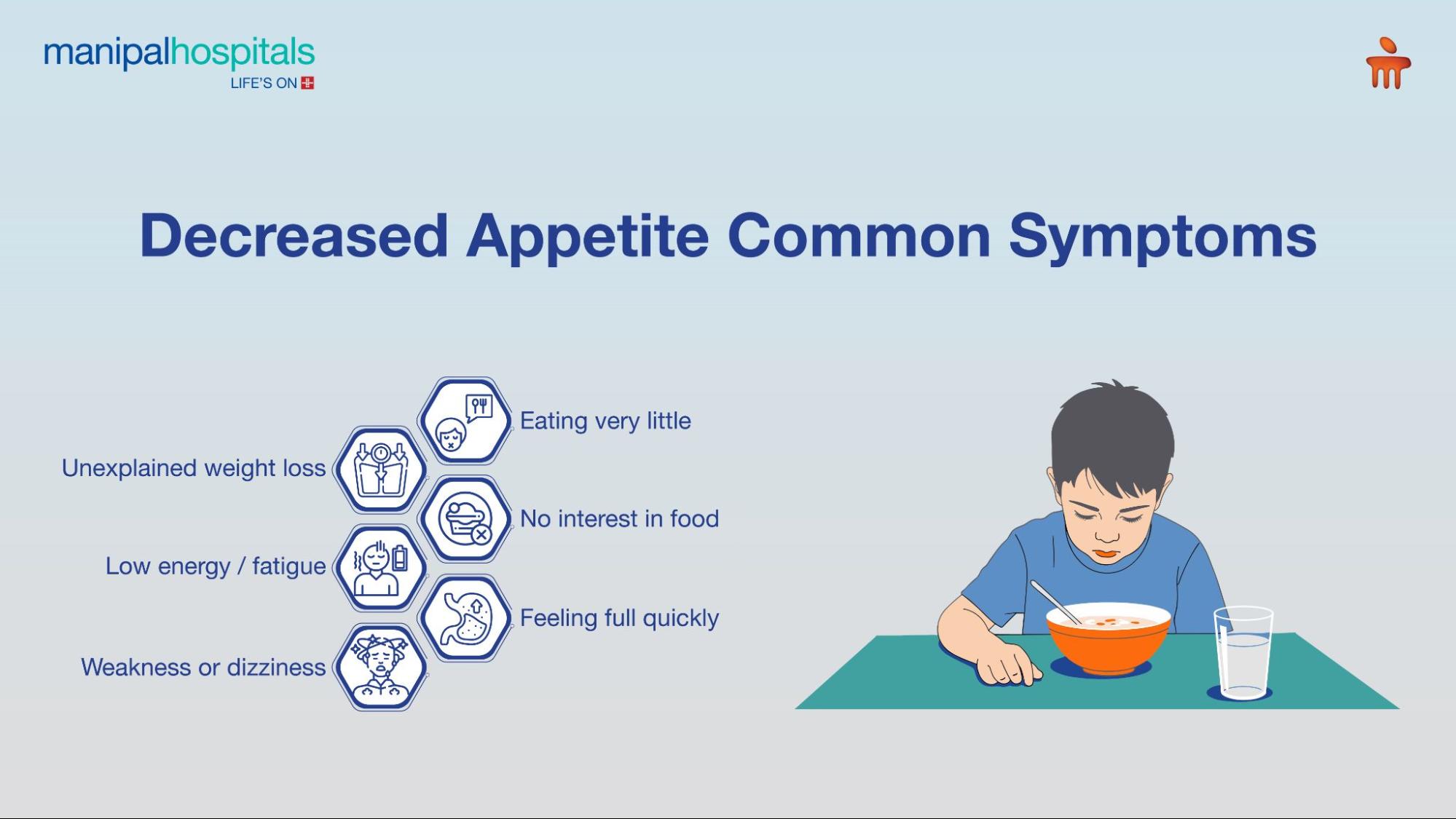
If you are experiencing decreased appetite, you might notice:
-
Eating very small portions and still feeling full
-
Skipping meals frequently
-
Lack of interest in favourite foods
-
Unintentional weight loss
-
Low energy or constant tiredness
-
Weakness or dizziness
These symptoms may seem mild initially, but over time they can affect your physical and mental well-being.
Causes of Decreased Appetite
There is no single reason behind appetite loss. It often results from a mix of physical, emotional, and lifestyle factors.
Medical Conditions
-
Certain health issues can directly affect your hunger levels:
-
Infections like flu, viral fever, or stomach infections
-
Digestive problems such as acidity, ulcers, or gastritis
-
Chronic illnesses like liver or kidney disease
-
Hormonal imbalances, including thyroid disorders
Mental and Emotional Factors
Your mind plays a powerful role in your eating habits.
-
Stress from work or personal life
-
Anxiety or overthinking
-
Depression
Many patients visiting Manipal Hospital Jaipur often report appetite loss during stressful phases, showing how closely mental health is linked to eating behaviour.
Medications and Treatments
Certain medicines can reduce hunger as a side effect:
-
Antibiotics
-
Pain medications
-
Cancer treatments like chemotherapy
If your appetite changed after starting a new medicine, it’s worth discussing with your doctor.
Lifestyle Habits
Sometimes, the cause is hidden in daily routines:
-
Skipping meals regularly
-
Eating too much junk food
-
Lack of physical activity
-
Irregular sleep patterns
These habits can slowly disturb your natural hunger cycle.
Ageing
As people grow older, their appetite often decreases due to:
-
Slower metabolism
-
Reduced taste and smell
-
Existing medical conditions
This is why elderly individuals need special attention when it comes to nutrition.
Not Every Case of Decreased Appetite Needs Medical Treatment. However, You Should Seek Help If:
-
Appetite loss lasts more than 1–2 weeks
-
You notice significant weight loss
-
You feel extremely weak or fatigued
-
There is nausea, vomiting, or pain
-
You struggle to eat even small amounts
Doctors at Manipal Hospital Jaipur focus on identifying the root cause early to prevent complications like malnutrition.
How is Decreased Appetite Diagnosed?
Diagnosis usually begins with a simple discussion about your symptoms and lifestyle. Depending on your condition, doctors may suggest the following:
-
Blood tests
-
Nutritional assessment
-
Imaging tests (if required)
-
Mental health evaluation
The aim is not just to treat the symptom but to understand why your appetite has reduced.
Treatment Options for Decreased Appetite
Treatment depends entirely on the cause. Here’s how it is usually managed:
Medical Treatment
-
Treating underlying infections or illnesses
-
Adjusting medications causing appetite loss
-
Prescribing supplements or appetite stimulants
Nutritional Support
-
High-calorie, nutrient-rich foods
-
Small, frequent meals instead of large ones
-
Protein shakes or liquid nutrition if solid food is difficult
Emotional and Mental Support
-
Stress management techniques
-
Counselling or therapy
-
Mindfulness and relaxation practices
A balanced approach like this is often followed at Manipal Hospital Jaipur, ensuring both physical and mental aspects are addressed.