5 Min Read
Summer is a season filled with holidays, outdoor activities, refreshing fruits, and longer days. However, along with the fun and excitement, summer also brings an increase in digestive discomfort for many people. Bloating, acidity, stomach irritation, indigestion, and dehydration become common complaints during hot weather. At Manipal Hospitals Jaipur, experts often notice a rise in seasonal digestive concerns as temperatures climb.
The good news is that most of these issues can be prevented with simple lifestyle changes and the right food choices. If you have been wondering how to reduce stomach heat, how to keep your stomach cool, or how to make your digestive system strong during summer, this guide will help you understand practical and effective solutions.
Synopsis
- Why Digestive Problems Increase During Summer
- Common Summer Digestive Problems
- How to Reduce Stomach Heat Naturally
- Best Foods to Keep Your Stomach Cool
- Gut-Friendly Foods for Better Digestion
- How to Keep Stomach Cool with Healthy Habits
- Summer Digestive Care: Do’s and Don’ts
- Signs You Should Not Ignore
Why Digestive Problems Increase During Summer
The digestive system works hard throughout the year, but summer heat puts extra stress on the body. High temperatures lead to excessive sweating and fluid loss, which directly impacts digestion.
When the body becomes dehydrated:
-
Digestive juices reduce
-
Metabolism slows down
-
Acidity increases
-
Bloating and constipation become common
In addition, unhealthy eating habits, irregular routines, and food contamination can worsen stomach-related problems. Many people search for ways to cool down their stomachs naturally because heat-related digestive discomfort can affect daily life and energy levels.
Common Summer Digestive Problems
-
Acidity and Heartburn - Spicy food, dehydration, and irregular eating can increase stomach acid production.
-
Bloating and Gas - Heavy meals and poor digestion often lead to discomfort and stomach swelling.
-
Food Poisoning - Bacteria multiply faster during summer, making stale or improperly stored food dangerous.
-
Loss of Appetite - Excess heat can reduce hunger and slow digestion.
-
Constipation - Lack of water and fibre-rich foods can make bowel movements difficult.
Understanding these problems is the first step in learning how to make the digestive system strong naturally.
How to Reduce Stomach Heat Naturally
One of the most effective ways to prevent digestive discomfort is by focusing on cooling foods and hydration. If you frequently search for how to reduce stomach heat, the answer often lies in your everyday diet.
Cooling foods contain high water content, essential nutrients, and natural soothing properties that calm the digestive system.
At Manipal Hospitals Jaipur, specialists recommend choosing lighter and hydrating foods during summer to support gut health and reduce acidity.
Best Foods to Keep Your Stomach Cool
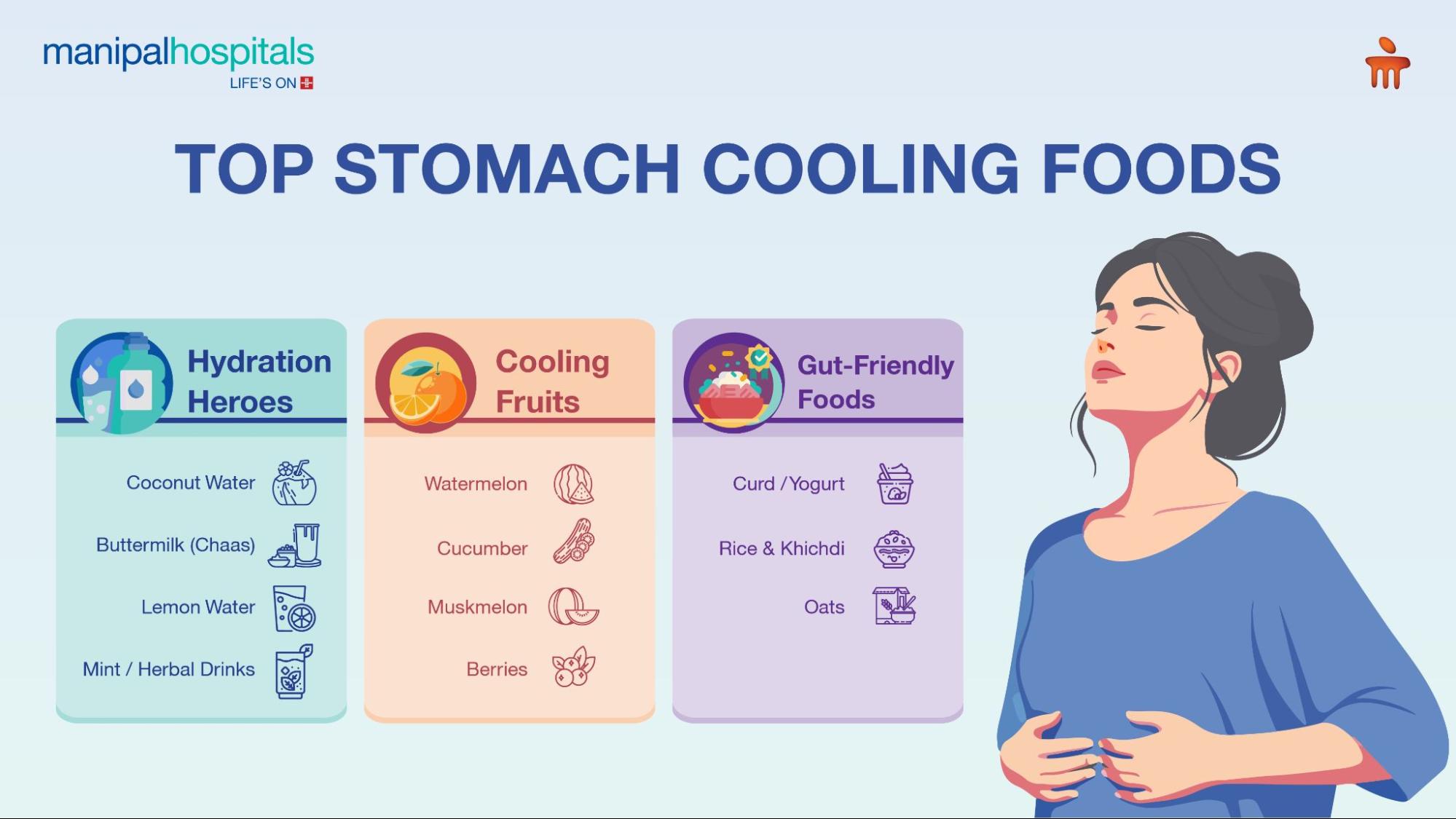
Hydrating Drinks
-
Coconut Water - A natural electrolyte drink that hydrates the body and helps maintain digestive balance.
-
Buttermilk (Chaas) - One of the best traditional remedies for people looking for how to keep their stomach cool. It contains probiotics that improve digestion and reduce acidity.
-
Lemon Water - Keeps the body hydrated while supporting smooth digestion.
-
Mint Water and Herbal Teas - Mint has natural cooling properties and can provide relief from stomach irritation and gas.
Fruits That Help Cool Down the Stomach
-
Watermelon - Contains over 90% water and helps flush toxins from the body.
-
Cucumber - Known for its cooling effect, the cucumber is excellent for reducing body heat.
-
Muskmelon - A light and hydrating fruit that supports digestion.
-
Berries - Rich in antioxidants and fibre, berries help improve gut health.
These foods are especially beneficial for those trying to understand how to cool down their stomach naturally during extreme heat.
Gut-Friendly Foods for Better Digestion
-
Yoghurt and Curd - Probiotic-rich foods improve the balance of healthy bacteria in the gut and strengthen digestion.
-
Rice-Based Meals - Simple meals like curd rice or khichdi are easy to digest and gentle on the stomach.
-
Oats - Contains soluble fibre that supports regular bowel movements.
-
Leafy Greens - Provide fibre and hydration while keeping meals light.
Including these foods regularly is one of the simplest ways to make the digestive system strong during summer.
How to Keep Stomach Cool with Healthy Habits
Food alone is not enough. Daily habits also play an important role in digestive health.
-
Stay Hydrated Throughout the Day - Drinking enough water is essential. Carry a water bottle and sip water regularly instead of waiting until you feel thirsty. Hydration is one of the most effective methods for people searching for how to keep stomach cool during hot weather.
-
Eat Smaller and Frequent Meals - Large meals put extra pressure on digestion. Eating smaller portions helps the stomach work more efficiently.
-
Avoid Excessively Spicy and Oily Foods - These foods generate more heat in the body and can worsen acidity and indigestion.
-
Maintain Food Hygiene - Wash fruits and vegetables properly and avoid stale or uncovered food.
-
Manage Stress - Stress can increase stomach acid production and affect gut health. Meditation, yoga, and deep breathing can help.
-
Get Proper Sleep - Good sleep supports digestion and helps the body recover from heat stress.
Summer Digestive Care: Do’s and Don’ts
Do’s
-
Drink plenty of water
-
Eat cooling fruits and vegetables
-
Include curd and buttermilk daily
-
Eat freshly cooked food
-
Exercise moderately
Don’ts
-
Avoid oily and fried foods
-
Don’t skip meals
-
Avoid excessive caffeine and alcohol
-
Don’t consume stale food
-
Avoid overeating at night
Signs You Should Not Ignore
While mild digestive discomfort is common, certain symptoms require medical attention:
-
Persistent vomiting or diarrhoea
-
Blood in stools
-
High fever
-
Extreme dehydration
If these symptoms continue, consult an expert at Manipal Hospitals Jaipur for timely diagnosis and treatment.
Disclaimer: This article is for informational purposes only and should not be considered medical advice. Please consult a qualified healthcare professional for personalised guidance.
FAQ's
It is mainly due to dehydration, spicy or oily food intake, and increased body temperature, leading to acidity and discomfort.
Drinking buttermilk or coconut water or eating cucumber and watermelon can provide quick relief.
Most water-rich fruits are beneficial, but some acidic fruits may not suit everyone. It’s best to observe your body’s response.
They improve the balance of good bacteria in your gut, enhancing digestion and preventing issues like bloating.
Yes, poor sleep can slow digestion and increase acidity.
Focus on hydration, balanced meals, regular exercise, stress control, and proper sleep.
Share this article on: