8 Min Read
In the journey of life, our bones serve as the foundational framework, supporting every movement and protecting our vital organs. Yet, for many, the strength of this crucial system quietly diminishes, often unnoticed until a significant event like a fracture occurs. Understanding weak bones symptoms is paramount for early intervention and maintaining an active, fulfilling life. At Manipal Hospitals, our commitment to skeletal health is unwavering. If you are concerned about your bone health or looking for expert guidance, our orthopaedics in Delhi offer state-of-the-art diagnostics and personalised care to help you thrive.
Synopsis
Understanding Weak Bones: The Silent Threat
Weak bones, medically often referred to as osteoporosis or osteopenia, represent a condition where bone density and quality decrease, making bones brittle and more susceptible to fractures. This insidious condition affects millions globally; for instance, it's estimated that 1 in 3 women and 1 in 5 men over the age of 50 will experience an osteoporotic fracture in their lifetime. Recognising the early signs of weak bone disease is crucial, as early diagnosis can significantly improve treatment outcomes and quality of life.
Key Weak Bones Symptoms to Watch For
While often called a "silent disease" because it can progress without noticeable signs for years, there are several weak bones symptoms that, if present, should prompt a medical evaluation. Being aware of these can lead to a timely diagnosis and effective management.
-
Receding Gums: Jawbone loss can be an early indicator of bone density issues, leading to receding gums.
-
Weakened Grip Strength: Studies have shown a correlation between grip strength and overall bone mineral density. A noticeable decrease in your ability to grip objects firmly could be a subtle sign.
-
Brittle Fingernails: While not always a direct indicator, brittle nails can sometimes reflect a lack of calcium and other essential nutrients vital for bone health.
-
Loss of Height: Over time, compression fractures in the spine can cause a gradual loss of height, often more than 2.5 cm (1 inch). This is one of the more advanced weak bone symptoms.
-
Change in Posture (Stooped or Hunchback): Vertebral fractures can lead to kyphosis, a rounding of the upper back. This can be a distressing visual sign of progressive bone weakening.
-
Back Pain: Persistent or sudden back pain, especially in the mid to lower back, could be due to spinal compression fractures, even if minor.
-
Frequent Fractures: The most definitive sign of weak bones is fracturing a bone from a minor fall or impact that wouldn't normally cause such an injury. This is a clear indicator that the bone structure has significantly weakened.
Causes of Weak Bones Disease
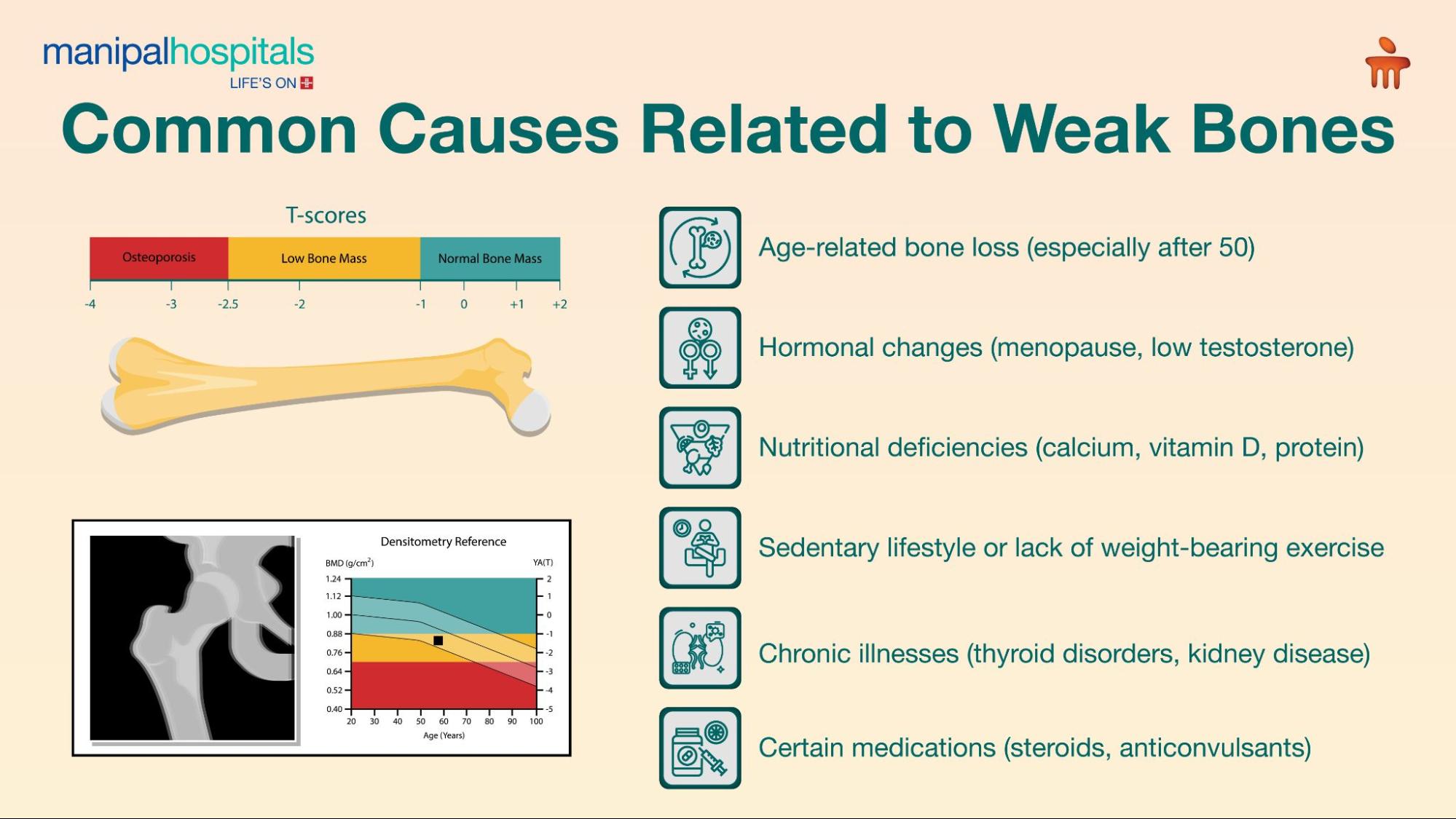
Understanding the weak bones causes is vital for prevention and effective management. Many factors contribute to the development of weak bones, ranging from genetics to lifestyle choices.
-
Age: Bone density naturally declines with age, particularly after 30.
-
Gender: Women are more prone to osteoporosis, especially post-menopause, due to a sharp drop in oestrogen, a hormone critical for bone maintenance.
-
Family History: Genetics play a significant role. If a parent or sibling has osteoporosis, your risk increases.
-
Nutritional Deficiencies: Insufficient intake of calcium and Vitamin D significantly impacts bone formation and strength.
-
Sedentary Lifestyle: Lack of weight-bearing exercise weakens bones.
-
Medical Conditions: Certain conditions, such as hyperthyroidism, inflammatory bowel disease, rheumatoid arthritis, and chronic kidney disease,se can contribute to bone loss.
-
Medications: Long-term use of corticosteroids, some anti-seizure medications, and certain cancer treatments can affect bone density.
-
Lifestyle Choices: Excessive alcohol consumption, smoking, and high caffeine intake can hinder bone health.
-
Low Body Weight: Being underweight (BMI less than 18.5) can increase the risk of bone loss.
The Health Benefits of Strong Bones
Strong bones offer far more than just structural support; they are integral to overall health and quality of life. Healthy bones enable mobility, protect internal organs, and store essential minerals like calcium and phosphorus, releasing them into the body as needed. Maintaining robust bone health reduces the risk of fractures, which can lead to chronic pain, disability, and a significant reduction in independence. Investing in bone health now means investing in a more active, pain-free future. Data shows that individuals with strong bone density through mid-life have up to a 60% lower risk of developing severe osteoporosis-related fractures later in life.
Nutrition for Robust Bone Health
Nutrition is a cornerstone of strong bones. A balanced diet rich in specific vitamins and minerals can significantly contribute to bone density and strength.
Essential Nutrients for Bone Health
-
Calcium: The primary mineral component of bone. Adults typically need 1000-1200 mg per day.
-
Vitamin D: Crucial for calcium absorption. A daily intake of 600-800 IU is often recommended for adults, but some may need more.
-
Vitamin K: Supports bone mineralisation and plays a role in bone protein synthesis.
-
Magnesium: Contributes to bone structure and helps regulate calcium and Vitamin D levels.
-
Phosphorus: A major component of bone mineral.
-
Potassium: May help reduce calcium loss from bones.
Food Sources for Stronger Bones
-
Dairy Products: Milk, yoghurt, and cheese are excellent sources of calcium.
-
Leafy Green Vegetables: Kale, spinach, broccoli provide calcium and Vitamin K.
-
Fortified Foods: Many cereals, plant-based milks, and orange juices are fortified with calcium and Vitamin D.
-
Fatty Fish: Salmon, mackerel, and tuna are good sources of Vitamin D.
-
Nuts and Seeds: Almonds, sesame seeds, and chia seeds offer calcium and magnesium.
-
Legumes: Beans and lentils provide magnesium and other trace minerals beneficial for bone health.
Lifestyle Factors for Bone Strength
Beyond nutrition, lifestyle choices profoundly impact bone health and can either strengthen or contribute to weak bone causes.
-
Regular Weight-Bearing and Resistance Exercise: Activities like walking, jogging, dancing, and lifting weights stimulate bone formation. Aim for at least 30 minutes most days of the week. Individuals who engage in regular weight-bearing exercise can increase their bone density by 1-3% annually in the early stages, significantly reducing future fracture risk.
-
Avoid Smoking: Smoking significantly reduces bone density.
-
Limit Alcohol Intake: Excessive alcohol consumption interferes with calcium absorption and bone formation.
-
Maintain a Healthy Weight: Both being underweight and being overweight can negatively impact bone health.
-
Adequate Sun Exposure: Helps the body produce Vitamin D naturally.
Weak Bones Treatment and Expert Advice
For those diagnosed with osteopenia or osteoporosis, effective treatment for weak bones is available. The approach often involves a combination of medication, lifestyle modifications, and nutritional support. Medications can help slow bone loss, increase bone density, and significantly reduce fracture risk, often by 50% or more. Early diagnosis is key, and regular bone density screenings, especially for individuals over 50 or with risk factors, are highly recommended.
In Manipal Hospitals, our orthopaedic specialists provide comprehensive care, from accurate diagnosis using advanced imaging techniques to developing personalised weak bones treatment plans. We believe in empowering our patients with knowledge and tailored strategies to manage and improve their bone health. Our orthopaedics in Delhi are equipped with the latest technology and expertise to guide you through every step of your bone health journey, ensuring you receive the best possible care and advice for preventing and treating weak bones.
Conclusion
If you are experiencing any of these weak bones symptoms or have concerns about your bone health, it's crucial to seek timely medical advice. Early diagnosis and personalised weak bones treatment can make a significant difference. Book an appointment with our expert orthopaedics at Manipal Hospitals Delhi today to safeguard your skeletal strength and ensure a healthier, more active future.
FAQ's
Osteopenia is a milder form of bone density loss, where bone mineral density is lower than normal but not yet severe enough to be classified as osteoporosis. Osteoporosis is a more severe condition characterised by significantly reduced bone density, leading to very brittle bones and a high risk of fractures.
While completely reversing severe bone loss to its youthful state is challenging, it is often possible to halt further bone loss, improve bone density, and significantly reduce fracture risk through a combination of medication, diet, and lifestyle changes. Early intervention offers the best prognosis.
The frequency depends on your age, gender, and risk factors. Women over 65 and men over 70, or younger individuals with significant risk factors for osteoporosis, should discuss screening frequency with their doctor. Typically, a DEXA scan every 1-2 years is common for those at risk or undergoing treatment.
Not always. If you can get enough calcium from your diet, supplements might not be necessary. However, for those with dietary restrictions or insufficient intake, supplements can be beneficial. Always consult your doctor before starting any supplements to determine the correct dosage and ensure it doesn't interact with other medications.
Weight-bearing exercises (e.g., walking, jogging, hiking, dancing) and resistance training (e.g., lifting weights, using resistance bands) are most effective. These types of exercises put stress on the bones, stimulating them to rebuild and become stronger. Balance exercises are also important to prevent falls.
Share this article on: