6 Min Read
Experiencing knee swelling and pain can be alarming, especially when you haven't had an obvious injury. Many people assume a direct impact is always the cause, but often, the culprit is a condition called knee bursitis. At Manipal Hospitals, we understand your concerns, and our orthopaedics in Delhi-NCR are dedicated to providing clear, comprehensive information and cutting-edge care for all your joint health needs. When dealing with discomfort like knee bursitis, seeking expert advice from our orthopaedics in Delhi-NCR is crucial for an accurate diagnosis and effective management plan. We pride ourselves on the expertise of our orthopaedics in Delhi-NCR, who are equipped to handle complex cases. Understanding the nuances of conditions like knee bursitis is what our orthopaedics in Delhi-NCR excel at, ensuring you receive the best care. Trust our orthopaedics in Delhi-NCR for your knee health journey.
Synopsis
What is Knee Bursitis?
Knee bursitis occurs when the bursae – small, fluid-filled sacs that cushion the bones, tendons, and muscles near your joints – become inflamed. Your knee has several bursae, and any of them can become inflamed. When this happens, the bursa fills with excess fluid, leading to pain, swelling, and tenderness. While a direct blow can certainly cause bursitis, it frequently develops from repetitive movements, prolonged pressure, or underlying medical conditions, explaining why your knee might swell up even without a specific injury.
-
Anatomy in Action: Bursae act as tiny shock absorbers, reducing friction during movement.
-
Inflammation explained: When a bursa is irritated, it produces more fluid, causing it to swell and become painful.
-
Common Occurrence: Knee bursitis is a relatively common condition, affecting thousands of individuals annually, with a high success rate for conservative treatments.
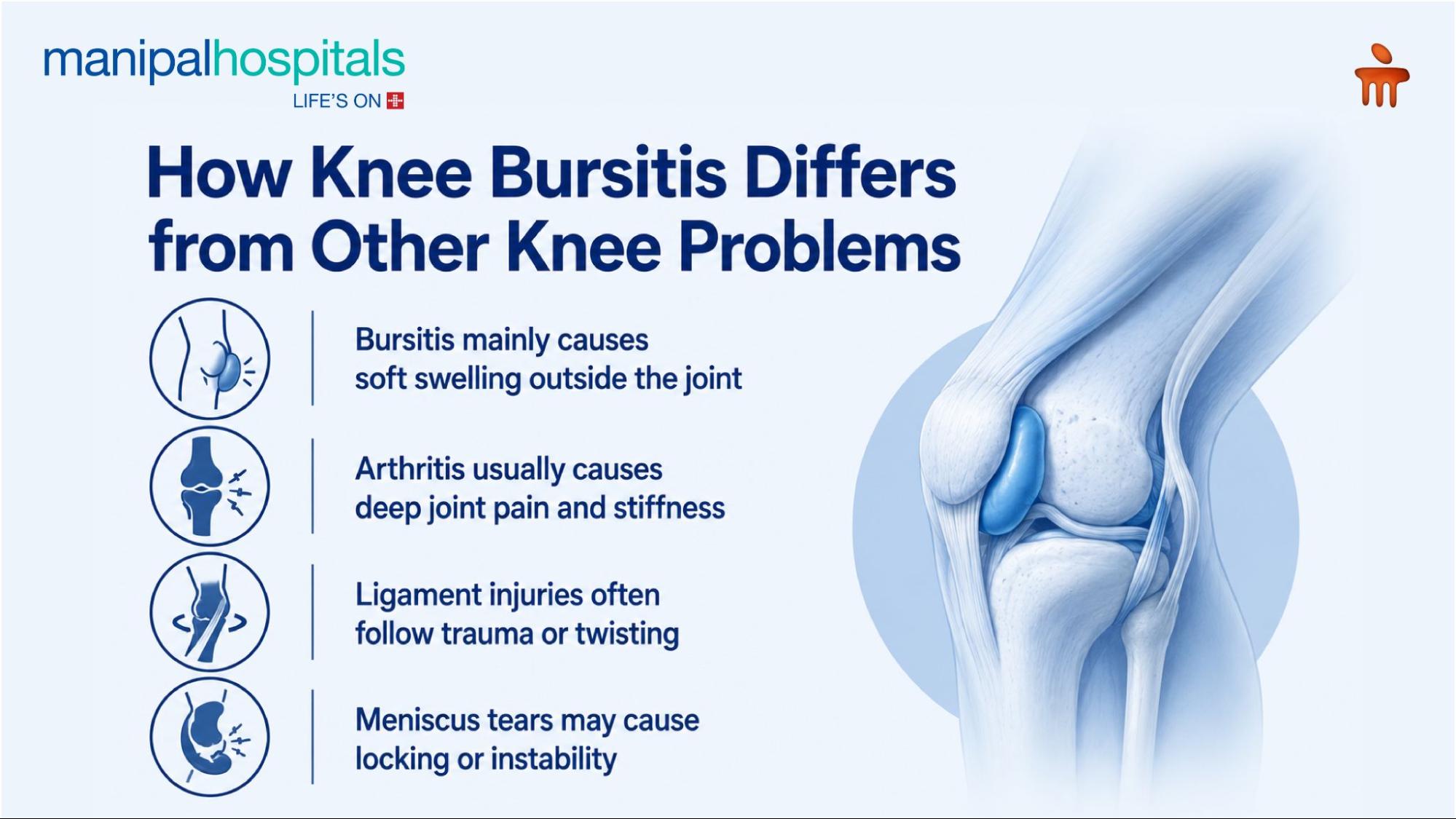
Types of Knee Bursitis
Understanding which bursa is affected can help pinpoint the cause and guide appropriate knee bursitis treatment. Several bursae around the knee can become inflamed:
-
Prepatellar Bursitis ("Housemaid's Knee"):
-
Located at the front of the kneecap.
-
Often results from prolonged kneeling, common in professions like carpet layers, gardeners, or roofers.
-
Characterized by swelling directly over the kneecap.
-
-
Infrapatellar Bursitis ("Clergyman's Knee" or "Jumper's Knee"):
-
Involves the bursa located just below the kneecap, either superficial (between skin and patellar tendon) or deep (between patellar tendon and tibia).
-
Frequently caused by activities involving repetitive jumping or kneeling, such as in sports.
-
Infrapatellar bursitis treatment typically involves rest, ice, and anti-inflammatory measures.
-
-
Pes Anserine Bursitis:
-
Affects the bursa on the inner side of your knee, about 2-3 inches below the joint.
-
More common in middle-aged women, overweight individuals, and athletes, especially runners.
-
Often linked to overuse, tight hamstrings, or unsupportive footwear.
-
-
Semimembranosus Bursitis:
-
Located at the back of the knee, often associated with Baker's cyst, which is a collection of fluid in the bursa.
-
Knee Bursitis Symptoms: What to Look For
Recognizing knee bursitis symptoms early is key to effective management. The symptoms can vary depending on which bursa is affected and the severity of the inflammation, but common indicators include:
-
Pain: This is often the primary symptom, ranging from mild ache to sharp pain, especially with movement or pressure.
-
Swelling: A noticeable lump or puffiness around the affected bursa, which can be significant in cases like prepatellar bursitis.
-
Tenderness: The area around the bursa will often be painful to touch.
-
Warmth and Redness: The skin over the inflamed bursa may feel warm to the touch and appear reddish. This is more common in infectious bursitis.
-
Limited Range of Motion: Pain and swelling can make it difficult or uncomfortable to bend or straighten your knee fully.
-
Stiffness: The knee may feel stiff, especially after periods of inactivity.
Causes and Risk Factors
Knee bursitis doesn't always require a direct injury. Several factors can contribute to its development:
-
Repetitive Pressure: Prolonged kneeling (as seen in carpet layers, plumbers), or repetitive friction can irritate bursae.
-
Overuse: Activities that place repetitive stress on the knee, such as running, jumping, or cycling, can lead to bursitis.
-
Direct Trauma: A blow or fall directly onto the knee can inflame a bursa.
-
Infection: The bursa can become infected by bacteria through a cut or scrape, leading to septic bursitis, which requires immediate medical attention.
-
Underlying Conditions: Certain medical conditions, such as rheumatoid arthritis, gout, or osteoarthritis, can increase the risk of bursitis.
-
Obesity: Increased weight puts more stress on the knee joints and bursae, particularly the pes anserine bursa.
Diagnosis of Knee Bursitis
Diagnosing knee bursitis usually involves a combination of a physical examination and, sometimes, imaging studies:
-
Physical Examination: Your doctor will examine your knee for tenderness, swelling, warmth, and pain, and will assess your range of motion.
-
Imaging Tests:
-
X-rays: Primarily used to rule out bone injuries or other causes of knee pain, such as arthritis.
-
Ultrasound: Can visualize the inflamed bursa and assess the amount of fluid.
-
MRI: Provides detailed images of soft tissues and can help differentiate bursitis from other conditions.
-
- Fluid Aspiration: If infection is suspected, fluid may be aspirated from the bursa with a needle and sent for laboratory analysis.
Knee Bursitis Treatment Options
Most cases of knee bursitis respond well to conservative measures, with surgical intervention being rare. The goal of knee bursitis treatment is to reduce pain and inflammation.
-
Conservative Management:
-
RICE Protocol:
-
Rest: Avoid activities that aggravate your knee.
-
Ice: Apply ice packs for 15-20 minutes several times a day to reduce swelling.
-
Compression: Use a compression bandage to help minimise swelling.
-
Elevation: Elevate your leg above your heart to reduce fluid accumulation.
-
-
-
Pain Relievers: Over-the-counter anti-inflammatory medications can help manage pain and inflammation.
-
Physical Therapy: Exercises to improve flexibility and strengthen the muscles around the knee can help prevent recurrence. This is particularly beneficial for infrapatellar bursitis treatment.
-
-
Corticosteroid Injections: In some cases, an injection of corticosteroids directly into the bursa can rapidly reduce inflammation and pain. Studies show that over 85% of patients experience significant relief after a single injection.
-
Aspiration: If the bursa is very large, fluid can be drained with a needle to relieve pressure and pain.
-
Antibiotics: If the bursitis is caused by an infection (septic bursitis), antibiotics are prescribed.
-
Surgery: Surgical removal of the bursa (bursectomy) is a rare option, reserved for chronic or recurrent cases that don't respond to other treatments. It is successful in over 95% of the selected cases.
When to See a Doctor
While many cases of knee bursitis resolve with conservative care, it's important to know when to seek professional medical advice. Consult a doctor if:
-
Your pain or swelling is severe and worsens.
-
You have a fever, chills, or excessive warmth and redness around the knee, which could indicate an infection.
-
You are unable to move your knee or bear weight on it.
-
Symptoms persist or recur despite home treatment.
Conclusion
If you are experiencing knee pain, swelling, or any of the knee bursitis symptoms, it's crucial to seek timely medical advice. Book an appointment with our expert orthopaedic specialists in Delhi-NCR today, and let us help you get back on your feet comfortably and confidently.
FAQ's
Healing time varies, but most cases of acute knee bursitis improve within a few weeks with conservative treatment. Chronic cases may take longer.
Mild cases might, but seeking medical advice ensures proper diagnosis and prevents complications like chronic inflammation or infection.
Bursitis is inflammation of a bursa, while tendonitis is inflammation of a tendon. Both cause pain and swelling, but affect different structures.
You should avoid activities that aggravate your symptoms. Gentle, low-impact exercises may be introduced gradually as pain subsides, preferably under the guidance of a physical therapist.
No, never attempt to drain fluid from a bursa yourself. This should only be done by a medical professional in a sterile environment to prevent infection and other complications.
Share this article on: