5 Min Read
An acoustic neuroma is a rare, non-cancerous tumour that develops on the nerve responsible for hearing and balance. This type of cerebellopontine angle tumour can cause significant discomfort, including hearing loss, dizziness, and facial numbness. Patients diagnosed with this condition often seek guidance on acoustic neuroma treatment and surgical options. Comprehensive evaluation by our neurosurgeons in Delhi ensures personalised care, from diagnosis to post-operative recovery. This blog explains everything you need to know about acoustic neuroma, including symptoms, indications for surgery, and what to expect from CP angle tumour surgery.
Synopsis
- Understanding Acoustic Neuroma
- Causes and Risk Factors
- Recognising Brain Tumour Behind Ear Symptoms
- Diagnosis of Acoustic Neuroma
- Indications for CP Angle Tumour Surgery
- Preparing for Acoustic Neuroma Surgery
- What to Expect During Surgery
- Risks and Complications
- Long-Term Outlook
- Alternatives to Surgery
- Lifestyle and Care After Surgery
- Conclusion
Understanding Acoustic Neuroma
An acoustic neuroma brain tumour arises from the Schwann cells that surround the vestibulocochlear nerve (cranial nerve VIII). Although benign, its location near critical nerves and the brainstem makes it potentially serious. This tumour is often referred to as a cerebellopontine angle tumour because it develops in the small area between the cerebellum and pons.
Causes and Risk Factors
While the exact cause of acoustic neuroma is not fully understood, some known risk factors include:
-
Genetic conditions such as neurofibromatosis type II
-
Family history of tumours
-
Age-related changes in nerve cells
Understanding risk factors helps guide early detection and informs decisions about acoustic neuroma treatment.
Recognising Brain Tumour Behind Ear Symptoms
Early detection of an acoustic neuroma is challenging because symptoms are often subtle. Common brain tumour behind ear symptoms include:
-
Gradual hearing loss in one ear
-
Tinnitus (ringing in the ear)
-
Balance issues or dizziness
-
Facial numbness or tingling
Recognising these brain tumour behind ear symptoms early enables timely evaluation for acoustic neuroma surgery or other treatments.
Diagnosis of Acoustic Neuroma
Accurate diagnosis is crucial for planning acoustic neuroma treatment. Medical evaluation often involves:
-
Detailed hearing tests (audiometry)
-
MRI scans to visualise the tumour
-
Balance assessments
-
Neurological examinations
Early detection improves outcomes and determines whether CP angle tumour surgery is necessary.
Indications for CP Angle Tumour Surgery
Not all acoustic neuroma cases require immediate surgery. Doctors consider acoustic neuroma surgery when:
-
Tumour growth is confirmed or rapid
-
Significant hearing loss or balance problems occur
-
Brainstem compression develops
-
Facial nerve function is at risk
Centres supported by our neurosurgeons in Delhi carefully evaluate these factors before recommending CP angle tumour surgery.
Preparing for Acoustic Neuroma Surgery
Pre-Surgical Evaluation
Preparation for acoustic neuroma surgery involves:
-
Detailed imaging to map tumour location
-
Hearing and neurological assessments
-
Discussing surgical approaches and potential risks
Patients are educated on what to expect before, during, and after surgery, ensuring informed decisions regarding acoustic neuroma treatment.
Types of Surgical Approaches
-
Translabyrinthine Approach - Often chosen when hearing cannot be preserved.
-
Retrosigmoid/Suboccipital Approach - Allows hearing preservation in some cases.
-
Middle Fossa Approach - Suitable for small tumours in patients with good hearing.
The choice depends on tumour size, location, and patient priorities for post-operative outcomes.
What to Expect During Surgery
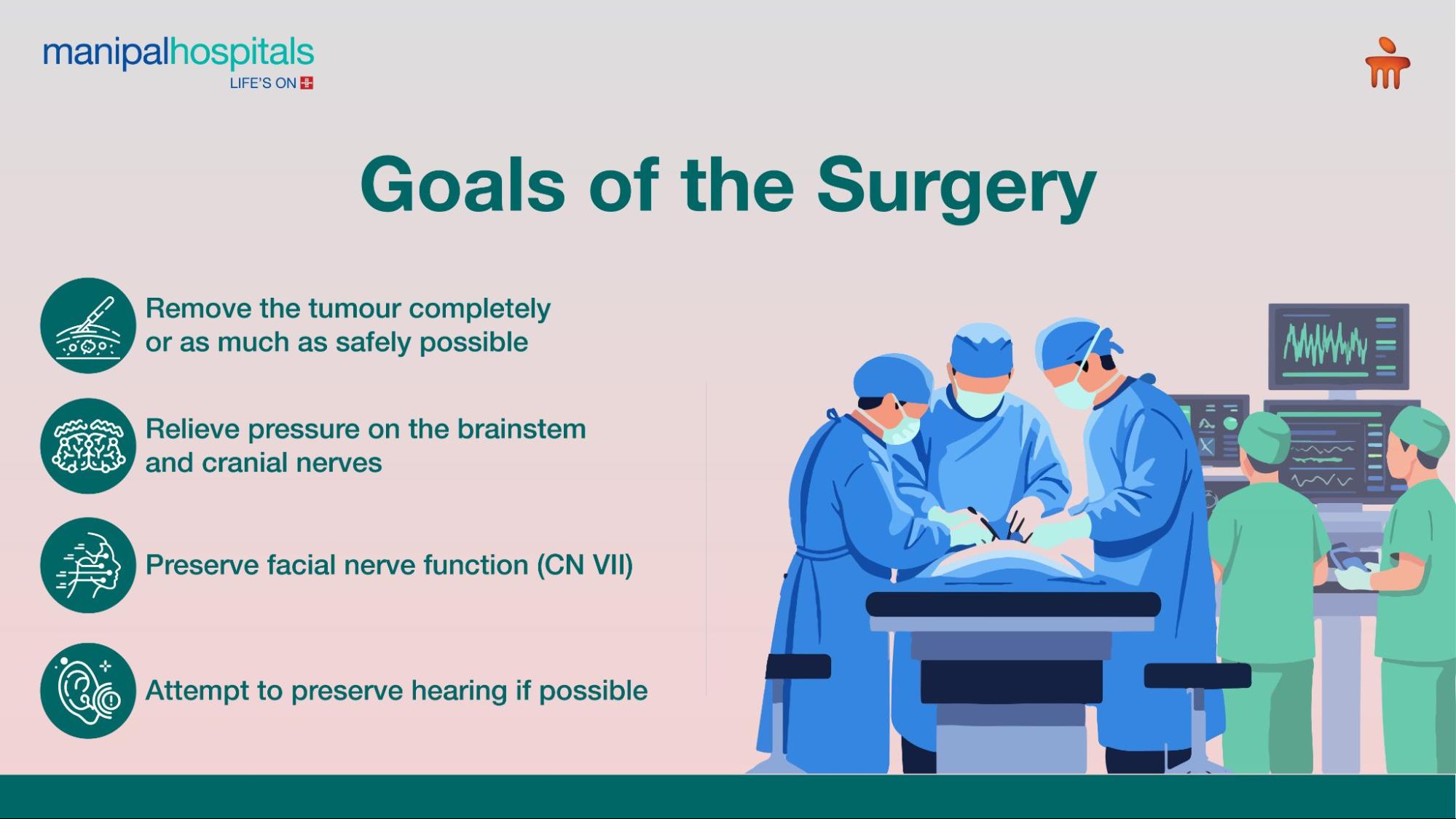
Acoustic neuroma surgery is performed under general anaesthesia. Surgeons aim to remove the tumour while preserving surrounding nerves, particularly the facial and vestibulocochlear nerves. Surgery duration varies depending on tumour size and complexity, ranging from 3 to 6 hours or more.
Post-Operative Recovery
Immediate Recovery
After CP angle tumour surgery, patients are monitored in intensive care. Common post-operative experiences include:
-
Mild to moderate pain around the surgical site
-
Facial numbness or weakness
-
Temporary balance issues
Rehabilitation
Recovery often includes:
-
Physical therapy for balance and mobility
-
Hearing rehabilitation if hearing was affected
-
Facial exercises to improve nerve function
Our neurosurgeons in Delhi provide structured guidance to support long-term recovery following acoustic neuroma surgery.
Risks and Complications
While acoustic neuroma surgery is generally safe, potential risks include:
-
Facial nerve injury
-
Hearing loss
-
Cerebrospinal fluid leaks
-
Infection
-
Balance disturbances
Understanding these risks helps patients make informed choices about acoustic neuroma treatment.
Long-Term Outlook
The long-term prognosis after acoustic neuroma surgery is generally favourable. Tumour recurrence is rare when complete removal is achieved. Regular follow-ups with imaging are essential to monitor for regrowth and manage any residual symptoms.
Alternatives to Surgery
Not all patients require immediate surgery. Alternatives in acoustic neuroma treatment include:
-
Watchful waiting with regular MRI monitoring
-
Stereotactic radiosurgery (gamma knife)
-
Symptom management for mild cases
These approaches are especially considered for older patients or those with small, slow-growing tumours.
Lifestyle and Care After Surgery
Maintaining health post-surgery enhances recovery:
-
Avoid strenuous activities initially
-
Follow physiotherapy and balance exercises
-
Monitor hearing and facial nerve function
-
Attend regular follow-ups
These steps help patients regain normal function after CP angle tumour surgery.
Conclusion
Acoustic neuroma is a benign but potentially impactful tumour located near the ear and brainstem. Recognising brain tumour behind the ear symptoms early and consulting experts in acoustic neuroma treatment is essential. When surgery is indicated, CP angle tumour surgery performed by skilled surgeons ensures optimal outcomes. Understanding the procedure, recovery, and long-term care helps patients approach acoustic neuroma surgery confidently. Our neurosurgeons in Delhi provide expert care from diagnosis to recovery, ensuring patients receive personalised guidance every step of the way.
FAQ's
An acoustic neuroma is a non-cancerous tumour that develops on the vestibulocochlear nerve, affecting hearing and balance.
Symptoms include gradual hearing loss, tinnitus, dizziness, facial numbness, and headaches.
Surgery is indicated for tumours that are growing, causing significant symptoms, or threatening nerve and brainstem function.
Risks include facial nerve injury, hearing loss, balance issues, and cerebrospinal fluid leaks, though complications are uncommon.
Yes, options include watchful waiting, stereotactic radiosurgery, and symptom management for small or slow-growing tumours.
Share this article on: