
 6 Min Read
Feeling tired all the time? Gaining weight despite eating less? Before blaming stress or age, pause for a moment. Could your thyroid gland be sending distress signals?
According to India’s National Family Health Surveys (NFHS IV, 2015–16 and NFHS V, 2019–21), self-reported goitre or thyroid disorders increased from 2.2% to 2.9% overall. Women aged 15–49 were affected nearly twice as often as men, with prevalence increasing with age. Yet many women dismiss early symptoms as part of a busy lifestyle.
This blog highlights the key thyroid disorder symptoms in females that should not be ignored and when to seek medical care.
Synopsis
- Understanding the Thyroid Gland
- Why Are Women More Vulnerable to Thyroid Disorders?
- Types of Thyroid Disorders
- Thyroid Disorder Symptoms in Women
- How Thyroid Disorders Affect Women’s Reproductive Health
- When Should You See a Doctor?
- What Causes Thyroid Disorders?
- How Are Thyroid Disorders Diagnosed?
- Treatment for Thyroid Disorders
- Conclusion
Understanding the Thyroid Gland
The thyroid is a small, butterfly-shaped endocrine gland located at the front of the neck, just below the Adam’s apple. It produces thyroid hormones, mainly thyroxine (T4) and triiodothyronine (T3). These hormones regulate essential body functions, including metabolism, energy levels, body temperature, heart rate, and menstrual cycles.
A thyroid disorder occurs when the gland produces either too little hormone or too much hormone, disrupting normal body function. Although thyroid disorders can affect individuals of any age, women are more commonly affected.
Why Are Women More Vulnerable to Thyroid Disorders?
Women are at higher risk due to:
-
Hormonal changes during menstruation, pregnancy, and menopause
-
Increased susceptibility to autoimmune diseases such as Hashimoto’s thyroiditis and Graves’ disease
-
Postpartum immune changes (postpartum thyroiditis)
Types of Thyroid Disorders
There are two main types of thyroid disorders. These are:
-
Hypothyroidism: An underactive thyroid that does not produce enough hormones, slowing metabolism and body functions.
-
Hyperthyroidism: An overactive thyroid that produces excess hormones, accelerating metabolism and various body processes.
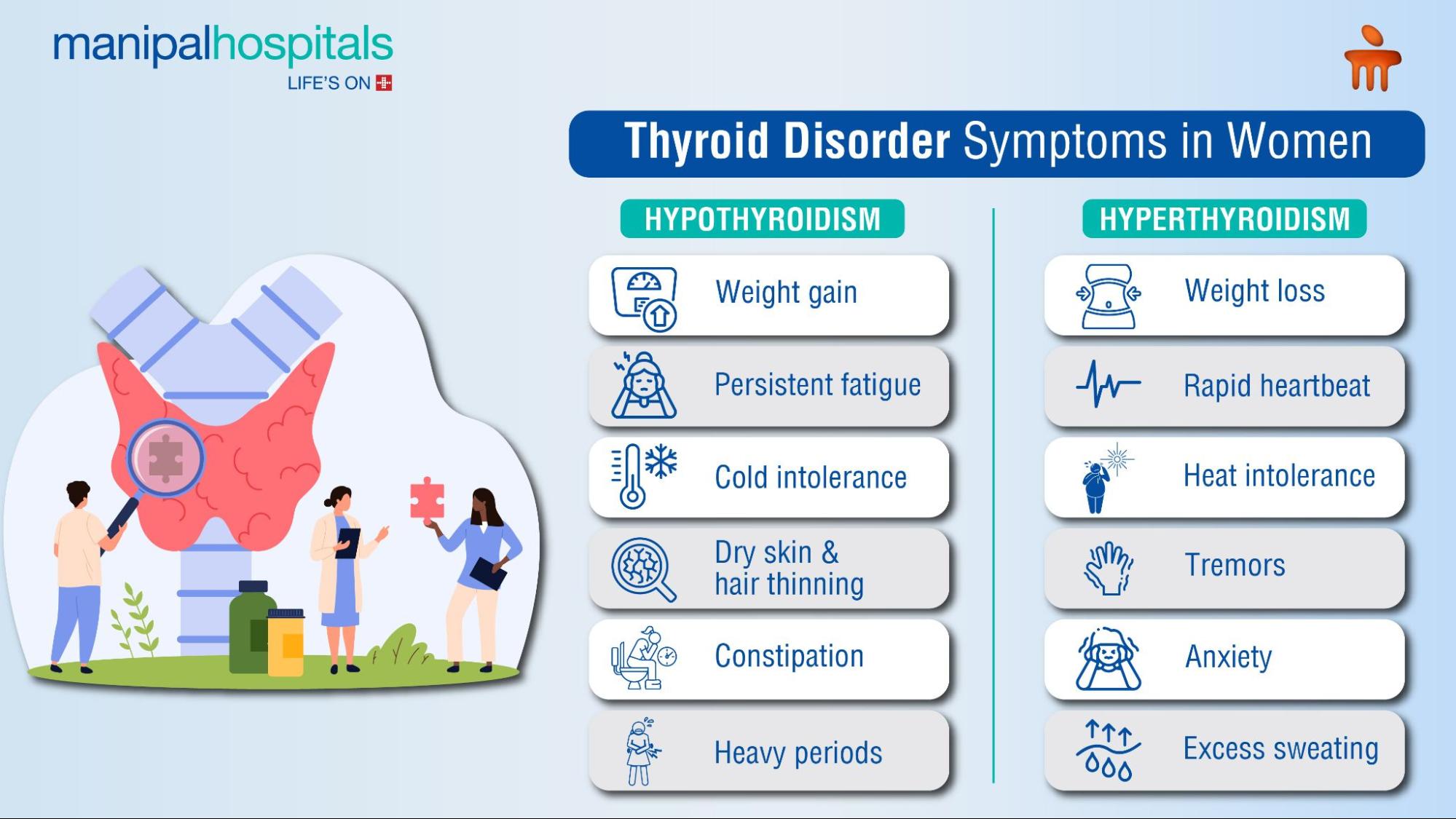
Thyroid Disorder Symptoms in Women
Thyroid symptoms often develop gradually and may overlap with stress, ageing, or lifestyle-related factors. However, persistent or worsening symptoms require medical evaluation.
Signs of Hypothyroidism (Underactive Thyroid)
Physical Symptoms
-
Unexplained weight gain
-
Persistent fatigue
-
Feeling unusually cold
-
Dry skin, brittle nails, and hair thinning
-
Constipation
-
Puffy face and eyelid swelling
-
Heavy or irregular menstrual periods
-
Muscle aches
Mental and Emotional Changes
-
Depression or low mood
-
Memory difficulties or poor concentration
-
Slowed speech or reflexes
-
Brain fog
Signs of Hyperthyroidism (Overactive Thyroid)
Physical Symptoms
-
Unexpected weight loss despite normal or increased appetite
-
Rapid heartbeat (tachycardia) or palpitations
-
Excessive sweating and heat intolerance
-
Tremors (shaky hands)
-
Light or missed periods
-
Difficulty sleeping (insomnia)
-
Frequent bowel movements
Mental and Emotional Changes
-
Anxiety or nervousness
-
Irritability and mood swings
-
Restlessness
Goitre (Enlarged Thyroid)
An enlarged thyroid gland (goitre) may occur in both hypothyroidism and hyperthyroidism, depending on the underlying cause.
How Thyroid Disorders Affect Women’s Reproductive Health
Thyroid disorders can affect reproductive health and pregnancy outcomes. Women may experience the following:
-
Irregular ovulation
-
Difficulty conceiving
-
Recurrent miscarriages
-
Menstrual irregularities
During pregnancy, uncontrolled thyroid disease may increase the risk of complications, such as preeclampsia and preterm birth. Proper monitoring and treatment are essential.
When Should You See a Doctor?
Seek medical evaluation if you experience:
-
Persistent fatigue lasting several weeks
-
Unexplained weight changes
-
Irregular menstrual cycles
-
Ongoing mood changes
-
Palpitations
-
Heat or cold intolerance
Women who are pregnant or planning pregnancy should seek prompt evaluation if symptoms appear.
What Causes Thyroid Disorders?
Thyroid disorders can occur due to several underlying factors. The most common thyroid causes include:
-
Autoimmune diseases such as Hashimoto’s thyroiditis (leading to hypothyroidism) and Graves’ disease (causing hyperthyroidism)
-
Iodine imbalance, either deficiency or excess
-
Thyroiditis, or inflammation of the thyroid gland, including postpartum thyroiditis
-
Overactive thyroid nodules that produce excess hormone
-
Certain medications, such as lithium or amiodarone
-
Thyroid surgery or radiation therapy, which may affect hormone production
Identifying the underlying cause is essential, as treatment depends on the specific type and mechanism of the disorder.
How Are Thyroid Disorders Diagnosed?
Diagnosis typically involves:
-
Clinical evaluation
-
Blood tests such as TSH and Free T4
-
Thyroid antibody testing when autoimmune disease is suspected
Ultrasound may be recommended if thyroid enlargement or nodules are detected. Fine-needle aspiration biopsy is used to evaluate thyroid nodules for malignancy, not to assess hormone overactivity.
Treatment for Thyroid Disorders
Thyroid treatment depends on the specific disorder.
Hypothyroidism
-
Treated with daily thyroid hormone replacement (levothyroxine)
-
Usually requires long-term or lifelong therapy
-
Regular blood tests (TSH) are used to monitor and adjust dosage
Hyperthyroidism
-
Anti-thyroid medications (commonly methimazole) to reduce hormone production
-
Beta-blockers to relieve symptoms such as palpitations
-
Radioactive iodine therapy or surgery in selected cases
Lifestyle measures such as a balanced diet, adequate sleep, and stress management support overall health but do not replace medical treatment.
Conclusion
Thyroid disorder symptoms in females often develop silently. Symptoms such as persistent fatigue, weight changes, menstrual irregularities, mood shifts, or palpitations should not be ignored. Early detection and appropriate treatment allow most women to manage thyroid disorders effectively and maintain healthy, active lives. If symptoms persist, a simple blood test can provide clarity.
At Manipal Hospitals, expert endocrinology care and comprehensive thyroid testing help ensure timely diagnosis and personalised treatment.
FAQ's
Consult a doctor if symptoms such as fatigue, weight changes, irregular periods, mood changes, or palpitations persist for several weeks. Women who are pregnant or planning pregnancy should seek evaluation promptly.
Lifestyle measures such as a balanced diet, adequate sleep, and stress management support overall thyroid health. However, autoimmune or hormonal thyroid disorders require medical treatment and monitoring.
Thyroid disorders can occur at any age but are more common after 30 years of age and during periods of hormonal change, such as pregnancy or menopause.
Most thyroid disorders cannot be completely prevented, as many are linked to genetics or autoimmune conditions. However, maintaining adequate iodine intake, attending regular health check-ups, and seeking early evaluation can support timely detection and management.
The most common screening test is TSH (Thyroid-Stimulating Hormone). In most laboratories, the normal range is approximately 0.4 to 4.0 mIU/L, though this may vary slightly. Free T4 is also measured for accurate assessment, and results are interpreted based on individual factors.
Share this article on: