


Appointment Helpline


Puffy eyes are commonly noticed as swelling or fullness around the eyelids, particularly under the eyes. The condition often appears after waking up but may persist throughout the day, affecting facial appearance, comfort, and self-confidence. In everyday life, puffy eye symptoms are frequently associated with a lack of sleep, prolonged screen exposure, high stress levels, dehydration, and dietary factors such as excessive salt intake.
Puffy eyes may occur occasionally or present as a recurring concern. In some cases, puffiness can be linked to underlying factors such as allergies, sinus congestion, hormonal fluctuations, fluid retention, or certain systemic medical conditions. Some individuals may also experience puffy eyes along with dark circles, itching, redness, or watery eyes, which can cause irritation and affect visual comfort. During pregnancy, puffy eyes may develop due to hormonal changes and increased fluid shifts in the body.
At Manipal Hospitals, puffy eyes are evaluated through a structured, patient-focused clinical approach. Specialists assess lifestyle habits, sleep patterns, medical history, and associated symptoms to identify contributing factors. Early evaluation and appropriate management help relieve discomfort, address underlying causes, reduce recurrence, and support long-term eye health and overall well-being.

Consult a doctor online in just 10 minutes – anytime, anywhere!
Puffy eyes can present with visible and sensory changes around the eyes, affecting both appearance and comfort. Puffy eyes are often more noticeable in the morning, after prolonged screen use, or during periods of fatigue and stress. The severity and duration of symptoms may vary depending on lifestyle habits and underlying causes.
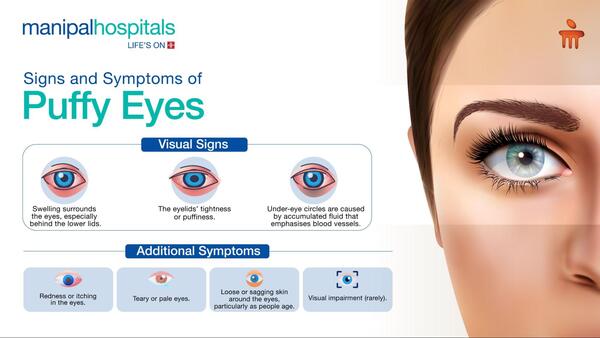
Common symptoms include:
Swelling or fullness of the lower or upper eyelids
A bloated or bulging appearance under the eyes
Tightness or a heavy sensation around the eyelids
Dark circles caused by fluid buildup and prominent blood vessels
Redness, itching, or irritation around the eyes
Watery or teary eyes, especially in allergic conditions
Mild discomfort, eye strain, or visual fatigue
Loose or sagging skin around the eyes, particularly with ageing
If puffiness persists, worsens over time, causes pain, or affects vision, medical evaluation is recommended to identify primary causes and guide appropriate treatment.
Puffy eyes develop due to fluid accumulation, tissue changes, or inflammation around the eyelids. The causes can vary depending on lifestyle habits, health conditions, and environmental factors. Common causes include:
Age-related weakening of eyelid muscles and supporting tissues, leading to fat displacement
Lack of sleep, which can promote fluid retention around the eyes
Fluid retention due to hormonal changes, high salt intake, or dehydration
Allergies that cause inflammation, itching, and swelling around the eyes
Sinus congestion or infections, where puffy eyes and cold symptoms may occur together
Fatigue or genetic predisposition associated with puffy eyes and dark circles
Skin conditions such as dermatitis affecting the eyelid area
Thyroid disorders that affect fluid balance and tissue health
Kidney or other systemic conditions that may cause facial and eyelid swelling
Identifying the contributing factors of puffy eyes is important for selecting effective treatment, reducing recurrence, and ensuring timely medical care when needed.
Diagnosis of puffy eyes involves a complete clinical evaluation to identify local, lifestyle-related, or systemic causes. At Manipal Hospitals, the diagnostic approach includes the following steps:
Detailed discussion of symptom onset, duration, progression, and severity
Review of daily sleep patterns, screen exposure, stress levels, and dietary habits
Assessment of allergy history, sinus symptoms, and environmental triggers
Comprehensive medical history to identify chronic conditions such as thyroid, kidney, or skin disorders
Review of current and recent medications that may contribute to fluid retention or swelling
Physical examination to assess eyelid puffiness, skin texture, redness, tenderness, and signs of inflammation or infection
Evaluation of the surrounding facial and sinus areas to rule out sinus-related causes
Vision assessment if the patient reports eye strain, discomfort, or visual changes
When required, further investigations may include:
Blood tests to evaluate allergies, thyroid function, kidney health, or other systemic conditions
Allergy testing (blood or skin tests) if allergic causes are suspected
Imaging studies such as ultrasound, CT scan, or MRI are used in rare or complex cases
This structured diagnostic approach ensures accurate targeted treatment planning.
Treatment for puffy eyes depends on the underlying cause, severity, and its impact on daily comfort and vision. At Manipal Hospitals, management is individualised to address both cosmetic concerns and medical factors. Common treatment options include:
Lifestyle modification, such as improving sleep quality, reducing screen time, and limiting salt intake
Allergy management through identification and avoidance of triggers
Use of antihistamines to reduce allergy-related swelling and itching
Medicated or lubricating eye drops to relieve irritation and dryness
Anti-inflammatory medications to reduce eyelid inflammation when indicated
Treatment of underlying medical conditions such as thyroid, sinus, or kidney disorders
Dietary and hydration guidance to minimise fluid retention
Cold compress therapy to temporarily reduce swelling
Cosmetic or procedural interventions, such as fillers or eyelid surgery, in selected and severe cases
These treatments aim to reduce eyelid swelling, relieve discomfort, improve eye appearance and function, and prevent recurrence by addressing the root cause effectively.
For mild puffy eyes, simple home-care measures may help reduce swelling and improve comfort. These measures are most effective when practised consistently as part of a healthy routine. Common home-care options include:
Applying cold compresses or chilled eye masks to constrict blood vessels and reduce swelling
Maintaining regular sleep routines to prevent fluid buildup around the eyes
Reducing salt intake to minimise water retention in facial tissues
Staying well hydrated to support proper fluid balance
Elevating the head while sleeping helps fluid drain away from the eye area
Using eye creams or gels with soothing ingredients such as caffeine or hyaluronic acid
Managing allergies by avoiding known triggers and following prescribed treatments
Limiting prolonged screen time to reduce eye strain and fatigue
While these home remedies can support symptom relief, they should not replace professional medical evaluation. Persistent, worsening, or painful puffy eyes require assessment by a healthcare professional to identify underlying causes and guide appropriate treatment.
Puffy eyes may be a symptom of lack of sleep, allergies, fluid retention, sinus congestion, hormonal changes, or underlying medical conditions. Persistent or worsening puffiness should be medically evaluated to identify the cause and guide appropriate treatment.
Yes. Puffy eyes during pregnancy are common due to hormonal changes, increased blood volume, and fluid retention. These changes can lead to swelling around the eyes, especially in the morning, and usually improve after rest or delivery.
Yes. Allergic reactions can cause itching, redness, watering, and swelling around the eyes. Exposure to allergens such as pollen, dust mites, pet dander, or cosmetics can trigger inflammation of the delicate eyelid tissues. This can lead to noticeable puffiness and discomfort.
Medical evaluation is advised if puffy eyes persist, worsen over time, cause pain or tenderness, or affect vision. When accompanied by redness, discharge, or other concerning symptoms, it may indicate an underlying medical condition requiring professional assessment.
Yes, puffy eye symptoms can be reduced with adequate sleep, proper hydration, reduced salt intake, and effective allergy management. Maintaining healthy daily habits helps minimise fluid retention around the eyes, reduce inflammation, and improve overall eye comfort and appearance.



Visit the Global site for International patient services


