7 Min Read
It often starts with symptoms that are easy to overlook. Feeling tired more than usual, sudden weight changes, hair fall, or noticing a swelling in the neck may not seem serious in the beginning. Many people assume these changes are caused by stress, diet, or a busy routine.
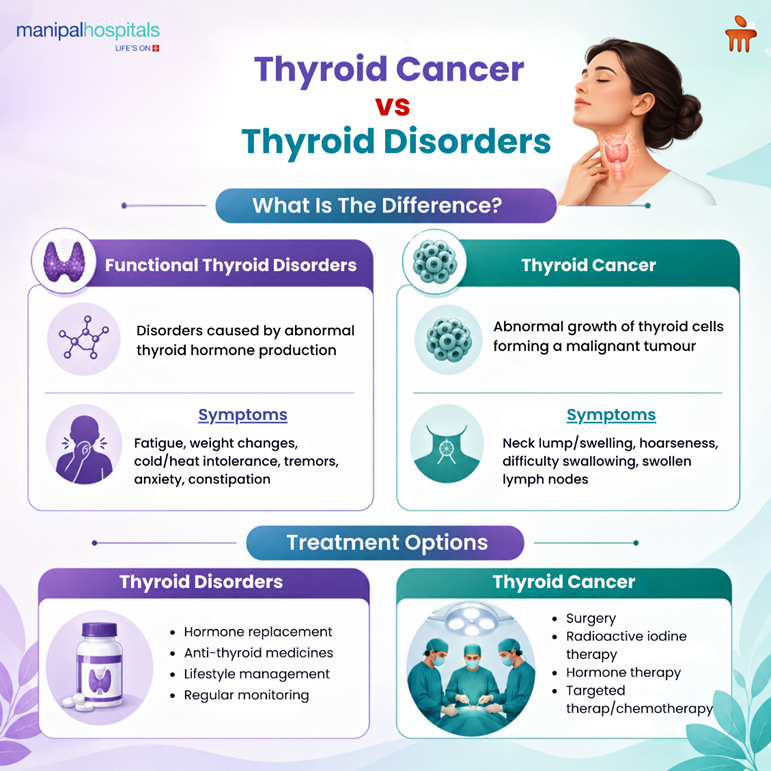
Since both thyroid disorders and thyroid cancer affect the thyroid gland, the symptoms can sometimes appear similar at first. However, these conditions are different. Thyroid disorders mainly affect the way the gland produces hormones, while thyroid cancer occurs when abnormal cells begin growing in the thyroid gland.
This blog looks at the common symptoms, causes, diagnosis, and treatment options for both conditions. It also explains when you may need medical attention and what you should know about thyroid cancer treatment in Whitefield.
Synopsis
- What is the thyroid gland?
- What Does Thyroid Cancer Mean?
- What are thyroid disorders?
- Symptoms of Thyroid Cancer
- Thyroid Disorder Symptoms
- Causes of Thyroid Cancer
- Causes of Thyroid Disorders
- Thyroid Cancer Vs. Thyroid Disorders: Key Differences
- Treatment Options for Thyroid Conditions
- When to See a Doctor?
- Conclusion
What is the thyroid gland?
The thyroid is a small, butterfly-shaped gland located at the front of the neck. Despite its size, it plays an important role in regulating many of the body’s essential functions. It produces hormones such as T3 (triiodothyronine) and T4 (thyroxine), which help control metabolism, heart rate, digestion, energy levels, and body temperature.
When the thyroid does not function properly, it can disrupt hormone balance and affect overall health. This may lead to a range of thyroid-related conditions, some benign and others malignant. Although thyroid disorders and thyroid cancer both affect the same gland, they differ significantly in their causes, symptoms, severity, diagnosis, and treatment approaches.
What Does Thyroid Cancer Mean?
Thyroid cancer is a disease caused by the abnormal development of cells in the thyroid gland. It often is asymptomatic in the early stages and may take time to develop. Thyroid cancer is often found during routine health check-ups or imaging tests for other health conditions. There are several types of thyroid cancer.
These are:
-
Papillary thyroid carcinoma
-
Follicular thyroid carcinoma
-
Medullary thyroid carcinoma
-
Anaplastic thyroid carcinoma
The most common type of thyroid cancer is papillary thyroid carcinoma, which usually has an excellent survival rate when detected early.
What are thyroid disorders?
Thyroid disorders are diseases that affect the function of the thyroid gland. They do not necessarily include cancer. Most of the ailments are caused by autoimmune diseases or hormonal imbalances. Common disorders of the thyroid include:
-
Hypothyroidism: This is when the thyroid gland does not produce enough hormone. It slows down metabolism and cellular processes.
-
Hyperthyroidism: This is when the thyroid gland is overactive and makes too much thyroid hormone.
-
Goitre: It is an enlargement of the thyroid gland. It can be associated with euthyroid (normal), hypothyroid (underactive), or hyperthyroid (overactive) states.
-
Thyroid Nodules: These are lumps or growths that develop in the thyroid gland. Most nodules are benign, but some can become cancerous.
-
Thyroiditis: Inflammation of the thyroid gland, often owing to infection or autoimmune illness (like Hashimoto's thyroiditis).
Most of these disorders with the thyroid gland can be treated with medication, changes in lifestyle, and regular monitoring.
Symptoms of Thyroid Cancer
At first, there may be no evident indicators of thyroid cancer. Some symptoms may develop as the illness progresses. Below are some common symptoms of thyroid cancer:
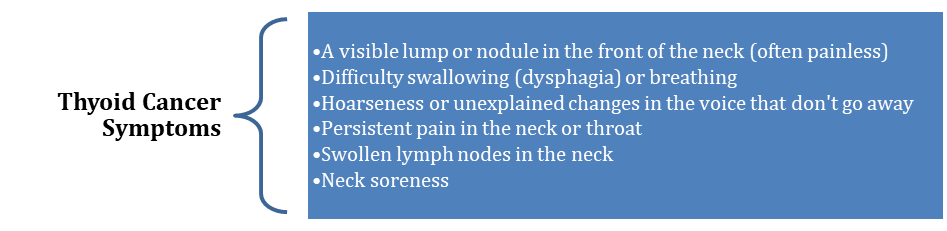
Some people won’t have pain to begin with. Routine screening is needed if there is a family history or risk factors associated with thyroid cancer.
Thyroid Disorder Symptoms
Thyroid disorders can develop when the thyroid gland becomes underactive (hypothyroidism) or overactive (hyperthyroidism), affecting many functions in the body.
|
Hypothyroidism Symptoms |
Hyperthyroidism Symptoms |
|
Tiredness and weakness |
Weight loss |
|
Weight gain |
Increased appetite |
|
Dry skin |
Rapid heartbeat |
|
Hair loss |
Anxiety and restlessness |
|
Sensitivity to cold |
Shaking or tremors |
|
Constipation |
Sensitivity to heat |
|
Slow heart rate |
Sleep problems |
Causes of Thyroid Cancer
There are certain things that can raise your risk for thyroid cancer. While the exact cause is not always understood, common causes of thyroid cancer include:
-
Genetics: If you have a family history of thyroid cancer or if you inherit certain genetic abnormalities, your risk may be higher.
-
Radiation Exposure: Previous radiation exposure, especially during childhood, may increase the risk of thyroid cancer.
-
Sex and Age: Women are more likely to get thyroid cancer than men. It is most commonly diagnosed in people between the ages of 30 and 60 years.
-
Iodine Imbalance: Too much or too little iodine in your diet might cause thyroid problems.
-
Thyroid Issues: Some thyroid problems or nodules can increase cancer risk.
-
Obesity: Research shows that obesity and metabolic issues may also increase the risk of thyroid cancer.
Causes of Thyroid Disorders
Thyroid problems are usually caused by hormonal or immune system problems. Some of the common reasons are:
-
Autoimmune illnesses, including Hashimoto’s thyroiditis and Graves’ disease
-
Iodine deficiency
-
Stress factors
-
Hormonal changes in pregnancy
-
Some medications
-
Family history or genetic predisposition
Most thyroid problems can be treated successfully if detected early.
Thyroid Cancer Vs. Thyroid Disorders: Key Differences
Although both conditions affect the thyroid gland, they are not the same. Thyroid disorders mainly affect hormone production and gland function, while thyroid cancer involves abnormal cell growth in the thyroid gland. The table below explains some of the main differences between the two conditions:
|
Feature |
Thyroid Cancer |
Thyroid Disorders |
|
Definition |
Abnormal growth of cancer cells in the thyroid gland |
Overactive or underactive thyroid hormone function |
|
Common Causes |
Genetic factors, radiation exposure, thyroid nodules |
Autoimmune conditions, hormonal imbalance, iodine deficiency |
|
Symptoms |
Neck lump, voice changes, difficulty swallowing |
Weight changes, tiredness, hair loss, fast or slow heartbeat |
|
Disease Progression |
May spread if untreated |
Usually manageable with treatment |
|
Diagnosis |
Biopsy, scans, ultrasound |
Blood tests, thyroid function tests, and an ultrasound |
|
Treatments |
Surgery, radioactive iodine therapy, hormone therapy |
Medicines, lifestyle changes, and hormone management |
Treatment Options for Thyroid Conditions
Treatment depends on whether the condition is a thyroid disorder or thyroid cancer.
Treatment for Thyroid Disorders
Most thyroid disorders can be managed with medicines, lifestyle changes, and regular monitoring.
-
Hypothyroidism is usually treated with medicines that replace thyroid hormones.
-
Hyperthyroidism treatment may include anti-thyroid medicines, radioactive iodine treatment, beta blockers, or surgery in severe cases.
-
Doctors may also recommend a balanced diet, stress management, proper iodine intake, and regular health check-ups.
With early treatment and follow-up, many people can successfully manage their thyroid disorders in the long term.
Treatment for Thyroid Cancer
Treatment for thyroid cancer depends on the type of cancer, its stage, and the patient’s overall health.
-
Surgery is commonly done to remove part or all of the thyroid gland.
-
Radioactive iodine therapy may be used after surgery to destroy remaining cancer cells.
-
Some patients may require lifelong thyroid hormone therapy after thyroid removal.
-
Radiation therapy, targeted therapy, or chemotherapy may be considered in advanced cases.
Today, many hospitals providing thyroid cancer treatment in Whitefield, Bangalore, offer advanced diagnosis, specialised care, and minimally invasive treatment options.
When to See a Doctor?
Early diagnosis enhances the success rate of management of thyroid disorders and treatment of thyroid cancer. It is necessary to get medical assistance if you experience:
-
Persistent neck swelling
-
Voice suddenly shifts
-
Unexplained changes in weight
-
Continual weariness
-
Eating difficulties
-
Fast heart rate or unusual anxiety
If you are experiencing any of these symptoms, consult an oncology specialist for expert evaluation and care in Whitefield.
Conclusion
Thyroid cancer and thyroid disorders are diseases of the thyroid gland, but they are two quite different illnesses. Thyroid disorders are typically caused by hormone imbalances and are frequently manageable with medication and lifestyle changes. Thyroid cancer is the result of the formation of aberrant cells that may necessitate surgery, radiation, or other advanced medical treatment. Early diagnosis of thyroid disease symptoms and thyroid cancer is critical for efficient therapy.
Today, with better healthcare and access to competent thyroid cancer treatment, patients can anticipate precise diagnosis, effective treatment, and enhanced quality of life.
Visit Manipal Hospital Whitefield for your thyroid-related concerns and guidance on possible treatment options.
FAQ's
Thyroid cancer is the uncontrolled proliferation of malignant cells in the thyroid gland. Thyroid problems, on the other hand, generally affect the production of hormones and the functioning of the gland.
The most common indicators of thyroid cancer are a lump in the neck, difficulty swallowing, changes in your voice, a sense of something in the throat, and swollen lymph nodes.
A few thyroid diseases that may somewhat increase the risk of thyroid cancer include thyroid nodules and chronic inflammation. Most thyroid issues, however, are benign and can be addressed with medicines, lifestyle changes, and regular monitoring by a specialist.
Blood tests, thyroid hormone tests, ultrasound scans, and physical examinations assist doctors in diagnosing thyroid problems. If cancer is suspected, more testing, such as biopsies or scans, may be recommended to confirm the diagnosis and plan appropriate therapy.
If thyroid disorder symptoms such as lethargy, unexplained weight gain or loss, swelling in the neck, difficulty swallowing, or voice changes persist for many weeks, it is crucial to seek medical help.
Share this article on: