7 Min Read
Participating in sports and other physical activities yields many health benefits. These include improvements in fitness, strength, flexibility and mental well-being. However, the risk of injuries in athletics still remains. Sports injuries can affect players of all ages and skill levels, ranging from a major ligament tear to a minor sprain. Therefore, it is very important to understand what sports injuries are, their causes and the correct strategies to prevent them in order to maintain long-term physical health and performance.
Whether you are a professional athlete, a fitness enthusiast or a leisure player, knowing how to avoid and treat common sports injuries will help minimise downtime and improve recovery.
Synopsis
What is a sports injury?
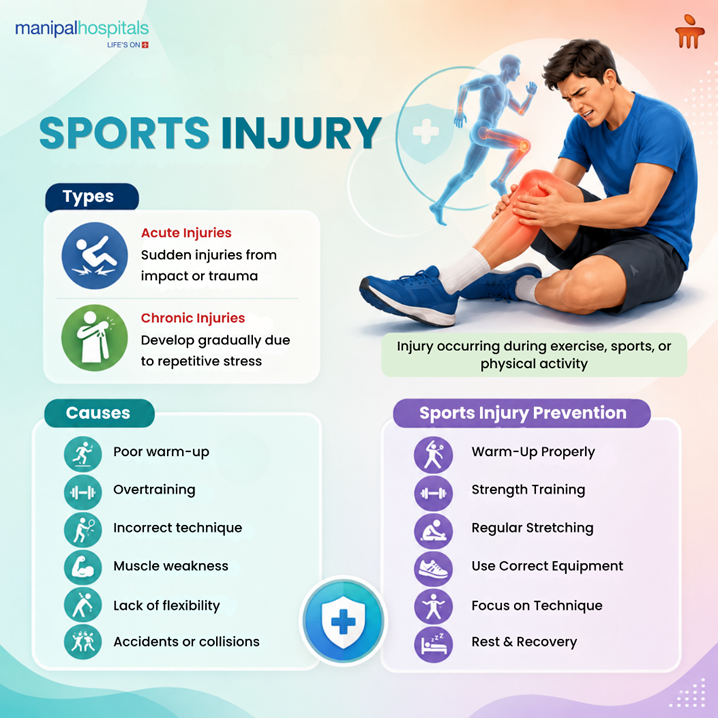
A sports injury happens when a part of the body gets hurt during exercise, training, or sports activities. It can involve the muscles, joints, ligaments, tendons, or bones. Some injuries are mild and heal with rest, while others may need proper medical care and recovery time.
-
Acute (Traumatic) Injuries: They are sudden, happen during an activity and are generally caused by some form of trauma or impact, like broken bones, sprains and dislocations.
-
Chronic Injuries: These injuries occur over time due to repetitive stress or abuse. Examples of this include tendinitis and stress fractures.
Knowing the common causes of sports injuries can help people avoid mistakes that may lead to injury during exercise or sports activities.
Sports Injuries Causes
Sports injuries do not always happen because of one major accident. In many cases, they develop due to poor training habits, muscle strain, or repeated stress on the body over time.
|
Cause |
How It Can Lead to Injury |
|
Poor warm-up |
Increases the risk of muscle strains and ligament injuries |
|
Overtraining |
Too much activity without rest can cause fatigue and overuse injuries |
|
Bad technique |
Incorrect posture or movement can put extra stress on joints and muscles |
|
Muscle weakness |
Weak muscles may not support the joints properly |
|
Lack of flexibility |
Tight muscles are more likely to strain or tear |
|
Accidents and collisions |
Sudden impact during sports can cause fractures or dislocations |
Understanding the causes of sports injuries can help reduce the risk and support safer physical activity.
Common Sports Injuries
Sports injuries can develop in numerous parts of the body, depending on the sport. Here are some of the most common sports injuries in athletes and active persons.
Sprain
A sprain is a stretching or tearing of a ligament, the tissue that connects bone to bone at a joint. The most common sites involved are the ankles, knees and wrists. You may notice swelling, tenderness, bruising and a loss of motion.
Strains
Strains are tears of the muscle or tendon. The most commonly affected areas are hamstrings, lower back and shoulders. Symptoms: muscle discomfort, weakness, oedema and muscle spasm.
Knee injury
The knee is one of the most susceptible joints in athletics. Typical injuries include ACL tears, meniscus injuries and patellar tendinitis. Symptoms include knee instability, swelling, trouble walking and pain while moving.
Tennis Elbow
Tennis elbow is an overuse condition of the tendons surrounding the elbow joint. Repetitive motions of the arm and wrist during sports or strenuous work usually cause tennis elbow. Symptoms include elbow ache, limited grip strength, and pain when lifting.
Shin Splints
Shin splints are overuse injuries that cause pain along the shin bone. This condition is common in runners, dancers and athletes. Symptoms include discomfort, soreness and slight swelling of the lower limb. These injuries can be averted by wearing appropriate footwear, gradually increasing activity duration and avoiding hard surfaces.
Fractures
Fractures refer to broken bones, induced by trauma or repetitive stress. They can be an acute fracture or a stress fracture. Symptoms often include intense pain, swelling, deformity, and an inability to move the affected area.
Dislocations
Dislocation is when bones are pushed out of their usual place in a joint. The most commonly affected joints are the shoulder, finger and knee. Some symptoms are unbearable pain, deformation of joints, inflammation and limited mobility.
Achilles Tendinopathy
This condition involves the Achilles tendon, which connects the calf muscles to the heel bone. Typical symptoms are pain in the heel, stiffness and swelling near the ankle. Some of the prevention strategies are stretching of calf muscles and not increasing exercise time suddenly.
Injuries to the Rotator Cuff
These injuries damage the muscles and tendons of the shoulder that move the arm. They generally happen with swimmers, baseball players, and weightlifters. Symptoms are shoulder discomfort, weakness, and restricted range of motion.
Effective Strategies for Sports Injury Prevention
-
Pre-activity Warm-up: A proper warm-up prepares the muscles and joints for physical activity, boosts blood flow, enhances flexibility, decreases muscle stiffness and improves performance. Light aerobic activity and dynamic stretching should be included in warm-up activities.
-
Strength Training Focus: Strong muscles support joints and lessen the stress on them when moving. Suggested regions are core muscles, leg muscles, and shoulder stabilisers.
-
Regular Stretching: Stretching before and after an exercise maintains flexibility and minimises the chance of muscular injury.
-
Get the Right Equipment: Adequate protective gear and correctly fitted sports equipment, including helmets, knee guards, and supportive footwear, lowers the chance of injuries.
-
Use the Correct Technique: Bad sports technique puts extra stress on muscles and joints. Good posture and body mechanics enhance safety and performance.
-
Take Sufficient Rest: Rest and recovery are vital for muscle regeneration and injury prevention. Proper sleep and recuperation days may increase athletic endurance and avoid overuse injuries.
-
Hydrate and Fuel: Adequate hydration and nutrition are essential for muscular health and recovery.
Sports Injuries Therapy
Even after taking preventative actions, injuries may occur. It is important to diagnose and treat an injury at the right time.
-
The PRICE Method: For minor injuries, the RICE (Protect, Rest, Ice, Compression, Elevation) method is often recommended.
-
Physiotherapy: It is suggested to regain strength, flexibility, and mobility after an accident.
-
Drugs: Painkillers and anti-inflammatory drugs can help lessen discomfort.
-
Surgical Method: Surgery may be necessary for severe injuries, such as ligament rips or fractures which affect daily activities of living and sports activities.
-
Rehabilitation: Sports-specific structured rehabilitation programmes enable players to return safely to athletic activities.
Advanced sports injury clinics offer a full range of services, including orthopaedic assessments, physiotherapy, minimally invasive techniques, and sports rehabilitation programmes.
When to See a Doctor?
You should seek medical assistance if you have:
-
Swelling (acute)
-
Severe, sharp pain
-
Joint laxity
-
Inability to bear weight on the affected limb
-
Ongoing symptoms
-
Suspected fracture or deformity
Early medical examination can prevent complications and hasten healing. If you are experiencing any of these symptoms, consult an orthopaedic specialist at Manipal Hospital Whitefield for timely diagnosis and expert sports injury treatment.
Long-Term Effects of Untreated Sports Injuries
Failing to treat sports injuries might lead to grave long-term problems like:
-
Chronic pain
-
Instability of the joint
-
Arthritis
-
Limited mobility
-
Weakness of the muscles
Early diagnosis and appropriate therapy are important to prevent irreversible injury.
Conclusion
Sports and physical activities are essential to maintain general health, fitness, and mental well-being. But there’s always the potential of sporting injuries, especially if you don’t take the necessary safeguards. Recognising what a sports injury is, understanding the causes of sports injuries, and knowing the prevalent sports injuries can help athletes avoid injuries and seek early treatment when necessary.
At Manipal Hospital Whitefield, we provide contemporary orthopaedic care and innovative sports injury treatment in Whitefield which may help athletes recover faster and get back to sports activities with confidence.
FAQ's
Sprains, strains, fractures, shin splints, tennis elbow, knee injuries and dislocations are common sports injuries. It is often caused by overtraining, bad technique, insufficient warm-up, or accidental physical contact.
Good sports injury prevention can help to reduce joint instability, muscle damage, chronic pain and long-term mobility difficulties. Warm-ups, weight training, stretching, hydrating and getting proper rest all drastically reduce the incidence of injury.
Sports injuries can be caused by bad technique, overuse, poor conditioning, inflexibility, no warm-up, dangerous playing fields, and inadequate protective equipment during training or competitive sports activities.
Seek medical treatment if you have pain, swelling, bruising, instability or problems with mobility after this injury. The early diagnosis and treatment of sports injuries contribute to the prevention of the effects and the faster and more successful recovery results.
Yes, physiotherapy is beneficial to improve the strength, flexibility, balance, and mobility of joints after sports accidents. It is important for athletes for rehabilitation, pain management, injury prevention, and safe return to sports activities.
Share this article on: