8 Min Read
A sudden burst of pain in your face can be unexpected. Some people feel it like an electric shock, while others describe it as a sharp, stabbing pain on one side. These episodes may last only a few seconds, but they can make simple things like eating or brushing your teeth difficult. This kind of pain is often linked to trigeminal neuralgia, a condition that affects the facial nerve.
The trigeminal nerve carries sensory signals from the face to the brain. When this nerve becomes irritated or compressed, it can lead to abnormal pain signals. Trigeminal neuralgia symptoms often appear suddenly and may be triggered by everyday movements. Because the pain can resemble dental or sinus issues, many people first consult a dentist or general physician, which may delay diagnosis.
Understanding trigeminal neuralgia causes and recognising early signs can help ensure timely care. With the right care, symptoms can often be managed well, and people looking for trigeminal neuralgia treatment in Varthur Road may benefit from seeing a specialist for a proper evaluation.
Synopsis
What Is Trigeminal Neuralgia?
Trigeminal neuralgia is a chronic nerve problem that affects the trigeminal nerve, also called the fifth cranial nerve. This nerve has three branches that carry feeling from the forehead, cheeks, and jaw, and the pain usually follows one or more of these areas. It most often affects one side of the face and causes sudden, very sharp bursts of pain that last from a few seconds to a couple of minutes. These attacks may come and go, with pain‑free gaps in between, or they can become more frequent over time.
The condition is more common in people who are over 50 years of age, although it can develop at any age. If it’s not treated at the onset, the pain might get worse and start making everyday tasks like eating, talking, or even brushing teeth difficult. With early diagnosis and the right treatment, many people can get their symptoms under control and return to a better quality of life.
Trigeminal Neuralgia Symptoms
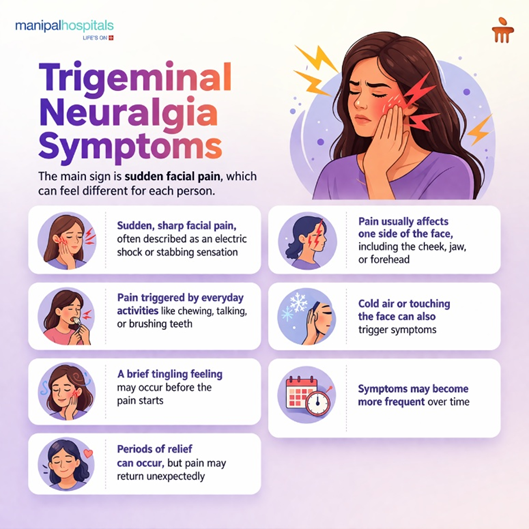
The main sign of trigeminal neuralgia symptoms is sudden facial pain, though it can feel different for each person.
Trigeminal Neuralgia Causes
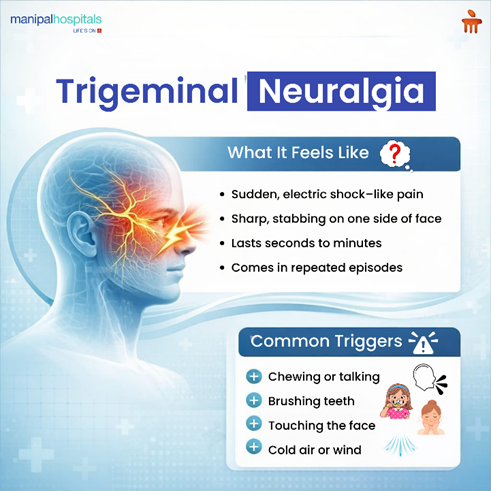
Several factors can cause trigeminal neuralgia. In many cases, a blood vessel presses against the trigeminal nerve, gradually wearing away its protective myelin covering. This irritates the nerve and triggers sudden, sharp bursts of facial pain.
Neurological conditions like multiple sclerosis can also cause trigeminal neuralgia. Tumors pressing on the nerve may also lead to symptoms. Facial trauma, previous surgical procedures, or structural abnormalities can contribute. Age-related vascular changes may increase the likelihood of nerve compression.
Certain individuals exhibit no identifiable structural abnormality. This is known as idiopathic trigeminal neuralgia. Understanding trigeminal neuralgia causes helps guide treatment decisions and prognosis.
Types of Trigeminal Neuralgia
Neurologists classify trigeminal neuralgia into distinct categories based on its underlying causes and how the symptoms appear.
|
Classical trigeminal neuralgia |
This is usually caused by a blood vessel pressing on the nerve, leading to sudden, brief pain often triggered by touch or movement. |
|
Secondary trigeminal neuralgia |
This develops because of an underlying neurological condition, such as multiple sclerosis or a tumour. |
|
Atypical trigeminal neuralgia |
The condition includes persistent aching or burning pain along with sharp episodes. |
Identifying these types assists in selecting appropriate trigeminal neuralgia treatment.
Common Triggers
Certain everyday activities may trigger attacks. These include brushing teeth, chewing food, talking, shaving, or washing the face. Even a gentle breeze or exposure to cold wind may provoke symptoms. Recognising these triggers allows individuals to adjust routines and reduce episodes. Avoiding sudden temperature changes and using soft foods during flare-ups may help minimise discomfort.
Pain Trigger Management in Trigeminal Neuralgia
|
Trigger Type |
Example Activity |
Practical Adjustment |
|
Oral Activities |
Brushing teeth, chewing |
Use a soft toothbrush and eat soft foods |
|
Facial Contact |
Washing face, shaving |
Use lukewarm water; avoid pressure |
|
Environmental Factors |
Cold wind, air conditioning |
Cover face with a scarf in cold weather |
|
Speech-related |
Talking for long periods |
Take pauses and avoid excessive strain |
|
Sudden Movements |
Quick head or facial movement |
Move slowly and gently during flare-ups |
Diagnosis of Trigeminal Neuralgia
Diagnosis is mainly based on a clinical assessment, supported by a neurological exam and MRI to rule out secondary causes. Neurologists look at how the pain feels, how long it lasts, and what triggers it, and they check sensory function during the examination. Imaging studies such as MRI are often recommended. These scans help identify trigeminal neuralgia causes such as vascular compression, tumours, or demyelinating conditions.
Accurate diagnosis is important because dental infections, sinusitis, and cluster headaches may mimic trigeminal neuralgia symptoms. Imaging helps confirm diagnosis and guide trigeminal neuralgia treatment.
Trigeminal Neuralgia Treatment Options
Treatment focuses on reducing pain and improving daily comfort.
-
Medications are the first-line trigeminal neuralgia treatment, especially anticonvulsants that help control nerve signals
-
Muscle relaxants may be added in some cases for additional relief
-
Injection therapies, such as nerve blocks, can provide short-term relief when medicines are not enough
-
Surgical trigeminal neuralgia treatment is considered if symptoms persist
-
Microvascular decompression relieves pressure on the nerve
-
Radiofrequency ablation targets pain-carrying nerve fibres
-
Gamma knife radiosurgery reduces pain signals using focused radiation
-
The choice of approach depends on the severity and underlying causes of trigeminal neuralgia causes.
When to Seek Medical Attention
It’s important not to ignore certain signs, especially when the pain starts affecting your daily routine.
-
Sudden facial pain that feels unusually intense
-
Pain triggered by everyday activities like chewing or brushing teeth
-
Episodes that become more frequent over time
-
Pain that does not improve with medication
Early consultation can help confirm the diagnosis and guide the right trigeminal neuralgia treatment.
Conclusion
Trigeminal neuralgia can make daily life very hard because even small movements of the face can cause a lot of pain. Recognising the early signs of trigeminal neuralgia can help you tell it apart from problems with your teeth or sinuses. Knowing what causes trigeminal neuralgia helps doctors make the right diagnosis and treat it quickly. Many people who get the right treatment for trigeminal neuralgia find that their pain episodes get much better. People who have constant facial pain or are looking for trigeminal neuralgia treatment on Manipal Hospitals, Varthur Road, should see a neurologist for a personalised evaluation and care.
FAQ's
Trigeminal neuralgia symptoms include sudden, electric shock–like facial pain that is often triggered by touch, chewing, or speaking. They may recur multiple times.
Trigeminal neuralgia causes include blood vessel compression, multiple sclerosis, tumours, and nerve injury. Sometimes, no cause is identified. Imaging helps determine underlying factors.
Yes, trigeminal neuralgia treatment includes medications, injections, and surgical procedures. Treatment depends on severity. Many patients achieve significant relief
Seek medical advice if facial pain is sudden, severe, or triggered by routine activities. Early evaluation improves outcomes. Timely treatment reduces complications.
Neurology specialists provide diagnosis and trigeminal neuralgia treatment in Varthur Road. Centres offer medications and procedural care.
Share this article on: