7 Min Read
It usually happens when you least expect it. You might be sitting quietly at your desk, driving, or climbing a flight of stairs when your chest suddenly feels like it is pounding or racing completely out of sync. It is a hard sensation to ignore, and it is natural to feel anxious when your heart rhythm suddenly feels unpredictable.
People ignore these signs at first, thinking it is stress, caffeine, lack of sleep, or anxiety. But sometimes, these occasional flutters or sudden bouts of unexplained exhaustion aren't just signs of a stressful week. They are often the first noticeable indicators of atrial fibrillation, commonly called AFib. If you are experiencing this erratic rhythm, learning about atrial fibrillation treatment and understanding your options is the most effective way to take control of your health and get back to your routine.
This blog will discuss atrial fibrillation (AFib) symptoms, causes, treatment, potential complications, and important pointers on how to live well with AFib.
Synopsis
What Is Atrial Fibrillation
Atrial fibrillation is a common heart rhythm disorder. The upper chambers of the heart (atria) beat irregularly and ineffectively instead of contracting in a coordinated way, so they beat out of sync with the lower chambers. This makes the heartbeat irregular and affects how efficiently blood moves through the heart.
Many patients describe the feeling as fluttering, pounding, racing, or skipping a beat. Some notice symptoms right away. Others have no idea anything is wrong until a routine check picks it up.
If the atria do not contract properly, blood can pool and form clots. A clot that travels to the brain can cause a stroke. That is why early treatment matters.
Atrial Fibrillation Causes
Pinpointing the reasons behind an irregular rhythm helps shape the treatment plan. Several factors can disturb the heart's electrical pathways.
-
High blood pressure over many years makes the heart work harder, which can stretch the upper chambers and upset the electrical signals.
-
Coronary artery disease narrows the arteries, reducing oxygen supply to the heart muscle and damaging the areas that control rhythm.
-
Faulty heart valves can cause blood to flow backwards, increasing pressure inside the atria.
-
An overactive thyroid, sleep apnea, diabetes, and obesity place ongoing stress on the heart.
-
Lifestyle factors such as heavy alcohol intake, excessive caffeine, poor sleep, and prolonged stress may sometimes trigger or worsen AFib episodes.
-
Ageing raises the risk. After 60, heart tissue changes make irregular rhythms more likely.
-
Thyroid problems that overstimulate the heart can set off an irregular beat.
Sometimes, no clear cause is found. That is still considered atrial fibrillation, and the treatment goals remain the same.
AFib Symptoms: What You May Notice
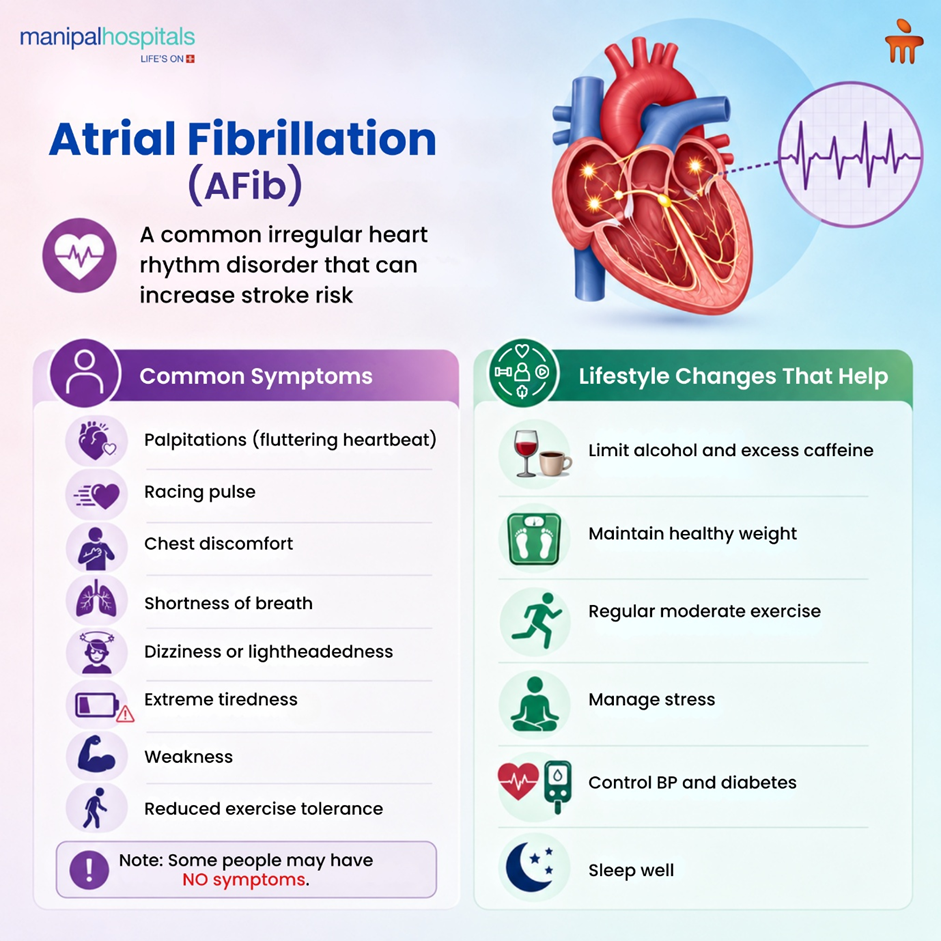
AFib symptoms vary. They can be loud and obvious or so mild they go unnoticed. Common signs include:
-
Palpitations, a fast or irregular heartbeat that you can feel
-
A racing pulse even when resting
-
Chest pain or pressure
-
Lightheadedness or dizziness
-
Shortness of breath during everyday activities
-
Extreme tiredness without heavy exertion
-
General weakness and low energy
-
Getting winded quickly during tasks that used to be easy
Some people with atrial fibrillation feel perfectly normal. The pulse may switch from fast to slow or feel irregular and forceful. This unpredictability is what sets it apart from the temporary racing that comes with stress or anxiety.
Types of Atrial Fibrillation
Doctors classify AFib by the length of time episodes last. The following classification is useful in guiding the management of atrial fibrillation:
|
Type of AFib |
What Happens |
|
Paroxysmal AFib |
Episodes come and go on their own |
|
Persistent AFib |
Irregular rhythm lasts longer than 7 days |
|
Long-Standing AFib |
Continuous AFib lasting many months |
|
Permanent AFib |
Rhythm remains irregular despite treatment |
How Doctors Diagnose Atrial Fibrillation
Diagnosis starts with a doctor listening to your heart, checking your pulse, and measuring your blood pressure. A few tests then confirm the irregular rhythm and look for underlying causes.
-
Electrocardiogram (ECG): A quick test that records the heart's electrical signals to spot irregular rhythms.
-
Holter monitor: A portable device worn for a day or two to catch episodes that come and go.
-
Echocardiogram: An ultrasound that checks heart size, structure, and valve function.
-
Blood tests: Used to analyse thyroid function, electrolytes, and kidney health to check for underlying atrial fibrillation causes.
Atrial Fibrillation Treatment: What Actually Helps
The primary goals of atrial fibrillation treatment are to restore a regular heart rhythm, manage the overall heart rate, and lower the risk of blood clots. Doctors choose the approach based on age, overall health, and how much symptoms affect daily life.
Rate control and rhythm control
Rate-control medicines keep the heart from beating too fast, even if the rhythm stays irregular. Rhythm-control medicines try to restore a steady beat. Some people feel fine with rate control alone. Others need rhythm control when AFib symptoms interfere with daily activities.
Stroke prevention
When the atria quiver, blood can pool and form clots. Blood thinners (anticoagulants) reduce the chance of a clot reaching the brain and causing a stroke. Whether a blood thinner is needed depends on age, blood pressure, diabetes, and other factors. For a few patients with very low risk, it may not be necessary.
Cardioversion
Cardioversion resets the heart rhythm using either medicines or a small electric shock given under sedation. It works well for many people, though the irregular rhythm can return later.
Catheter ablation
If medicines do not work well enough, catheter ablation may be an option. A doctor guides a thin tube from a vein to the heart, then uses heat or cold to create tiny scars that block the faulty signals causing the irregular beat. This is a targeted form of irregular heartbeat treatment.
Lifestyle changes
Simple daily habits can reduce how often AFib episodes happen and support medical therapies. Helpful adjustments include:
-
Cutting down on alcohol
-
Maintaining a healthy weight
-
Doing regular, moderate exercise
-
Keeping blood pressure and blood sugar in check
-
Getting good sleep and managing stress
Living Well with the Condition
With regular check-ups, most people keep up their normal routines, including work, travel, and physical activity. A few simple habits help manage AFib symptoms:
-
Check your pulse daily, so you know your baseline
-
Drink enough water throughout the day
-
Avoid too much caffeine or other stimulants
-
Take medicines exactly as prescribed
With proper treatment, many people notice fewer episodes, can exercise more easily, sleep better, and feel calmer. Ongoing follow-ups remain important to monitor heart rhythm and stroke risk.
When Should You See a Cardiologist
See a heart specialist if you notice:
-
Frequent palpitations
-
A racing pulse that does not settle
-
Unexplained tiredness
-
Dizziness
-
Repeated episodes of an irregular heartbeat
Early assessment helps prevent complications and improves how well treatment works.
Conclusion
Atrial fibrillation is common, but it needs attention. Catching symptoms early, knowing what causes your AFib, and starting treatment can greatly lower the risk of stroke and long-term heart damage. Manipal Hospital, Varthur Road, Bangalore, provides cardiac evaluations, heart rhythm monitoring, and irregular heartbeat treatment in Varthur Road to support long-term heart health.
FAQ's
Yes, in some people, stress can trigger the release of hormones that make the heart work harder. This can increase the heartbeat, make it harder to sleep, and sometimes cause irregular heartbeats.
Some people experience occasional AFib episodes that improve with treatment or lifestyle changes, while others may require long-term management if the condition becomes persistent.
Yes, regular moderate exercise is likely to safely assist in improving the general condition of the heart and regulating blood pressure and circulation, as well as losing weight, thus decreasing AFib risk.
Having too much caffeine can make AFib symptoms worse. However, some people are able to drink moderate amounts of caffeine without any problems.
Rhythm disorders in the heart are likely to manifest themselves at night because of changes in body posture and levels of stress hormones.
Share this article on: