7 Min Read
A hot summer afternoon may seem harmless at first. You step outside for work, a cricket match, a long drive, or even a quick walk, and within hours, exhaustion starts creeping in. The body feels drained, the head begins to pound, and suddenly, even standing feels difficult. While many people brush this off as “too much heat,” it can sometimes be something far more serious: sunstroke.
Every year, rising temperatures across India lead to a sharp increase in heat-related illnesses. The danger is that many people fail to recognise early sunstroke symptoms until the condition becomes severe. Unlike ordinary tiredness or dehydration, sunstroke can affect the brain, heart, kidneys, and muscles if you delay medical care.
In this blog, you will learn the definition of sunstroke, its causes, symptoms, and safe treatment options. Also covered are some helpful methods to prevent sunstroke.
Synopsis
- What Exactly Is Sunstroke?
- Why Sunstroke Happens More Often Than People Realise
- Early Sunstroke Symptoms Can Be Easy to Miss
- Why the Brain Gets Affected During Sunstroke
- Heat Exhaustion vs Sunstroke: Understanding the Difference
- How Doctors Diagnose Sunstroke
- Sunstroke Treatment: What Are the Initial Actions That Need to Be Taken?
- Hospital-Based Sunstroke Treatment
- Foods and Fluids That Help During Hot Weather
- Other general precautions:
- When Should You Seek Emergency Care
- Conclusion
What Exactly Is Sunstroke?
To understand the condition better, it helps to know how the body normally handles heat. Our body is constantly trying to regulate its internal temperature. This happens by sweating and increasing blood flow to the skin when there is an increase in temperature. However, when there is an extreme exposure to high temperatures, especially those under the sun, this process fails.
This dangerous overheating is called sunstroke. Heatstroke is a severe heat-related illness involving an elevation in body temperature, typically but not always greater than 40°C. Sunstroke left untreated can cause organ failure, mental confusion, loss of consciousness, or even death.
There are 2 forms of heat stroke: classic and exertional.
Classic heat stroke typically affects elderly individuals with chronic medical conditions, while exertional heat stroke affects otherwise healthy people who engage in strenuous exercise in hot or humid weather.
Why Sunstroke Happens More Often Than People Realise
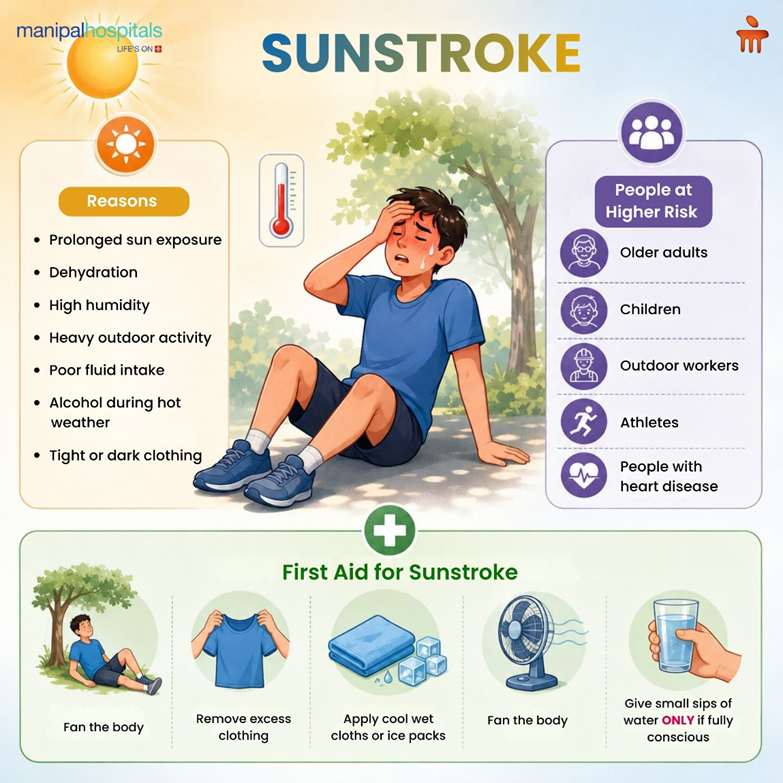
Heat-related illnesses are becoming increasingly common during long summers and heat waves. Several factors increase the risk of sunstroke:
-
Prolonged exposure to direct sunlight
-
Dehydration
-
High humidity
-
Intense physical activity outdoors
-
Poor fluid intake
-
Alcohol consumption during hot weather
-
Wearing tight or dark clothing
Older adults, children, outdoor workers, athletes, and people with heart disease are especially vulnerable.
Early Sunstroke Symptoms Can Be Easy to Miss
The body usually alerts individuals to an oncoming condition of extreme overheating. However, a majority of individuals overlook such symptoms and assume that they require a rest or some water.
Some of the most common sunstroke symptoms include:
-
Intense headache
-
Loss of balance or dizziness
-
Nausea
-
Feeling sick or vomiting
-
Lack of thinking or confusion
-
Getting muscle cramps
-
Severe tiredness
-
Fast heartbeats or palpitations
-
Dry or hot skin
-
Loss of consciousness
-
Decreased urine output
-
Seizures
As the condition worsens, people may become disoriented, stop sweating, or lose consciousness. Severe sunstroke symptoms require immediate medical attention.
Why the Brain Gets Affected During Sunstroke
The human brain is exceptionally sensitive to thermal fluctuations. When the body's core temperature climbs to dangerous levels, the blood-brain barrier can be compromised, and brain cells struggle to function.
This thermal stress manifests as acute neurological distress. It explains why individuals experiencing sunstroke display sudden confusion, stumble while walking, struggle to find words, or exhibit erratic behaviour. These are not secondary symptoms; they are direct signs that the central nervous system is under immediate threat.
Heat Exhaustion vs Sunstroke: Understanding the Difference
Many people confuse heat exhaustion with sunstroke, but they are different stages of heat illness.
Heat exhaustion does not usually need emergency medical help if you can cool down within 30 minutes. If it turns into heatstroke, it needs to be treated as an emergency. Recognising where an individual sits on this spectrum dictates how urgently medical intervention is required:
|
Condition |
What Happens |
Severity |
|
Heat Exhaustion |
Heavy sweating, weakness, very thirsty |
Moderate |
|
Sunstroke |
Dangerous rise in body temperature affecting organs |
Severe |
|
Mild Dehydration |
Thirst and tiredness after heat exposure |
Mild |
|
Severe Sunstroke |
Confusion, collapse, unconsciousness |
Emergency |
Sunstroke is considered a medical emergency and should never be managed casually at home if symptoms become severe.
How Doctors Diagnose Sunstroke
In an emergency setting, medical professionals diagnose sunstroke rapidly to avoid treatment delays. Diagnosis is primarily clinical, based on:
-
A documented history of recent heat exposure or outdoor exertion.
-
A core body temperature reading at or above 40°C (104°F).
-
The presence of altered mental states, confusion, or central nervous system changes.
To assess the systemic impact of the heat, doctors will also run targeted diagnostic tests:
-
Blood Tests: To evaluate electrolyte balances (sodium and potassium, Calcium ) and check for muscle breakdown markers (CPK)
-
Kidney & Liver Function Tests: To ensure these vital organs have not sustained thermal or metabolic damage.
-
Coagulation profile – To rule out any bleeding/thrombosis risk
-
Heart Monitoring (ECG): To evaluate any strain placed on the cardiovascular system by the rapid heart rate.
Sunstroke Treatment: What Are the Initial Actions That Need to Be Taken?
When dealing with a suspected case of sunstroke, every moment is important. Your immediate goal is to lower the person's body temperature while waiting for professional medical backup.
Critical First-Aid Protocols:
-
Move to Shade: Immediately relocate the person to an air-conditioned room or a deeply shaded, well-ventilated area.
-
Strip Excess Layers: Remove tight, heavy, or unnecessary clothing to maximise skin exposure to the air.
-
Initiate Rapid External Cooling: Apply cool, damp cloths or wrapped ice packs directly to the neck, armpits, and groin, areas where large blood vessels run close to the surface. Sponging or misting the skin with cool water while fanning it heavily accelerates evaporative cooling.
-
Hydrate Wisely: If, and only if, the person is fully conscious, alert, and able to swallow normally, offer small, frequent sips of cool water or an ORS solution. Never force fluids into someone who is disoriented or semi-conscious.
Hospital-Based Sunstroke Treatment
Some patients need hospital care if symptoms become severe. Doctors may provide:
-
Oxygen support if needed
-
Intravenous fluids
-
Electrolyte correction
-
Cooling techniques such as Ice bath immersion/ice pack application
-
Monitoring for kidney or heart complications
-
Other medications to decrease the body temperature
Modern sunstroke treatment focuses on rapid cooling while protecting vital organs.
Foods and Fluids That Help During Hot Weather
When temperatures soar, plain water should be supplemented with fluids that actively restock lost minerals and electrolytes. Excellent options include:
-
Tender Coconut Water: Packed with natural potassium and highly bioavailable electrolytes.
-
Buttermilk (Chaas): A traditional, cooling digestive aid that replenishes sodium levels naturally.
-
Fresh Lemon Water (Nimbu Pani): Salted versions work wonderfully to combat sodium depletion from heavy sweating.
-
Hydrating Fruits: Incorporating watermelon, cucumbers, oranges, and pineapples into your diet provides a steady release of water and essential vitamins.
-
ORS (Oral Rehydration Solutions): Ideal for those engaging in prolonged outdoor exertion.
Other general precautions:
-
Prevention is always better than cure.
-
Wear appropriate clothing during hot weather
-
Do not leave children unattended in parked vehicles.
-
Avoid strenuous physical activities during hot and humid conditions.
-
Seek shade immediately if signs or symptoms of heat stroke develop.
-
Once heat stroke is recognised, initiate rapid cooling measures without delay.
-
After treatment for exertional heat stroke, the patient must abstain from exercise for least 7 days
-
-
Arrange a follow-up evaluation one week after presentation to assess for possible end-organ damage.
When Should You Seek Emergency Care
Certain warning signs should never be ignored. Seek urgent medical help if:
-
Confusion develops
-
Fainting occurs
-
Seizures happen
-
Vomiting becomes persistent
-
Body temperature remains very high
-
Breathing becomes difficult
Severe sunstroke symptoms require emergency treatment immediately in Varthur Road
Conclusion
Heat-related ailments need never be trivialised. Knowing what sunstroke is, identifying early sunstroke signs, and getting prompt sunstroke treatment can go a long way towards avoiding any further complications. If you or a loved one encounters a severe heat crisis in the locality, Manipal Hospital Varthur Road offers comprehensive, round-the-clock emergency medical care, advanced dehydration protocols, and targeted organ-monitoring services to ensure a safe, supported path to recovery.
FAQ's
Heat exhaustion is less severe and involves heavy sweating, weakness, and nausea. Sunstroke is an emergency where body temperature rises above 40°C and the skin often becomes hot and dry. Confusion and loss of consciousness are signs that it has advanced.
Yes, if treatment is delayed. It can harm the brain, kidneys, heart, and muscles. Some people recover fully, while others may have ongoing sensitivity to heat or organ issues.
Move them to shade or a cool area, remove extra clothing, place cool wet cloths on the neck and armpits, fan them, and if they are conscious, give small sips of cool water. Stay with them and keep an eye on breathing and alertness.
Older adults, infants, people with chronic conditions, outdoor workers, and athletes exercising in the heat are at higher risk. Certain medications and alcohol use also increase vulnerability.
Yes. It can happen indoors in very hot, poorly ventilated spaces. Enclosed areas like parked cars, stuffy rooms, or hot indoor work areas can all cause overheating, especially when fluids are low.
Share this article on: