8 Min Read
A tingling sensation in the little finger and ring finger is often ignored at first. Some people notice it only while holding a phone, driving, or sleeping with the elbow bent. In many cases, the feeling comes and goes in the beginning, which is why people do not immediately seek treatment.
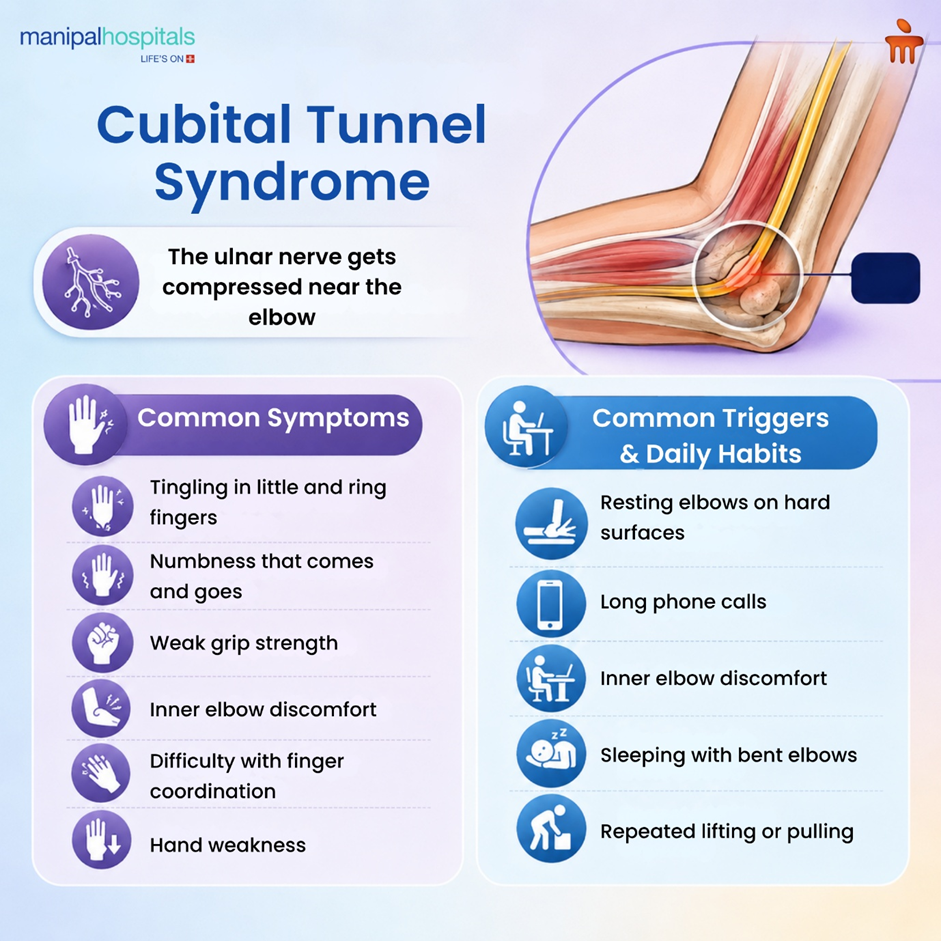
Cubital tunnel syndrome develops when the ulnar nerve gets compressed near the elbow. Over time, pressure on the nerve can begin to affect hand strength, finger movement, and everyday tasks. Mild symptoms often settle with early attention and adjustments to daily habits, but ongoing nerve compression should not be ignored. Recognising these signs early allows for simpler adjustments to daily habits, which can often prevent the condition from progressing to permanent nerve damage.
This blog explores cubital tunnel syndrome, its symptoms, causes, treatment options, recovery, and when it is worth seeking medical advice.
Synopsis
- Understanding Cubital Tunnel Syndrome
- Why Symptoms Often Become Worse at Night
- Understanding Cubital Tunnel Syndrome Symptoms
- Daily Activities That Can Trigger Symptoms
- Common Causes of Cubital Tunnel Syndrome
- How Do Doctors Diagnose Cubital Tunnel Syndrome?
- Cubital Tunnel Syndrome Treatment
- Cubital Tunnel Syndrome Exercises
- Can Cubital Tunnel Syndrome Heal on Its Own?
- Recovery and Healing Time
- Conclusion
Understanding Cubital Tunnel Syndrome
To understand cubital tunnel syndrome, it helps to know how the ulnar nerve functions inside the arm. The ulnar nerve travels from the neck down to the hand and passes through a narrow tunnel behind the elbow called the cubital tunnel. Because the space is limited, the nerve can easily become irritated when extra pressure builds around the elbow area.
Most people have felt a sudden tingling sensation after hitting the “funny bone". That feeling happens because the ulnar nerve becomes irritated for a short time. In cubital tunnel syndrome, however, the irritation keeps returning because the nerve remains under pressure. The condition usually develops slowly rather than suddenly. Without treatment, long-term nerve compression may begin affecting muscle control in the hand. This is why recognising symptoms early is important.
Why Symptoms Often Become Worse at Night
Many people notice symptoms of cubital tunnel syndrome becoming worse during the night or early morning because the elbows often remain bent during sleep for several hours. Bending the elbow raises the pressure inside the cubital tunnel and puts the ulnar nerve under greater stretch. Because of this, tingling, numbness, and discomfort tend to become more noticeable during sleep.
Some people wake up because of hand discomfort and feel temporary relief only after straightening the arm. In people with ongoing nerve irritation, disturbed sleep can gradually become more frequent. Doctors sometimes recommend elbow splints at night because they help keep the arm in a more relaxed position and reduce unnecessary strain on the nerve.
Understanding Cubital Tunnel Syndrome Symptoms
Cubital tunnel syndrome symptoms start mild but get worse over time if the nerve stays irritated.
-
Tingling in the fingers: A pins-and-needles sensation commonly develops in the little finger and ring finger. Some people notice it more while using a phone or resting their elbow on a table.
-
Numbness that comes and goes: In the early stage, numbness may appear occasionally and improve after straightening the arm. Over time, the sensation may last longer.
-
Weak grip strength: Ongoing nerve compression may weaken hand muscles, making gripping, opening jars, or carrying objects more difficult.
-
Pain near the elbow: Mild aching or discomfort may develop along the inner side of the elbow, especially after repetitive movement.
-
Difficulty with finger movement: In more advanced cases, finger coordination may become affected, making small hand movements harder.
Daily Activities That Can Trigger Symptoms
Certain everyday activities and habits may unknowingly place added pressure on the ulnar nerve, especially around the elbow. The table below highlights common daily activities that may contribute to irritation and how they can affect the elbow and nerve:
|
Activity or Habit |
Effect on the Elbow and Nerve |
|
Resting the elbow on hard surfaces |
It can irritate the nerve behind the elbow |
|
Sleeping with bent elbows |
Keeps pressure on the nerve for several hours |
|
Long phone calls |
The elbow remains bent continuously |
|
Desk-based work |
Poor arm posture may strain the nerve |
|
Repetitive lifting or pulling |
Repeated movement may increase irritation |
Common Causes of Cubital Tunnel Syndrome
Cubital tunnel syndrome typically arises from the ulnar nerve getting irritated repeatedly over time near the elbow. For most folks, it builds up through daily habits rather than a one-off injury.
-
Keeping the elbow bent for ages is a major trigger. Think of holding the phone to your ear, tapping away at a desk, reading in bed, or taking long drives.
-
Many lean on their elbows while sitting or working. That constant rub on hard surfaces grinds away at the nerve behind the elbow.
-
Repetitive arm movements add to it, too. Frequent lifting, pulling, or steady arm use strains the tissues around the joint.
-
Past elbow injuries can sometimes trigger problems. Leftover swelling, joint shifts, or old fractures squeeze the nerve's space.
-
How you sleep matters as well. Arms folded or elbows tucked tight overnight often wake you with tingling or numbness.
How Do Doctors Diagnose Cubital Tunnel Syndrome?
Doctors figure out cubital tunnel syndrome by asking about symptoms, checking you over, and running nerve tests:
-
They test grip strength and finger movement, search for numb spots, and may gently tap near the nerve at the elbow to see whether tingling symptoms are triggered, which may suggest ulnar nerve irritation.
-
They'll ask about your work, repeated activities, how you sleep, and when symptoms started.
-
A nerve conduction study checks signal speed along the ulnar nerve. Electromyography (EMG) helps assess whether nerve compression has started affecting muscle function.
-
X-rays spot bone spurs or arthritis around the elbow that might squeeze the nerve.
Cubital Tunnel Syndrome Treatment
Treatment for cubital tunnel syndrome depends on how severe the symptoms are and how much the nerve has been affected.
-
Activity modification: Avoiding repeated elbow bending and reducing pressure on the elbow may help settle mild symptoms.
-
Elbow splints or braces: Wearing elbow support during sleep can help keep the arm in a better position and reduce nighttime irritation.
-
Pain relief medicines: Doctors may prescribe medicines to reduce discomfort and inflammation around the nerve.
-
Physiotherapy: Stretching and strengthening exercises may help improve arm movement and reduce strain around the elbow.
-
Lifestyle and posture correction: Improving work posture and avoiding habits that increase nerve pressure can support recovery.
-
Surgery: If numbness, weakness, or hand function continues worsening despite treatment, surgery may be advised to relieve pressure on the nerve.
Cubital Tunnel Syndrome Exercises
Certain cubital tunnel syndrome exercises may help improve flexibility and reduce stiffness around the arm and elbow.
-
Nerve gliding exercises: These exercises help the ulnar nerve move more freely and may reduce irritation.
-
Wrist stretching exercises: Gentle stretches may help reduce tightness in the forearm and wrist.
-
Forearm strengthening exercises: Improving muscle support around the arm may reduce strain during movement.
-
Posture correction exercises: Shoulder and upper arm positioning can affect nerve pressure, so posture training may help.
Can Cubital Tunnel Syndrome Heal on Its Own?
Mild cubital tunnel syndrome can settle on its own if you stop putting repeated strain on the elbow. Just avoid leaning on it or keeping it bent too long-that helps some people get by. But don't ignore it if numbness, tingling, or weakness comes back again and again. Your hand ends up feeling weaker when you do everyday stuff like holding things. If symptoms drag on for weeks, get proper treatment to fix it right.
Recovery and Healing Time
Recovery time really depends on how severe the nerve compression is and how soon you get treatment started. With mild symptoms, most people see improvement in just a few weeks after cutting back on elbow pressure, such as avoiding leaning on it or keeping it bent too long. Moderate cases take more time, though, and usually mean heading to physio for sessions, using night splints, or doing targeted exercises to help things along.
After surgery, it's different for everyone. Some bounce back in weeks and feel strong again, but others need a few months for the nerve to heal up properly and get their hand strength back to normal.
Conclusion
Cubital tunnel syndrome often starts small – a tingle in your ring finger while typing at work. If elbow nerve pressure keeps up, numbness spreads, and hand weakness sets in over time. Catch symptoms early: fix posture, try exercises, and get treatment to avoid worse problems. Mild cases may improve with basic care, but see the doctor if numbness, pain, or grip weakness continues. For cubital tunnel syndrome treatment in Varthur Road, orthopaedic specialists at Manipal Hospitals offer evaluation, treatment plans, rehab support, and long-term follow-up care.
FAQ's
Yes. Typing, writing, phone use, carrying bags, or bent elbows all day make it uncomfortable and harder to get work done properly. People often struggle with routine tasks.
No. Most people feel tingling, numb fingers, or weakness more than actual pain right at the elbow area. The hand symptoms stand out more usually.
Yes. Less pressure and no repeated strain let mild symptoms ease up, especially if you catch it early on and stick with the changes.
Sleeping with bent elbows presses the nerve for hours straight and ramps up the tingling or numbness big time every single night.
Yes. Work strain, bad posture, daily habits, or too much elbow bending can bring it back over time if you don't watch those things carefully.
Share this article on: