9 Min Read
For many people, weight problems build slowly over time. At first, it may just feel like getting tired more easily or struggling with stairs and long walks. Later, sleep may get disturbed, movement may become uncomfortable, and health problems like diabetes or joint pain may begin to affect routine life. Most people try different methods before thinking about surgery. Some manage weight with exercise and food changes, while others continue struggling despite repeated efforts over several years. This stage is where bariatric surgery may be discussed. Before deciding, people usually want clear information about how the surgery works, possible risks, recovery, eating changes, and the kind of results they may notice later.
This blog explains bariatric surgery meaning, its benefits, side effects, risks, and life before and after surgery in a simple way.
Synopsis
- What Is Bariatric Surgery?
- Types of Bariatric Surgery
- Who May Need Bariatric Surgery?
- Benefits of Bariatric Surgery
- Bariatric Surgery Before and After
- Bariatric Surgery Side Effects
- Bariatric Surgery Risks
- Recovery After Bariatric Surgery
- Life After Bariatric Surgery
- When Should You Speak to a Doctor?
- Conclusion
What Is Bariatric Surgery?
The term "bariatric surgery" meaning refers to surgeries done to help reduce weight when obesity seriously affects health.
These surgeries mainly reduce the stomach size. Some surgeries also change how food passes through the body. This helps people feel full after eating less food.
Surgery is usually not the first option for weight management. In many cases, people first try:
-
Diet changes
-
Exercise programmes
-
Medicines for weight management
-
Lifestyle modifications
Doctors may suggest surgery when diet, exercise, and medications fail to control weight and related health issues, which keep disrupting everyday life.
Before surgery, doctors usually review:
-
Current health problems
-
Eating habits
-
Previous weight-loss efforts
-
Medicines being taken
-
Readiness for long-term food changes
This information helps doctors understand whether surgery may be suitable and safe for the patient.
Types of Bariatric Surgery
Different bariatric procedures are available, and the choice depends on the person’s condition and health needs.
Gastric sleeve surgery
Around 70 to 80% of the stomach is removed, leaving a smaller sleeve-shaped stomach. The remaining stomach becomes much smaller, so people generally feel full after eating less food. Because meal portions become smaller naturally after surgery, many patients gradually lose weight over time.
Gastric bypass surgery
This surgery changes the route food takes through the digestive system. It reduces food intake and also changes how food moves through part of the digestive tract, reducing calorie and nutrient absorption. Doctors may advise this surgery in people dealing with obesity-related conditions such as diabetes or severe obesity.
Adjustable gastric band
A band is placed around the upper part of the stomach to reduce how much food can be eaten comfortably. This procedure is less common now compared to other bariatric surgeries.
Mini gastric bypass
This procedure combines stomach reduction with digestive changes and may be advised in selected patients depending on their health condition and obesity-related problems.
Who May Need Bariatric Surgery?
Bariatric surgery is usually considered when weight starts affecting health, movement, sleep, or daily activities. Some people struggle with:
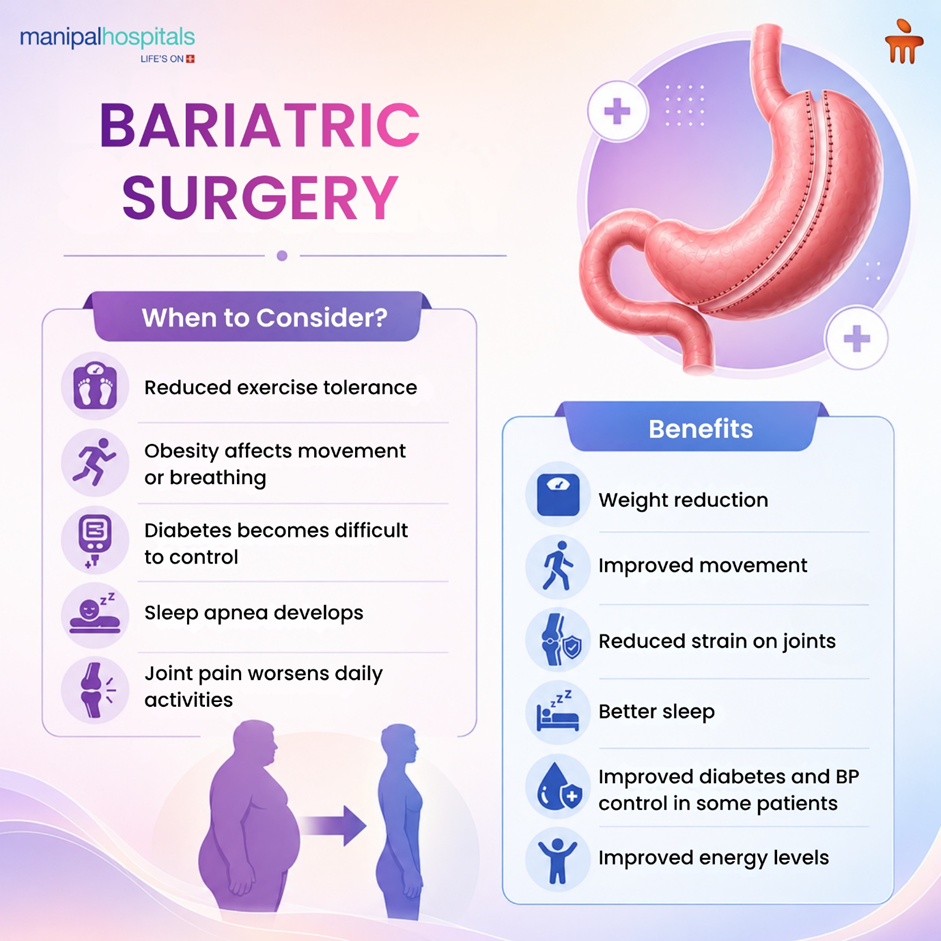
-
Obesity-related diabetes or poorly controlled blood sugar
-
Disturbed sleep or sleep apnoea
-
Knee and back strain
-
Breathing discomfort during activity
-
Difficulty with walking or movement
In some cases, everyday things like climbing stairs, standing for any length of time, or travelling can become genuinely difficult. Before surgery is considered, doctors look at the overall health picture - not just body weight.
Benefits of Bariatric Surgery
Bariatric surgery does more than reduce weight. In the months following recovery, many patients find they are moving more freely, sleeping better, and getting through the day with considerably more energy.
Some common benefits include:
-
Weight reduction: Weight loss usually happens gradually over several months rather than immediately after surgery.
-
Easier movement: Walking, climbing stairs, and performing daily activities may start feeling less tiring after weight reduction.
-
Less pressure on joints: Lower body weight may reduce strain on the knees, hips, and back during movement.
-
Better sleep: Some people notice improvement in sleep quality and breathing discomfort during the night.
-
Improvement in weight-related health problems: Conditions like diabetes or high blood pressure may improve in some patients after surgery.
Results differ from person to person, and healthy food habits still remain important after treatment.
Bariatric Surgery Before and After
Bariatric surgery before and after often involves more than weight reduction alone. Many people notice changes in mobility, sleep, eating habits, and overall daily comfort after recovery. Before surgery, doctors usually advise:
-
Blood tests
-
Scans
-
Nutrition counselling
-
Diabetes and blood pressure checks
-
Discussions about food changes after surgery
Patients are also informed that eating habits usually need long-term adjustment after treatment.
After surgery, meals are introduced slowly. Most people begin with liquids before moving to soft foods and then to smaller, regular meals.
Many patients need time adjusting to slower eating habits and smaller portions. Some people later notice:
-
Easier walking
-
Reduced tiredness
-
Better sleep
-
Improvement in blood sugar levels
-
Less strain during daily activities
Weight reduction usually happens gradually over several months.
Bariatric Surgery Side Effects
Like any major surgery, bariatric surgery side effects are also possible. Some side effects settle as the body adjusts to smaller meals and eating changes:
-
Nausea or vomiting: This may happen if food is eaten too quickly during the recovery period.
-
Low energy levels: Feeling tired for some time is common because meal portions become much smaller after surgery.
-
Digestive discomfort: Certain foods may feel uncomfortable in the beginning, and some people notice bloating or constipation.
-
Low vitamin levels: Smaller food intake may affect vitamin and mineral levels, so supplements are often advised after surgery.
-
Hair thinning: Temporary hair fall may happen during rapid weight reduction in some people.
Doctors usually monitor nutrition and recovery during follow-up visits after surgery.
Bariatric Surgery Risks
Like other surgeries, bariatric surgery risks are also possible. Possible risks may include:
-
Bleeding or infection: These can happen after surgery and may need additional treatment or monitoring.
-
Leakage from the operated area: In rare cases, leakage may develop around the surgical site.
Doctors usually perform detailed health checks before surgery to reduce complications as much as possible.
Recovery After Bariatric Surgery
Recovery looks different for everyone after bariatric surgery. Some people get back to light activities in a few weeks; others take a bit longer. Food intake progresses in stages from liquids to soft foods and eventually to smaller, regular meals.
During recovery, doctors often advise:
-
Eating slowly
-
Chewing food properly
-
Drinking enough fluids
-
Walking regularly
-
Avoiding overeating
-
Attending follow-up visits
Heavy exercise is usually avoided during the early recovery period.
Life After Bariatric Surgery
Bariatric surgery changes how you eat and live every day for good. Most people need weeks or even months to settle into smaller meals and different food habits after they have recovered. Patients are usually advised to:
-
Maintain healthier food habits
-
Avoid overeating
-
Stay physically active
-
Continue supplements
-
Attend regular follow-up appointments
Long-term results often depend on how consistently patients maintain these changes after surgery.
When Should You Speak to a Doctor?
Speaking to a doctor may help when weight starts affecting sleep, movement, breathing, or daily activities.
Medical advice may also be needed if:
-
Diabetes becomes difficult to manage
-
Walking becomes uncomfortable
-
Knee or back pain increases because of weight
-
Repeated weight-loss efforts stop helping enough
Early guidance may help people understand suitable treatment options before health problems become harder to manage.
Conclusion
Bariatric surgery is mainly considered when weight starts affecting health and daily life. The surgery may help with weight reduction and may also improve some health problems linked to obesity. At the same time, recovery also brings long-term food changes, regular follow-up, and lifestyle adjustments. Understanding the benefits, side effects, risks, and recovery process helps people make informed decisions before treatment.
People looking for bariatric surgery care in Varthur Road should speak to a qualified specialist at Manipal Hospitals for proper evaluation, treatment planning, and long-term recovery guidance based on their overall health condition.
FAQ's
Most people stay for 1-3 days after bariatric surgery. Doctors check how recovery goes, manage pain, see if eating starts okay, ensure you can walk about, and confirm health looks steady before you head home.
Follow-up appointments matter after bariatric surgery. The doctor uses these visits to check how you are healing, where your nutrition levels sit, how your weight is changing, and whether anything needs attention before it develops into a problem.
Yes, but meal portions usually become much smaller after surgery. Food is introduced gradually during recovery so the stomach can adjust properly to eating changes.
Supplements are often advised because smaller food intake after surgery may reduce the vitamin and mineral levels needed to support recovery, nutrition, and overall health properly.
In some people, weight reduction after surgery may help improve diabetes, sleep problems, breathing discomfort, joint strain, and difficulty with movement during daily activities.
Share this article on: