


Appointment Helpline


Oversleeping, medically known as hypersomnia, refers to consistently sleeping for longer periods than what is considered healthy or restorative for the body. While occasional long sleep may occur after physical exertion, illness, or prior sleep deprivation, persistent oversleeping can disrupt normal daily routines and negatively affect health. Oversleeping symptoms may include extended sleep duration, difficulty waking up, excessive grogginess, and a feeling of being unrefreshed even after many hours of rest.
Unlike short-term recovery sleep, chronic oversleeping is often associated with underlying conditions rather than simple fatigue. It may be linked to sleep disorders, mental health concerns, metabolic or hormonal imbalances, neurological conditions, or lifestyle-related factors. Although insomnia is more frequently associated with depression, excessive sleep can also occur alongside emotional health challenges, anxiety, or prolonged stress. Over time, oversleeping may reduce energy levels, impair concentration, affect mood stability, and lower overall productivity, gradually impacting quality of life.
At Manipal Hospitals, oversleeping is assessed as a clinical symptom rather than a behavioural habit. Sleep specialists and physicians conduct structured evaluations of sleep patterns, medical history, mental health, and daily routines to identify contributing factors. Early diagnosis and targeted management help restore healthy sleep rhythms, improve daytime alertness, and prevent long-term complications associated with excessive sleep.

Consult a doctor online in just 10 minutes – anytime, anywhere!
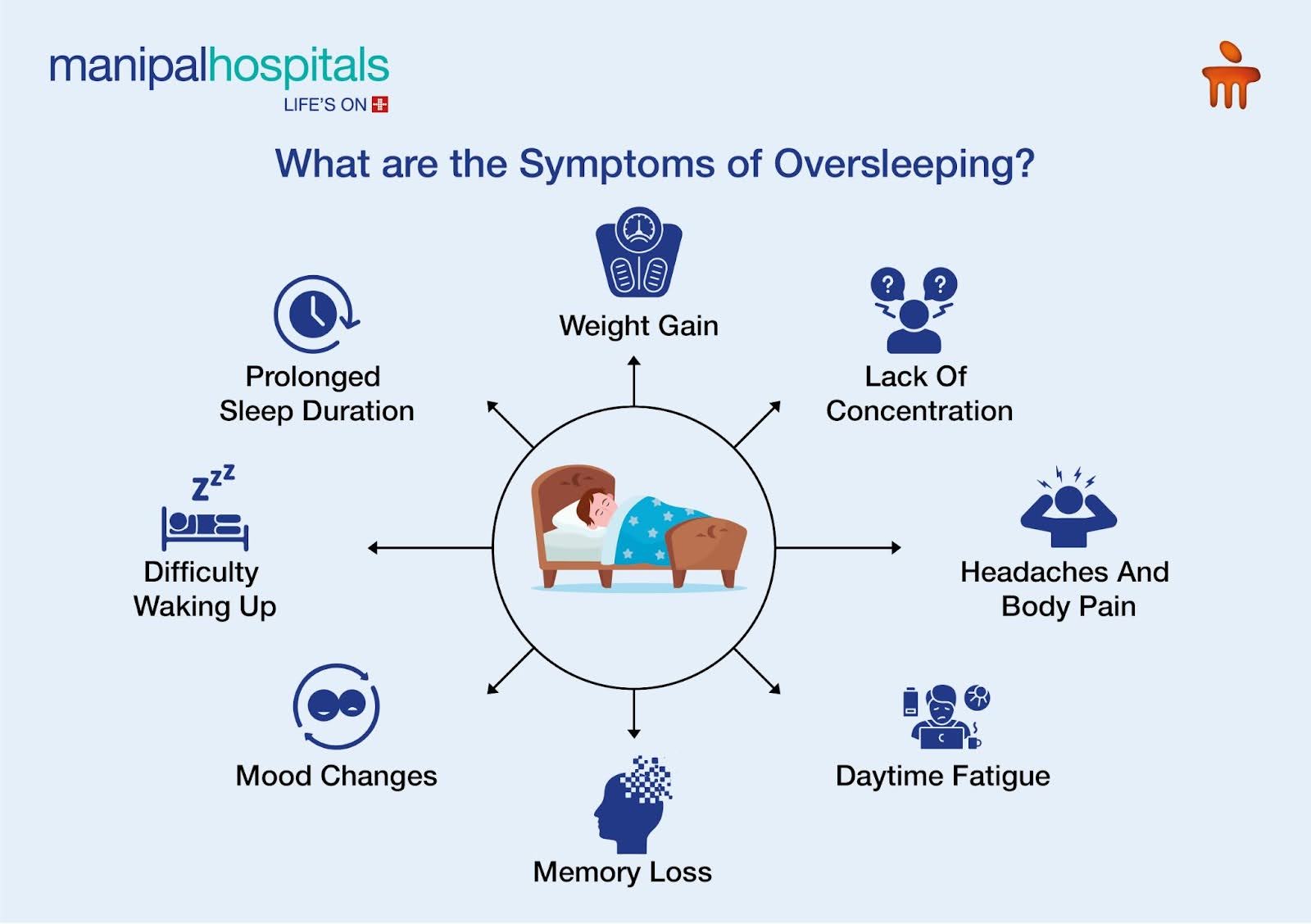
Symptoms of oversleeping can vary based on the underlying cause, age, and overall health status of an individual. Common oversleeping symptoms include:
Prolonged sleep duration that regularly exceeds the recommended number of hours
Difficulty waking up despite long and uninterrupted sleep periods
Persistent daytime fatigue and sleepiness, even after adequate rest
Low energy levels that reduce motivation and physical performance
Reduced concentration, slower thinking, and decreased mental alertness
Frequent headaches or body aches associated with excessive sleep
Mood changes such as irritability, sadness, low motivation, or emotional dullness
Memory difficulties and slower cognitive processing are affecting work or learning
Weight gain is related to reduced activity levels and disrupted metabolism
Oversleeping can sometimes be associated with depression, but excessive sleep alone does not directly cause depression. If these symptoms persist, worsen, or affect daily life, medical evaluation is recommended to identify underlying causes and guide appropriate management.
Understanding oversleeping symptoms and causes helps identify factors that disrupt normal sleep–wake cycles and impair sleep quality, leading to excessive sleep duration. Common causes include:
Sleep disorders, such as hypersomnia, sleep apnoea, or narcolepsy, which interfere with restorative sleep
Mental health conditions, including depression, anxiety, and chronic stress, that alter sleep regulation
Side effects of certain medications, such as sedatives or antidepressants, which increase drowsiness
Chronic fatigue syndrome or prolonged illness, leading to persistent tiredness
Nutritional deficiencies, particularly vitamin B12 or iron deficiency, can reduce energy levels
Irregular sleep schedules and unhealthy lifestyle habits that disrupt circadian rhythms
Alcohol or substance use, which interferes with sleep architecture and overall sleep quality
Medical conditions, such as thyroid disorders, diabetes, or neurological conditions, can affect alertness
Diet quality, regular physical activity, and structured daily routines play an important role in maintaining healthy sleep patterns and preventing excessive sleepiness.
Diagnosis of oversleeping focuses on understanding sleep duration, sleep quality, and the extent to which excessive sleep affects daily functioning and energy levels. Doctors follow a systematic evaluation to identify whether oversleeping is normal or a symptom of an underlying medical or sleep-related condition. The diagnostic approach may include:
A detailed medical and sleep history assessment, including usual bedtime, wake time, total sleep duration, and daytime sleepiness
Review of mental health status to assess the presence of depression, anxiety, stress, or other psychological factors influencing sleep
Evaluation of lifestyle habits such as physical activity, diet, caffeine or alcohol intake, and work schedules that may disrupt sleep patterns
Sleep diary tracking over several weeks to monitor sleep duration, quality, awakenings, and daytime fatigue
Polysomnography, also known as a sleep study, is used to analyse sleep stages and detect disorders such as sleep apnoea, narcolepsy, or periodic limb movements
Blood tests to identify hormonal imbalances, thyroid dysfunction, vitamin deficiencies, or metabolic conditions contributing to fatigue
It is important to recognise that some individuals naturally require longer sleep durations and may feel well-rested without any underlying disorder. Accurate diagnosis helps distinguish normal sleep variation from clinical conditions requiring targeted treatment and ongoing management.
Treatment for oversleeping is tailored based on symptom severity and its impact on daily functioning. Management focuses on restoring healthy sleep patterns while addressing medical, psychological, and lifestyle-related contributing factors. Common treatment approaches include:
Treating underlying sleep disorders or medical conditions such as sleep apnoea, thyroid imbalance, or nutritional deficiencies
Improving sleep hygiene through consistent bedtime routines and an appropriate sleep environment
Cognitive behavioural therapy for sleep-related issues to address unhealthy sleep behaviours and thought patterns
Use of medication when prescribed by healthcare professionals, based on individual clinical needs
Lifestyle modifications, including regular physical activity and a balanced, nutrient-rich diet
Stress management techniques and mental health support to address anxiety, depression, or chronic stress
Preventive measures play an important role in long-term management. These include maintaining a consistent sleep schedule, limiting excessive daytime naps, reducing caffeine or stimulant use before bedtime, and attending regular health check-ups.
For mild or occasional oversleeping, simple home-care measures may help regulate sleep patterns, improve alertness, and restore healthy energy levels. These approaches focus on improving sleep quality rather than increasing sleep duration. Helpful home remedies include:
Maintaining a consistent sleep and wake-up time, even on weekends, to regulate the body’s internal clock
Getting morning sunlight exposure to support natural circadian rhythm alignment
Creating a comfortable sleep environment with minimal noise, balanced room temperature, and low light
Limiting daytime naps, especially long or late-afternoon naps that interfere with nighttime sleep
Reducing caffeine, alcohol, and heavy meals close to bedtime, as these affect sleep quality
Staying physically active with regular exercise to improve sleep efficiency and daytime alertness
Practising relaxation techniques such as deep breathing, meditation, or light stretching to manage stress
While these measures may help manage oversleeping symptoms, persistent or worsening oversleeping should be medically evaluated to identify and treat underlying causes.
The symptoms of oversleeping include sleeping for unusually long hours, difficulty waking up, persistent daytime fatigue, low energy, headaches, poor concentration, and mood changes. Many people feel unrefreshed despite extended sleep, which can affect productivity, motivation, and overall daily functioning.
The pattern of oversleeping symptoms and causes varies between individuals. Oversleeping may result from sleep disorders, depression, chronic stress, medication side effects, poor sleep quality, nutritional deficiencies, or underlying medical conditions. Irregular sleep routines, alcohol use, and lack of physical activity can also disrupt normal sleep–wake cycles.
Yes. Chronic oversleeping may be associated with weight gain, reduced metabolism, headaches, body aches, and increased risk of certain medical conditions. It can also lower physical activity levels, contributing to reduced energy, stiffness, and long-term health imbalance.
Some people naturally need more sleep and feel refreshed after longer rest. Oversleeping becomes a concern when excessive sleep is unrefreshing, persistent, and interferes with daily life, work performance, mood, or concentration, suggesting a health issue.
Oversleeping symptoms can occur alongside depression, but this does not automatically mean a person is depressed. Some individuals with depression experience excessive sleep, while others have insomnia. Persistent oversleeping with low mood, loss of interest, or fatigue should be medically evaluated.
Yes, conditions like depression and anxiety can disrupt sleep patterns and lead to excessive sleeping.



Visit the Global site for International patient services


