


Appointment Helpline


Ear pain, medically referred to as 'otalgia', is commonly experienced as discomfort, pressure, or sharp pain in one or both ears. Ear pain can affect individuals of all age groups, from infants to older adults. It may range from mild, short-lived discomfort to severe or persistent pain that interferes with daily activities, sleep, and work productivity. These ear pain symptoms are often associated with upper respiratory tract infections, sinus congestion, middle or outer ear infections, prolonged headphone use, exposure to loud noise, or pressure changes during air travel or altitude shifts.
Ear pain may occur as an isolated symptom or in conjunction with fever, hearing changes, discharge, or throat and jaw discomfort. In some cases, ear pain can be a symptom of COVID, as viral infections can cause ear discomfort due to congestion or inflammation. Certain groups may experience ear pain differently. Ear pain in babies often presents as irritability or ear tugging. Ear pain during pregnancy may occur due to sinus congestion or fluid retention.
At Manipal Hospitals, ear pain is evaluated using a structured clinical approach. ENT specialists assess symptoms, medical history, and contributing factors to identify the underlying cause and guide timely treatment.

Consult a doctor online in just 10 minutes – anytime, anywhere!
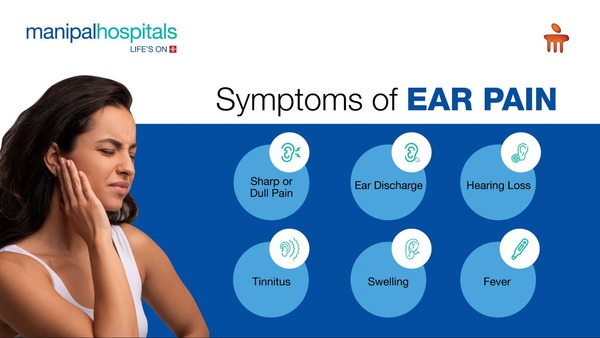
Ear pain can present in different ways depending on the health condition involved and age group. Common symptoms include:
Sharp, stabbing, throbbing, or dull aching pain inside the ear
A persistent feeling of pressure, blockage, or fullness within the ear
Ear discharge that may be clear, yellow, green, or blood-tinged
Temporary hearing loss or muffled hearing sensations
Fever or chills, particularly when an infection is present
Ringing, buzzing, or humming sounds in the ear (tinnitus)
Swelling, redness, or tenderness around the outer ear or ear canal
Increased pain while chewing, yawning, swallowing, or lying down
Irritability, poor sleep, or difficulty concentrating due to discomfort
Dizziness or balance disturbance in some cases
In children and babies, symptoms may also include frequent crying, ear pulling, or difficulty with feeding. If ear pain persists, worsens, or is associated with fever, discharge, or hearing loss, prompt medical evaluation is recommended to prevent complications.
Ear pain causes vary by age, health condition, and environmental factors. Common causes include:
Middle ear infection (otitis media): A frequent cause in children, often following colds or throat infections
Outer ear infection (otitis externa or swimmer’s ear): Caused by moisture, bacterial, or fungal growth in the ear canal
Eustachian tube dysfunction: Can lead to pressure imbalance, ear fullness, and discomfort
Sinus infections: May cause referred ear pain
Temporomandibular joint (TMJ) disorders: Can cause pain felt near or inside the ear
Ear injuries or trauma: Including pressure injury, foreign objects, or sudden impact
Excessive earwax buildup: May block the ear canal and cause pain or hearing changes
Viral infections: Upper respiratory infections can trigger inflammation-related ear pain
The symptoms of ear pain in adults often relate to sinus disease or temporomandibular joint disorders. Identifying the exact cause helps guide appropriate treatment and prevent complications.
Diagnosis of ear pain involves a structured clinical evaluation to identify infection, inflammation, pressure-related problems, or referred pain from nearby structures. At Manipal Hospitals, doctors follow a systematic approach to ensure accurate diagnosis and appropriate treatment planning.
Detailed review of symptom onset, duration, severity, and progression of ear pain
Assessment of associated symptoms such as fever, ear discharge, hearing changes, dizziness, or tinnitus
Evaluation of recent illnesses, including colds, throat infections, sinus problems, or COVID-related symptoms
Review of medical history, including previous ear infections, allergies, sinus disease, swimming habits, or trauma
Otoscopic examination to inspect the ear canal and eardrum for redness, swelling, fluid collection, infection, or perforation
Examination of the nasal passages and throat to identify sinusitis, tonsillitis, or upper respiratory infections
Assessment of jaw movement and tenderness to rule out temporomandibular joint (TMJ) disorders
Hearing evaluation when hearing loss, muffled hearing, or speech difficulty is reported
Tympanometry to assess middle-ear pressure and eardrum movement in selected cases
Hearing tests or imaging studies, such as X-rays or scans, when complications or referred causes are suspected
This comprehensive diagnostic approach ensures accurate identification of ear pain symptoms, helps determine the underlying cause, and supports effective, targeted treatment.
Treatment of ear pain depends on the underlying cause, age, and severity of symptoms. Common treatment options include:
Pain-relief medications help reduce pain, swelling, and fever
Antibiotics are prescribed only for confirmed bacterial infections based on clinical evaluation
Medicated ear drops for outer ear infections to control bacterial or fungal growth and reduce inflammation
Decongestants or nasal sprays relieve sinus congestion and Eustachian tube dysfunction, causing pressure-related ear pain
Warm compresses to the affected ear to ease pain and improve comfort
Earwax removal is performed by healthcare professionals when wax buildup causes blockage or pain
Management of underlying conditions to address referred ear pain
Supportive care: Adequate hydration, rest, and avoidance of water exposure during infection
Timely and appropriate treatment helps relieve ear pain symptoms, promotes healing, and reduces the risk of hearing loss or recurrent infections.
For mild ear pain, supportive home-care measures can help reduce discomfort and promote natural healing. Common home-care measures include:
Warm compresses over the affected ear help ease pain and reduce pressure
Adequate hydration supports recovery and helps thin sinus secretions
Proper rest allows the body to fight infection and inflammation effectively
Avoid inserting objects inside the ear
Keep ears dry to prevent irritation or infection
Managing sinus congestion with steam inhalation or saline nasal sprays may reduce pressure-related ear pain
Limiting headphone use or reducing prolonged earphone use prevents additional irritation
Maintaining good posture, like sleeping with the head elevated, may help reduce ear pressure
While home remedies support temporary symptom relief, persistent, worsening, or recurrent ear pain requires prompt medical evaluation to identify the underlying cause and prevent complications.
Ear pain symptoms may include sharp, stabbing, or dull aching pain in the ear, a sensation of pressure or fullness, temporary hearing changes, ear discharge, and fever. When symptoms persist, worsen, or affect hearing, a timely medical evaluation is advised to identify the cause and prevent complications.
Ear pain is not a primary symptom of COVID-19. It may occur during viral illnesses due to nasal congestion, Eustachian tube dysfunction, or secondary ear infections. Persistent ear pain accompanied by fever, hearing changes, or worsening respiratory symptoms should be medically evaluated.
Medical evaluation is advised if ear pain persists beyond a few days or worsens over time. Consultation is particularly important if ear pain is associated with fever, hearing loss, ear discharge, dizziness, or swelling. Early assessment helps identify the cause and ensures timely treatment.
Ear pain may be reduced by avoiding ear trauma, managing upper respiratory infections promptly, and protecting the ears from excessive noise and water exposure. Maintaining good ear hygiene and seeking timely medical care can help prevent recurrent ear pain and complications.
Yes. Ear pain symptoms may occur during pregnancy due to hormonal changes, sinus congestion, or fluid retention affecting ear pressure. Although usually mild, persistent ear pain, fever, or hearing changes during pregnancy should be medically evaluated to rule out infection.



Visit the Global site for International patient services


