8 Min Read
We used to think strokes only happened to older people, but today, more adults in their 20s and 30s are ending up in the hospital with stroke symptoms. This is a huge worry because younger people often don't recognise the early warning signs of stroke and delay getting help.
A stroke happens when a clot or burst vessel cuts off blood to the brain, damaging speech, memory, and movement. It is rising because of modern habits like high stress, poor sleep, smoking, and sitting all day, which hurt blood vessels early on. Because younger individuals often mistake stroke symptoms for a passing migraine or simple exhaustion, valuable time is lost before they arrive at a specialised stroke treatment hospital. When dealing with a stroke, every second counts.
Consulting the best doctor for stroke treatment immediately can save a life and completely prevent permanent disability.
This blog explains why strokes are increasing in young adults, the symptoms and early warning signs to watch for, what causes them, and how to prevent them.
Synopsis
Understanding Stroke Types in the Younger Population
A stroke affecting individuals between 18 and 45 years is generally classified as a stroke in young adults. While the condition is less common in younger people compared to older adults, the number of cases has steadily increased worldwide over the last decade.
There are two main types of stroke:
|
Type of Stroke |
Description |
|
Ischaemic Stroke |
Occurs when a blood clot blocks blood flow to the brain |
|
Haemorrhagic Stroke |
Happens when a blood vessel ruptures and causes bleeding in the brain |
Most young strokes happen when a blood clot blocks the brain. This usually comes from high cholesterol, diabetes, heart conditions, or family blood traits. For women, taking contraceptive pills, pregnancy complications, or smoking while dealing with migraines can also raise the risk. The good news is that younger brains can bounce back much better if you act fast and recognise ischaemic stroke symptoms early.
Symptoms of Stroke in Young Adults
Stroke symptoms in younger adults can appear suddenly and should never be ignored. Immediate medical attention is essential because treatment is most effective during the early hours after symptom onset.
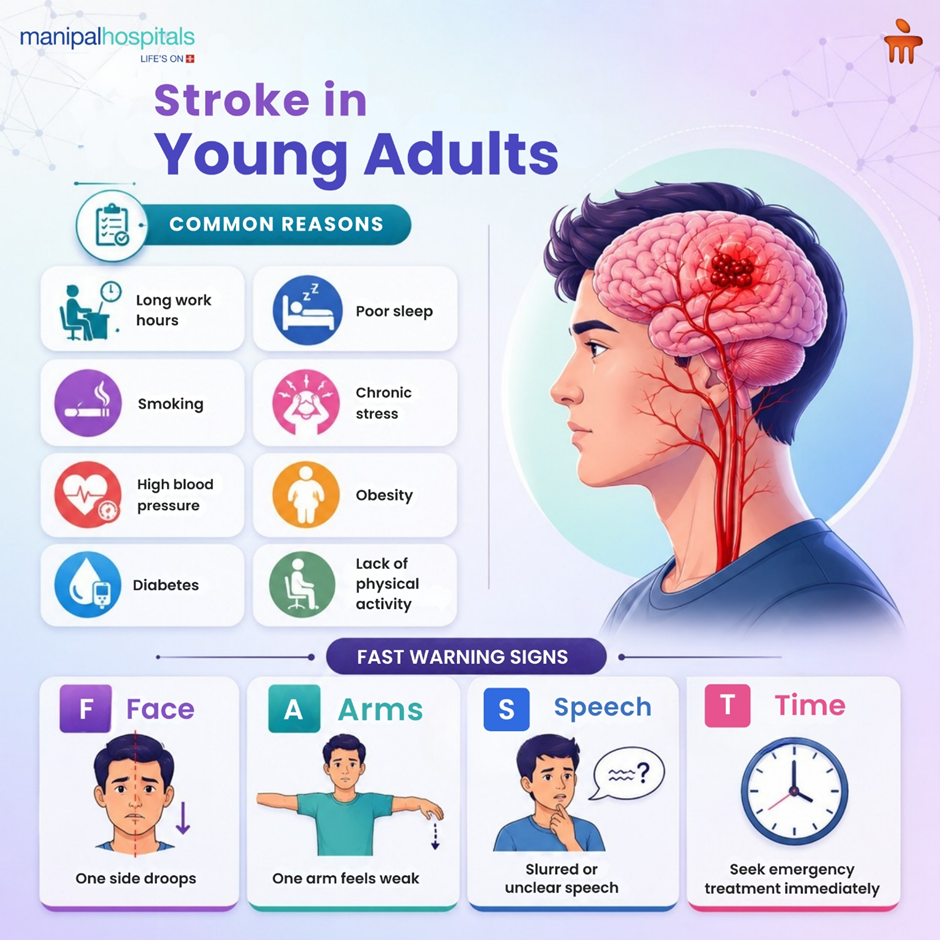
Common symptoms include:
-
Sudden weakness in the leg, arm, or face
-
Numbness affecting one side of the body
-
Difficulty speaking clearly
-
Trouble understanding speech
-
Sudden dizziness or loss of balance
-
Severe unexplained headache
-
Blurred or double vision
-
Difficulty walking
-
Sudden confusion or memory disturbance
Doctors commonly use the FAST method to identify stroke symptoms quickly:
|
FAST Sign |
Meaning |
|
Face |
One side of the face droops or feels numb |
|
Arms |
One arm becomes weak or difficult to lift |
|
Speech |
Speech becomes slurred or difficult |
|
Time |
Immediate emergency care is required |
Arriving at a properly equipped medical centre without delay allows doctors to initiate emergency stroke treatment before irreversible brain damage occurs.
Subtle Early Warning Signs You Might Dismiss
A stroke doesn't always start with a sudden, dramatic emergency. Sometimes, you get small warning signs days or even weeks before anything serious happens. But honestly, when you're caught up in a busy, stressful routine, it is just so easy to ignore them and carry on with your day.
Watch closely for these early indicators:
-
Recurrent, unexplained headaches that do not respond to standard medication.
-
Brief, passing numbness or a "pins-and-needles" sensation in a single limb.
-
Temporary visual disturbances, such as sudden blurring that clears up after a few minutes.
-
Fleeting moments of slurred speech or difficulty finding the right words.
-
Sudden, uncharacteristic episodes of imbalance or clumsy movement.
Never brush off these symptoms if you have high blood pressure or a family history of heart issues. Recreational drugs are a major trigger that can cause sudden bleeding in the brain.
Primary Cause of Stroke in Young Adults
Several medical and lifestyle-related conditions contribute to the growing incidence of stroke among younger adults. Understanding these causes helps in both prevention and early treatment.
-
High Blood Pressure: Hypertension remains one of the strongest stroke risk factors. Constantly elevated pressure damages blood vessel walls and increases the chance of clot formation or bleeding.
-
Diabetes: Uncontrolled blood sugar damages blood vessels and harms circulation over time. This significantly raises stroke risk for young adults.
-
High Cholesterol: Excess cholesterol can lead to plaque build-up inside arteries, restricting blood flow to the brain.
-
Obesity and Sedentary Lifestyle: Sitting for hours at work or study is common now. This lack of movement causes weight gain, high blood pressure, and poor heart health, directly raising stroke risk.
-
Heart Conditions: Certain heart rhythm disorders and congenital heart defects increase the risk of blood clots travelling to the brain.
-
Stress and Mental Exhaustion: Long-term emotional stress can lead to high blood pressure, unhealthy eating patterns and disordered sleep, all of which indirectly raise the risk of stroke.
-
Smoking, Alcohol and Drug Abuse: Heavy alcohol consumption, smoking and recreational drug use can severely affect blood vessel function and blood pressure regulation.
-
Genetic and Autoimmune Disorders: Some inherited conditions make blood clotting more likely. Autoimmune diseases may also inflame blood vessels and increase stroke risk.
Neurologists use advanced imaging, blood investigations, heart evaluation, and vascular studies to identify the exact cause.
Emergency Stroke Treatment: What to Expect
In acute stroke care, time lost is brain lost. The medical protocol for emergency stroke treatment is determined entirely by the specific type of stroke the patient is experiencing.
If a blood clot is blocking the flow, the medical team usually gives a strong medicine to dissolve it and get blood moving again. If the clot is too big, a specialist might have to go in and physically pull it out. But if a blood vessel has actually burst, the main goal is to stop the bleeding, lower the pressure inside the head, and fix the damaged vessel.
Getting straight to a stroke treatment hospital gives you the absolute best chance at bouncing back. The Best doctor for stroke treatment in Sarjapur Road, Bangalore, will handle the immediate emergency and get rehab started right away—using therapies like physio and speech exercises to help the brain heal and rebuild itself.
Prevention of Stroke in Young Adults
The majority of stroke cases in younger demographics are entirely preventable through proactive health tracking and lifestyle modifications. Effective prevention of stroke in young adults involves a few dedicated habits:
-
Monitor Blood Pressure: Do not assume youth equals normal blood pressure. Regular screenings help detect silent hypertension early.
-
Get moving: Try to get around 150 minutes a week of brisk walking, cycling, or swimming. It keeps your blood vessels flexible and healthy.
-
Eat fresh: Base your meals on fresh veggies, fruits, lean meats, and whole grains. Cut back on heavily processed foods and extra salt.
-
Drop bad habits: Ditching the cigarettes and cutting down on drinks instantly lowers the inflammation and stress inside your blood vessels.
Seek Early Neurological Evaluation
If you are dealing with frequent headaches, dizzy spells, changes in your speech, or random numbness, please do not just shrug it off. Getting checked out early by the best neurology doctor on Sarjapur Road for stroke treatment can stop a serious medical emergency before it even happens.
If a stroke does occur, rehabilitation is everything. Getting into physiotherapy, speech therapy, and brain exercises helps people get their independence back. Having the right neurology care and rehab in place is what truly makes a difference in getting life back to normal.
Conclusion
Stroke among younger adults is no longer rare. Modern lifestyle habits, stress, obesity, diabetes, smoking, and delayed medical attention have contributed to rising stroke cases worldwide. Catching the signs early and getting to a doctor right away is what saves the brain from lasting damage. For advanced stroke diagnosis, emergency treatment, and comprehensive neurological rehabilitation, consult the best neurology hospital in Sarjapur Road, Bangalore, and experienced neurology specialists near Sarjapur Road, Bangalore, for expert stroke care and long-term neurological support. As a trusted stroke treatment hospital in Sarjapur Road Bangalore, the hospital offers expert stroke care, rapid intervention, and long-term neurological support tailored to every patient’s recovery needs.
FAQ's
Yes. Chronic stress over time can cause poor sleep, high blood pressure, unhealthy eating habits, and strain on the cardiovascular system, all of which can increase the risk of stroke.
Younger adults often recover better because the brain has greater adaptability. Early treatment, rehabilitation, and consistent therapy greatly influence long-term neurological improvement and functional recovery.
Severe dehydration may thicken the blood and increase clotting risk, especially in individuals with existing medical conditions or cardiovascular risk factors affecting blood circulation.
The increasing number of young stroke patients is mainly due to lifestyle changes, obesity, smoking, hypertension, diabetes, stress, unhealthy diet, and lack of physical exercise.
Emergency medical treatment becomes necessary when one suffers from sudden weakness, facial paralysis, difficulty in speaking, headache, problems with vision, or balance issues.
Share this article on: