8 Min Read
Acute and chronic renal failure are both critical health conditions that lead to a decreased capacity of the kidneys, including the ability to filter waste from the blood, retain water, and perform other vital bodily functions that help keep the body healthy. Despite the similarity, acute and chronic renal failure are distinct types of disease that have different mechanisms of development and possible consequences.
The main difficulty associated with kidney diseases is that the symptoms manifest slowly and can sometimes be confused with signs of other concerning illnesses. Many patients do not suspect any major health issue until considerable damage to the body is caused, and therefore knowledge about symptoms of the condition may help start treatment in time.
In this blog, we will discuss the different causes of kidney failure, its symptoms, the difference between acute and chronic renal failure, when prompt medical assistance is needed, the possible treatments, and precautions to take to maintain kidney health in the long run.
Synopsis
- Understanding How Kidney Failure Develops
- Early Warning Signs You Should Not Ignore
- Common Causes of Kidney Failure
- Difference Between Acute and Chronic Renal Failure
- When Is It Necessary to Go to Hospital Right Away?
- Diagnosis of Renal Failure by Medical Practitioners
- Methods of Treatment and Recovery Expectations
- How to Preserve Your Kidneys?
- Conclusion
Understanding How Kidney Failure Develops
The kidneys perform several essential tasks every minute. They remove toxins, regulate blood pressure, balance electrolytes, and help produce hormones involved in red blood cell production and bone health.
When kidney function declines, these processes are disrupted. In acute and chronic renal failure, the kidneys are unable to filter blood effectively, leading to a build-up of waste products and fluid within the body.
Acute kidney failure develops suddenly, often over hours or days. Chronic kidney failure develops slowly over months or years, usually as a result of ongoing kidney damage. Although both affect kidney function, their causes, progression, and management can differ considerably.
Early Warning Signs You Should Not Ignore
Kidney disease does not always cause pain in its early stages. Many symptoms are subtle and may seem unrelated to the kidneys at first.
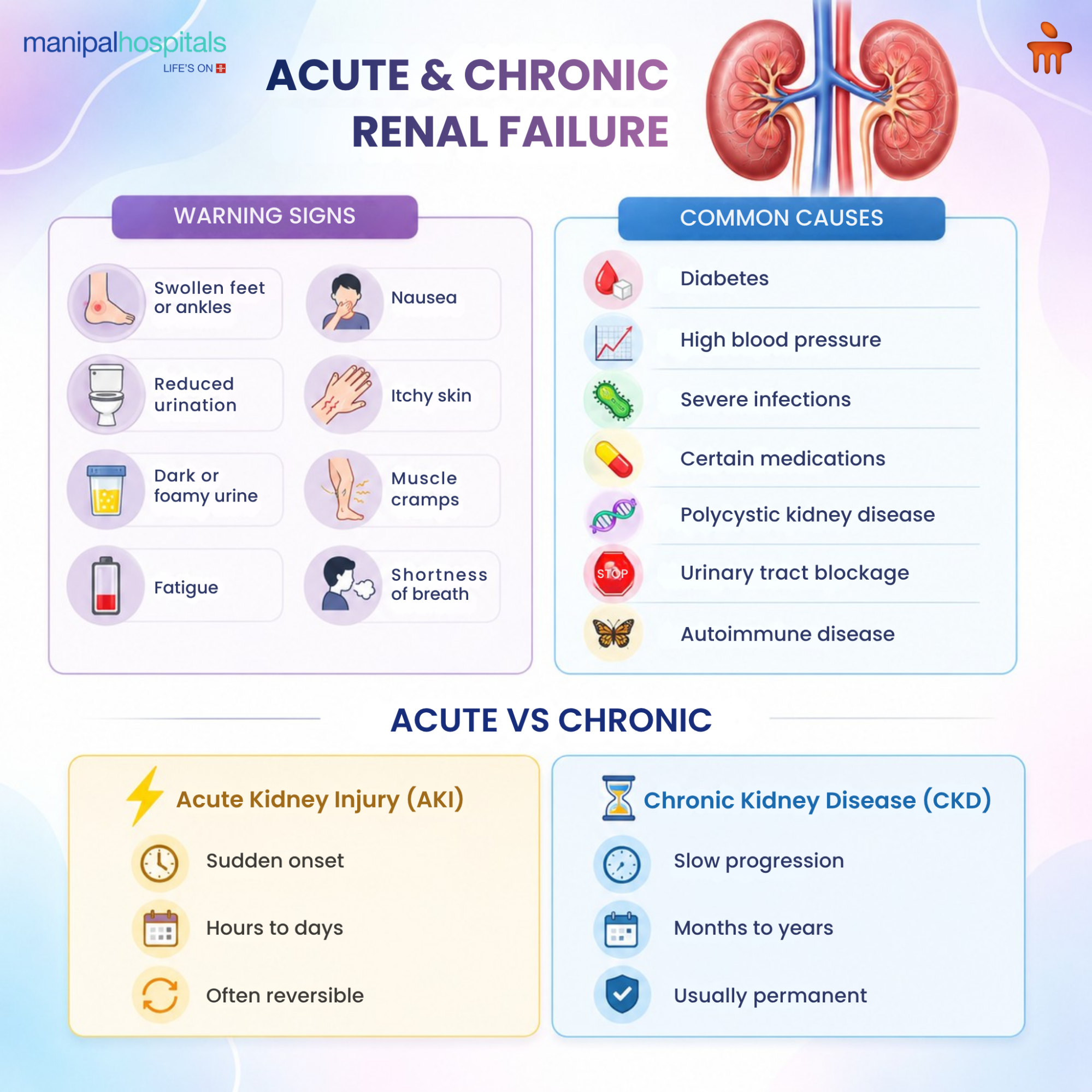
Some warning signs include:
-
Swelling around the ankles, feet, hands, or face
-
Persistent fatigue despite adequate rest
-
Reduced urine output or difficulty passing urine
-
Foamy or unusually dark urine
-
Loss of appetite
-
Nausea or an unpleasant metallic taste in the mouth
-
Shortness of breath
-
Difficulty concentrating
-
Muscle cramps, particularly at night
-
Unexplained itching
These symptoms occur because waste products and excess fluid begin accumulating in the bloodstream. If several of these signs develop together, medical evaluation should not be delayed.
Common Causes of Kidney Failure
Understanding the underlying cause helps doctors determine the most appropriate treatment strategy.
Acute kidney injury is often linked to events that suddenly reduce blood flow to the kidneys or directly damage kidney tissue. Examples include severe dehydration, major infections, certain medications, uncontrolled bleeding, or urinary tract obstruction.
In contrast, acute renal failure and chronic kidney disease are connected in an important way. Repeated episodes of acute kidney injury can increase the risk of developing chronic kidney damage over time.
Long-term causes of chronic kidney failure include:
-
Diabetes mellitus
-
High blood pressure
-
Polycystic kidney disease
-
Chronic glomerulonephritis
-
Autoimmune disorders such as lupus
-
Recurrent kidney infections
-
Long-term use of certain pain medications
Managing these conditions effectively is often the most important step in preventing progressive kidney damage.
Difference Between Acute and Chronic Renal Failure
Because the symptoms may overlap, many people assume all kidney failure develops in the same way. However, recognising the distinctions helps patients better understand their diagnosis and prognosis.
|
Feature |
Acute Renal Failure |
Chronic Renal Failure |
|
Onset |
Develops within hours to days |
Progresses over months or years |
|
Reversibility |
Often reversible if treated promptly |
Usually irreversible, but progression can be slowed |
|
Kidney Size on Imaging |
Typically normal-sized kidneys |
Kidneys may become smaller over time |
|
Main Trigger |
Sudden illness, injury, or blockage |
Long-standing medical conditions |
|
Anaemia Presence |
Less common initially |
Frequently develops as disease progresses |
|
Bone Health Effects |
Rare in short-term illness |
Common in advanced stages due to mineral imbalance |
|
Monitoring Needs |
Intensive short-term monitoring |
Lifelong follow-up and management |
Understanding the acute and chronic renal failure difference allows you to appreciate why treatment approaches and long-term expectations vary between the two conditions.
When Is It Necessary to Go to Hospital Right Away?
Not all kidney conditions are emergencies, but some require immediate treatment to prevent serious or fatal consequences. Immediate medical attention is recommended if you experience:
-
Inability to urinate
-
Severe swelling that appears fast
-
Confusion
-
Constant vomiting that prevents you from drinking any fluids
-
Shortness of breath
-
Pain in your chest due to fluid retention
-
High temperature combined with low urine production
-
Bloody urine with severe pain
It can be a sign of serious problems with your kidneys, including worsening kidney function, severe infection, electrolyte imbalance, or obstruction requiring immediate intervention.
Diagnosis of Renal Failure by Medical Practitioners
Proper diagnosis goes beyond symptom identification. Health professionals utilise various tests to ascertain kidney function and diagnose the disease.
-
Some of these investigations include:
-
Tests that determine blood levels of creatinine and urea
-
Estimated Glomerular Filtration Rate (eGFR)
-
Urinalysis
-
Testing of protein in urine
-
Ultrasound of the kidney
-
Test of electrolytes
-
Testing for autoimmune diseases
In most cases, proper diagnosis enables initiation of treatment before complications such as heart conditions, severe anaemia, and electrolyte imbalance arise.
Methods of Treatment and Recovery Expectations
The chosen method of treatment is dependent on the degree of dysfunction in the kidney and the cause of the condition. The main objective in such cases is to conserve the remaining kidney function while relieving the symptoms and stopping any further damage.
-
Acute and chronic renal failure can be managed using:
-
Intravenous fluid administration for dehydration
-
Medicating infections
-
Modification of drugs that affect kidney function
-
Managing high blood pressure
-
Managing blood sugar levels
-
Diet modification
-
Correction of electrolyte imbalance
-
Dialysis, in cases of severe kidney dysfunction
Treatment strategies for acute and chronic renal failure can be surprisingly different. While acute kidney damage can potentially be cured by addressing the cause, chronic kidney failure treatment includes efforts aimed at preventing disease progression and improving quality of life.
How to Preserve Your Kidneys?
There are numerous kidney diseases that can be easily prevented or diagnosed due to small changes in your health-related behaviour. Little steps taken daily can result in big consequences, such as:
-
Drink plenty of water
-
Keep track of your blood pressure
-
Control your diabetes
-
Do not take unnecessary medicines for pain relief
-
Maintain your normal weight
-
Reduce salt consumption
-
Give up smoking
-
Undergo health screening
Attending regular health check-ups becomes especially important if you suffer from diabetes or hypertension or you have a history of renal conditions in your family.
Conclusion
Kidney failure rarely develops without warning. Paying attention to changes such as swelling, altered urination patterns, persistent fatigue, or unexplained nausea can help identify problems before they become severe. Early evaluation from a best consultant urologist in Sarjapur road,Bangalore allows doctors to intervene sooner, potentially preserving kidney function and reducing long-term complications.
If you are concerned about symptoms related to acute and chronic renal failure, seeking expert medical advice promptly can make a substantial difference. For specialised kidney care, consult the best urologists in Sarjapur Road and seek treatment at a trusted urology hospital in Sarjapur Road, Bangalore for timely assessment, advanced diagnostics, and personalised management of acute and chronic renal failure.
FAQ's
Yes. Kidney dysfunction can contribute to sleep disturbances through restless legs syndrome, muscle cramps, itching, and changes in hormone regulation. Poor sleep may also worsen fatigue and overall well-being, creating a cycle that affects daily functioning.
Kidney disease and cardiovascular disease are closely linked. Impaired kidney function can contribute to high blood pressure, fluid overload, and vascular damage, all of which increase the likelihood of heart-related complications.
Although the risk increases with age, kidney failure can occur in younger individuals due to genetic conditions, autoimmune diseases, severe infections, or untreated hypertension. Age alone does not eliminate the possibility of kidney disease.
Not necessarily. Some herbal products contain substances that may be harmful to the kidneys or interact with prescribed medications. Anyone with existing kidney disease should discuss supplements with a healthcare professional before using them.
The frequency depends on the stage of kidney disease, underlying causes, and overall health status. Some individuals require assessments every few months, while others with advanced disease may need much closer monitoring to track kidney function and treatment effectiveness.
Share this article on:


.webp "Dr. Ravindra Mukkunda | Best Nephrologist in Sarjapur Road, Bangalore | Manipal Hospitals")