6 Min Read
Uncontrolled high blood pressure can quietly damage the body for years, but there are times when it escalates suddenly into a medical emergency. One of the most serious complications of uncontrolled hypertension is a hypertensive crisis. It is a complication that can affect the brain, heart, kidneys, and blood vessels in a very short time. Even though high blood pressure usually seems like a chronic condition with long-term health implications, a drastic and unexpected increase in blood pressure can cause immediate harm to one’s body.
Learning about hypertensive crises will help you avoid organ damage and save your life. However, there are certain hypertensive crisis symptoms that may be confused with other less serious conditions, leading to a delay in the treatment process. In this blog, we explore what the causes of this condition are, its symptoms, the dangers of the crisis, diagnosis options, possible treatment plans, recovery, and how to lower your chances of developing it in the future.
Synopsis
- What Is Hypertensive Crisis?
- Symptoms of Hypertensive Crisis That Call for Prompt Identification
- Why Does a Hypertensive Crisis Occur?
- How a Hypertensive Crisis Affects Different Organs
- How Are Hypertensive Crisis Cases Diagnosed?
- Hypertensive Crisis Treatment
- Hypertensive Crisis Management Following the Emergency
- How to Prevent Hypertensive Crisis
- Conclusion
What Is Hypertensive Crisis?
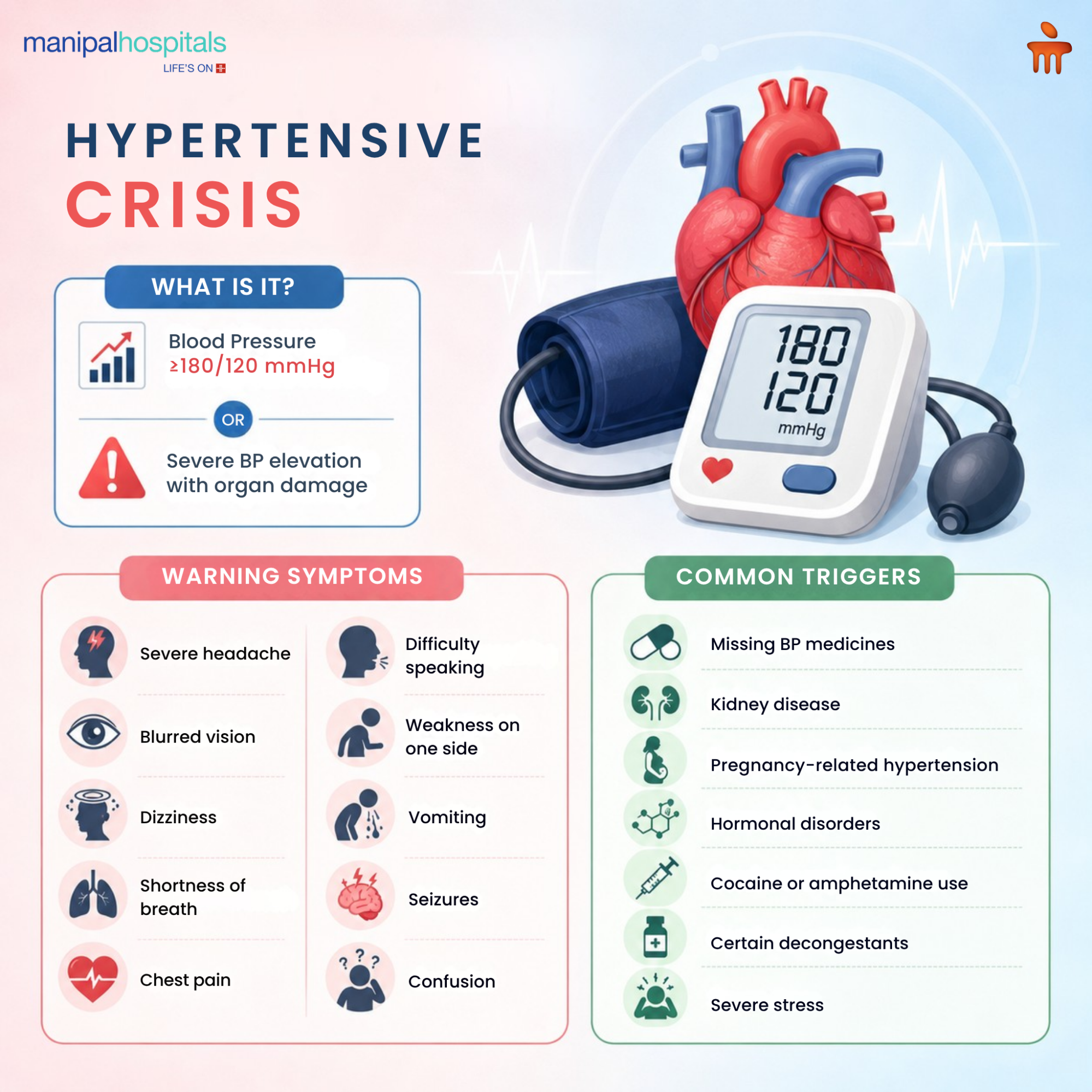
In a human body, blood pressure fluctuates in accordance with the level of physical activity and emotions, among other things. However, should it rise to dangerously high levels, that is, over 180/120 mmHg, it could be called a hypertensive crisis. This condition is normally classified by doctors into two types:
-
Hypertensive urgency, when blood pressure is dangerously high, but without any organ damage.
-
Hypertensive emergency, when high blood pressure leads to damage to the body’s organs.
Although the distinction between these two conditions may seem small at first, they require very different treatment methods and levels of urgency. Accordingly, the correct diagnosis out of the two is crucial.
Symptoms of Hypertensive Crisis That Call for Prompt Identification
One of the things that makes this condition especially scary is that the symptoms may emerge instantly. Some people may have several symptoms, while others may have just one or two before complications arise.
Some of the most common hypertensive crisis symptoms:
-
Severe and persistent headache
-
Visual disturbances
-
Discomfort or chest pressure
-
Difficulty breathing
-
Mental confusion
-
Weakness on one side of the body, such as the face, arm, or leg
-
Difficulty talking
-
Vomiting
-
In severe instances, seizures
These symptoms must not be ignored, especially if the individual is a chronic hypertension patient or has elevated blood pressure at the moment.
Why Does a Hypertensive Crisis Occur?
Most hypertensive crises do not occur without a trigger. In many cases, a crisis may be due to the long-term lack of control of one's high blood pressure. Some diseases and behaviours may lead to this kind of health problem as well.
Some of the triggers are:
-
Missing or stopping prescribed blood pressure medications
-
Long-term kidney disease
-
Constriction of arteries in the kidneys
-
High blood pressure due to pregnancy
-
Endocrine diseases that affect the adrenal glands
-
Stimulants like cocaine and amphetamines
-
Over-the-counter decongestants
-
Excessive stress, be it physical or emotional
It is important to determine the causes because the condition should be treated by controlling the high blood pressure as well as treating its trigger.
How a Hypertensive Crisis Affects Different Organs
Extremely high blood pressure places immense stress on blood vessels throughout the body. The organs that depend on these vessels for oxygen and nutrients can quickly become damaged when blood flow is disrupted.
|
Affected Organ |
Possible Consequence |
Why It Matters |
|
Brain |
Hypertensive encephalopathy (brain dysfunction caused by severely elevated blood pressure) |
Can cause confusion, seizures, or loss of consciousness |
|
Heart |
Acute heart failure |
The heart struggles to pump blood effectively |
|
Aorta |
Aortic dissection |
A tear develops in the major artery leaving the heart |
|
Kidneys |
Acute kidney injury |
Waste products accumulate rapidly in the body |
|
Eyes |
Retinal haemorrhage |
May result in significant vision impairment |
|
Placenta (during pregnancy) |
Reduced blood flow to the baby |
Can threaten both maternal and foetal health |
These complications highlight why a hypertensive emergency should always be treated without delay.
How Are Hypertensive Crisis Cases Diagnosed?
Once you reach the hospital with high blood pressure levels, the medical personnel will try to see if there is any organ damage to your body, which will serve as guidelines on what kind of treatment will be needed.
The following tests can be conducted during diagnosis:
-
Consecutive blood pressure readings
-
ECG
-
Kidney function tests
-
Tests for protein or blood in urine
-
Retinal test to check for any eye damage
-
Brain imaging in case of neurological symptoms
-
X-ray imaging if the heart or lungs are involved
These investigations provide a clearer picture of the severity of the condition and help shape an appropriate treatment plan.
Hypertensive Crisis Treatment
The goal of hypertensive crisis treatment is not simply to lower blood pressure quickly. Reducing blood pressure too rapidly can decrease blood flow to critical organs and worsen outcomes.
Treatment may involve:
-
Intravenous medications administered in a monitored setting
-
Continuous heart and blood pressure monitoring
-
Oxygen support when required
-
Careful fluid management
-
Treatment of associated conditions, such as heart failure or stroke
-
Gradual adjustment of blood pressure targets over several hours
Patients experiencing hypertensive urgency may sometimes be managed with oral medications and close follow-up, while emergencies require hospital admission.
Hypertensive Crisis Management Following the Emergency
Recovery is not complete simply when the blood pressure comes back down within a safe range. This is due to the fact that people who have had one hypertensive crisis are at higher risk of cardiovascular problems in the future.
A typical course of hypertensive crisis management may include:
-
Checking medication regimens
-
Checking blood pressure at home
-
Eating low-sodium foods
-
Cutting down on alcohol consumption
-
Dealing with co-morbidities like diabetes
-
Coming for regular checkups
-
Knowing about the blood pressure goals.
Monitoring your condition regularly and going for regular follow-ups can help combat any worsening aspect before there is a second crisis.
How to Prevent Hypertensive Crisis
Prevention is often far easier than treatment. You can often avoid many severe blood pressure emergencies by getting regular care from an experienced cardiologist in Sarjapur Road and making healthy lifestyle choices.
Understanding how to prevent hypertensive crisis starts with recognising that blood pressure control requires ongoing attention, even when you feel completely well.
Helpful preventive measures include:
-
Taking prescribed medications without interruption
-
Maintaining a healthy body weight
-
Engaging in regular physical activity
-
Reducing dietary salt intake
-
Managing stress effectively
-
Avoiding tobacco products
-
Limiting highly processed foods
-
Scheduling routine blood pressure checks
Small, consistent habits often provide greater protection than dramatic short-term changes.
Conclusion
A hypertensive crisis is a medical emergency that requires immediate attention. Recognising warning signs early and seeking prompt care can significantly reduce the risk of permanent damage to the brain, heart, kidneys, and other vital organs. Understanding what is hypertensive crisis and staying committed to long-term blood pressure control can help you avoid serious complications and maintain better cardiovascular health.
If you have concerns about severe blood pressure fluctuations or require expert cardiac evaluation, seek specialised care from the best cardiology doctors in Sarjapur Road at one of the best cardiology hospitals near Sarjapur Road.
FAQ's
Yes. Although it is more common in people with known hypertension, some individuals first discover they have high blood pressure when they develop a hypertensive crisis. Undiagnosed hypertension may remain silent for years before presenting dramatically.
A strong family history of hypertension can increase the likelihood of developing high blood pressure, which may indirectly raise the risk of a hypertensive crisis. However, lifestyle factors and medication adherence also play major roles.
Commercial air travel is generally safe for most people with stable hypertension. However, those with poorly controlled blood pressure or recent cardiovascular complications should discuss travel plans with their doctor before flying.
Physical activity is usually encouraged after recovery, but the timing and intensity should be determined by your healthcare provider. A personalised exercise plan helps ensure safe cardiovascular rehabilitation.
Yes. Conditions such as obstructive sleep apnoea can cause repeated oxygen deprivation during sleep, leading to persistent blood pressure elevation and increasing the risk of future cardiovascular complications.
Share this article on:


.webp "Dr. Ravindra Mukkunda | Best Nephrologist in Sarjapur Road, Bangalore | Manipal Hospitals")