.webp "Dr. Ravindra Mukkunda | Best Nephrologist in Sarjapur Road, Bangalore | Manipal Hospitals")
 10 Min Read
If you have kidney disease, your kidneys may not clear waste like urea and creatinine as well as before. You might notice swelling in the feet or face, or changes in urine. Salts, sodium, potassium, and fluid can start building up in the body.
Diet plays an important role in managing kidney disease and reducing stress on the kidneys. Food choices directly affect how much waste, fluid, and minerals the kidneys need to process. Many patients assume a renal diet means avoiding most foods, but the focus is actually on portion control and nutrient balance.
A simple renal diet chart helps you stay on track. It gives you a basic structure for meals throughout the day, so you are not guessing what to eat each time. In the next sections, we will go step by step through the changes needed, the foods you can choose, and a weekly plan you can follow at home.
Synopsis
What Is a Renal Diet?
If you have kidney disease, your doctor may have asked you to make changes to your daily meals. A renal diet is a way of eating that helps reduce the build-up of minerals like potassium, phosphate, etc. in the body when kidney function is reduced.
A renal diet usually aims to:
-
Keep salt intake low so the body does not hold on to too much fluid
-
Manage potassium levels so they stay within a safe range
-
Limit foods that add to waste build-up in the body
-
Maintain steady fluid levels through the day
The plan is not the same for everyone. Some people may need only small changes in the early stage, while those on dialysis often require more protein along with closer control of fluids. Blood test results also guide these decisions, as they show which nutrients need to be reduced or adjusted over time.
Why Diet for Renal Patients Is Different
When you have kidney disease, the kidneys lose their ability to filter out extra sodium, potassium, and phosphorus through urine. They also struggle to remove excess fluid from the body. Because of this, these substances can remain in the bloodstream instead of being cleared out. This condition is the reason the diet for renal patients needs to be planned more carefully than a regular diet.
In reduced kidney function, sodium from salt can stay in the body and lead to water retention. Potassium, which is present in many fruits and vegetables, may rise in the blood if intake is not controlled. Phosphorus, found in dairy products and processed foods, can also accumulate because the kidneys cannot remove it effectively.
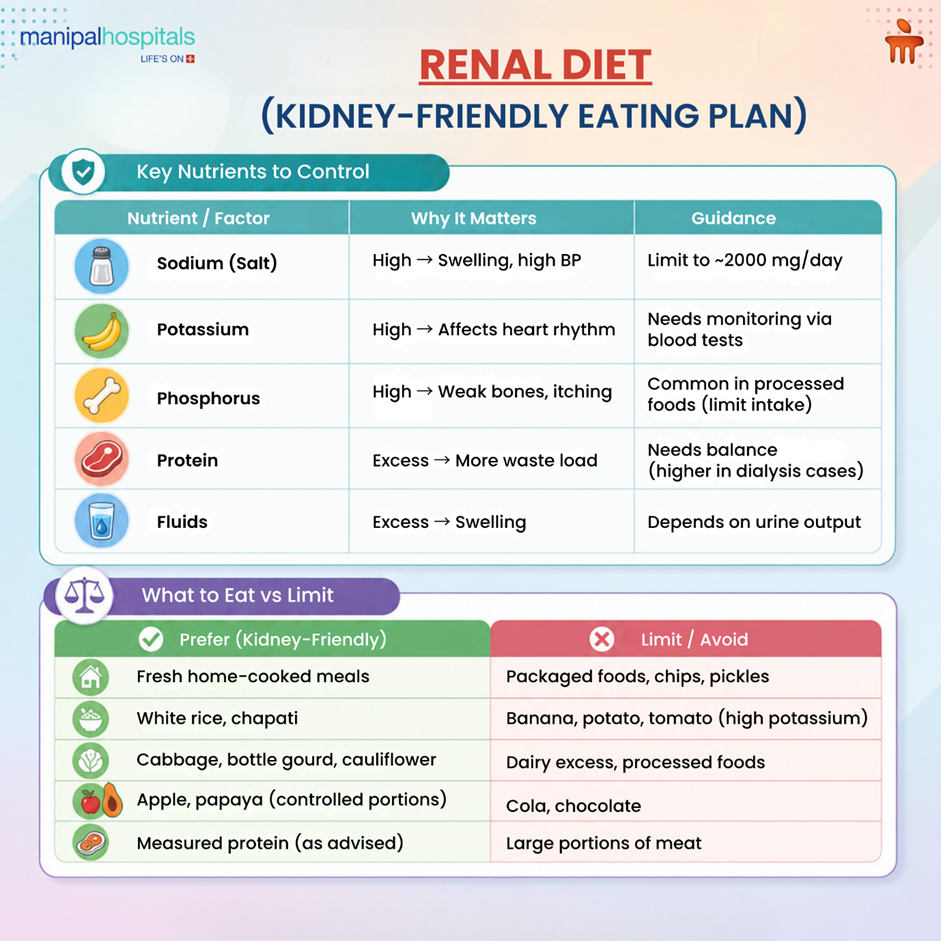
The kidneys also regulate how much water leaves the body through urine. When this process slows down, fluid can collect in tissues. This may lead to swelling in the feet, ankles, around the eyes, or lungs. Some patients may also notice reduced urine output.
If these nutrients are not managed through food:
-
Excess sodium can lead to fluid retention and increased blood pressure
-
High potassium levels can interfere with the normal heart rate and rhythm
-
Elevated phosphorus over time can affect blood vessels & circulation to different organs and can cause itching
Key Nutrients to Monitor in a Renal Diet
When you are living with kidney disease, some parts of your daily meals need to be more controlled. Choosing the right renal diet foods is key to keeping certain nutrients within a safe range so your body stays balanced. The following nutrients usually require close monitoring:
Sodium
Sodium mainly comes from salt, which is used in regular foods and other salt-dense sources like pickles and packaged foods. When you take more than what your body needs, it makes you retain water. You may notice swelling in your feet or face, and your blood pressure can go up. In most cases, doctors advise keeping sodium intake close to 2 gm per day or less (or sodium chloride/salt to <6 gm/day), depending on your condition.
Potassium
Potassium is present in many everyday foods. When its level rises too much in the blood, it can affect how the heart works. Foods like bananas, oranges, potatoes, and tomatoes have high potassium content, while options like apples, cabbage, and white rice are lower. How much you can take depends on your blood reports, so it is not the same for everyone.
Phosphorus
Phosphorus is found in foods like milk, cheese, and nuts, and also in many packaged items. When it builds up, it can be deposited in blood vessels and affect circulation to different organs. A high phosphorus level can cause itching.
Protein
Your body still needs protein, but the amount has to be balanced. Too much protein can add to the waste your kidneys have to handle. At the same time, if you are on dialysis, your doctor may advise a slightly higher intake because some protein is lost during dialysis treatment.
Fluids
Fluid intake recommendations depend on urine output, swelling, and overall kidney function. Some people need to limit fluids, while others can continue with a normal intake. Your doctor will guide you based on your condition.
Renal Diet Foods: What to Choose and What to Limit
Planning meals becomes simpler when you look at foods based on the nutrients they contain. This way, you can adjust your plate without second-guessing each item. The table below brings together common renal diet foods along with options that are better taken in smaller amounts as part of the diet for renal patients:
|
Nutrient |
Foods Higher in This Nutrient (Limit) |
Foods Lower in This Nutrient (Prefer) |
|
Sodium |
Packaged snacks, chips, namkeen, pickles, instant noodles, ready-made gravies, bakery items, sauces, processed cheese |
Fresh home-cooked meals, plain rice, chapati without excess salt, fresh vegetables, and homemade dals with less salt |
|
Potassium |
Banana, orange, sweet lime, potato, tomato, spinach, beetroot, coconut water, dried fruits like raisins and dates |
Apple, papaya (in small portions if allowed), cabbage, cauliflower, cucumber, bottle gourd, ridge gourd, white rice, semolina |
|
Phosphorus |
Milk, cheese, paneer, curd (in excess), cola drinks, chocolate, nuts, seeds, processed meats, packaged foods with additives |
Fresh fruits, most vegetables, rice-based dishes, homemade meals, non-fortified rice milk |
|
Protein |
Large portions of chicken, red meat, fish, multiple eggs in a day, and protein supplements |
Measured portions of eggs, small servings of lean chicken or fish as advised, and controlled dal intake |
|
Fats |
Deep-fried foods, repeated-use oil, excess butter, cream, and large amounts of ghee |
Small amounts of olive oil, sunflower oil, or limited ghee for cooking |
Weekly Renal Diet Chart
Following a fixed routine can make eating easier when you are dealing with kidney disease. A planned renal diet chart helps you space your meals and keep portions steady across the day. Follow the sample diet chart below:
|
Day |
Breakfast |
Lunch |
Dinner |
Snacks |
|
Monday |
1 cup capsimicum rice + 1 cup toned milk or 100 ml tea |
1.5 cups rice + ½ cup lauki dal (leached) + ½ cup bhindi sabzi + ½ cup curd |
1 cup rice + ½ cup bhindi sabzi |
1 pear (100 g), later 100 ml tea or milk + 4 biscuits |
|
Tuesday |
3 rice dosa + ½ cup sambar (100 ml) + 1 tsp chutney + 100 ml milk/tea |
1 cup rice + 2 chapati + ½ cup mixed veg sambar + ½ cup lauki sabzi + ½ cup curd |
1 cup rice + ½ cup lauki sabzi |
4 small jambu/strawberries, later 3 biscuits and tea |
|
Wednesday |
4 idli + ½ cup sambar (100 ml) + 1 tsp chutney + 100 ml milk/tea |
1 cup rice + 2 chapati + ½ cup ridge gourd sabzi + ½ cup methi dal + ½ cup curd |
1 cup rice + ½ cup ridge gourd sabzi |
Pineapple (100 g), later tea/milk + 4 biscuits |
|
Thursday |
1 cup vermicelli upma + 100 ml milk/tea |
1.5 cups rice + ½ cup capsicum sabzi + ½ cup ridge gourd dal + ½ cup curd |
1 cup rice + ½ cup capsicum sabzi |
Muskmelon (100 g), later 1 cup poha + tea |
|
Friday |
3 chapati + ½ cup capsicum curry + 100 ml milk/tea |
1 cup rice + 2 chapati + ½ cup brinjal sabzi + ½ cup tomato dal + ½ cup curd |
1 cup rice + ½ cup brinjal sabzi |
Papaya (100 g), later tea/milk and 4 biscuits |
|
Saturday |
1 cup tomato rice + 2 tsp chutney + 100 ml milk/tea |
1.5 cups rice + ½ cup mixed veg sambar + ½ cup ivy gourd sabzi + ½ cup curd |
1 cup rice + ½ cup ivy gourd sabzi |
Watermelon (100 g), later tea/milk + 4 biscuits |
|
Sunday |
1 cup vangibath + 100 ml milk/tea |
1 cup rice + 2 chapati + ½ cup snake gourd dal + ½ cup cabbage sabzi + ½ cup curd |
1 cup rice + ½ cup cabbage sabzi |
Apple (100 g), later 1 cup puffed rice + tea |
Dal and vegetables are often “leached” (soaked and cooked in water) to reduce potassium content before cooking.
Practical Tips for Following a Renal Diet
Making small, consistent changes in your daily routine can make the diet for renal patients easier to follow.
-
Check food labels when buying packaged items, especially for sodium content, as salt is often added even in foods that do not taste salty.
-
Cook meals at home as much as possible to control the salt and ingredients.
-
Soaking and boiling certain vegetables, then discarding the water, can help reduce potassium content before cooking.
-
Follow the plan given by your doctor or dietitian instead of relying on general charts, as your needs may be different.
-
Get regular blood tests done to track levels of potassium, sodium, phosphorus, and other markers. Your kidney doctor and dietitian will give you advice based on these results.
Conclusion
Following a structured renal diet chart can help you manage your condition more steadily. It clearly shows what to eat, how much to take, and how to space your meals throughout the day. At the same time, it is important to remember that your diet should match your current reports and stage of kidney disease. What works for one person may not suit another. You can also consult the nephrology specialists near Sarjapur Road for personalised kidney care and dietary guidance.
Diet recommendations will always be personalised based on kidney function, blood test results, and treatment requirements. At Nephrology care in Manipal Hospital, Sarjapur Road, our best nephrology specialist in Sarjapur Road will help you with practical diet plans based on your condition, treatment, and daily needs, so you can follow a plan that is safe and realistic for you. Get in touch today.
FAQ's
A renal diet is a planned way of eating that helps control salt, potassium, fluids, and protein when your kidneys are not working well.
Yes, rice is usually allowed in controlled portions. White rice is often preferred, as it is lower in potassium compared to some other grains.
Protein is not harmful, but the amount matters. Too much can increase waste in the body. Your doctor will guide how much you need.
Fluid intake depends on your urine output and swelling. Some patients need restriction, while others may not. Always follow medical advice.
Foods high in salt, potassium, and phosphorus, such as packaged snacks, pickles, excess dairy, and certain fruits, may need to be limited.
Share this article on: