8 Min Read
Cardiac tamponade is a serious condition in which fluid accumulates within the external covering of the heart, also called the pericardium, affecting its ability to pump blood effectively. Fluid accumulation in the pericardium is referred to as a pericardial effusion. When this collection becomes extreme, it causes a complete inability of the heart to pump blood, leading to cardiac tamponade, which needs emergency treatment. Symptoms can develop suddenly and may worsen rapidly if not treated early.
In this blog, you will know what cardiac tamponade is, how to spot early warning signs, and when to act, which can save a life.
Synopsis
What Is Cardiac Tamponade?
The heart is protected from the nearby organs by a layer of tough tissue called pericardium. Because it does not stretch easily, even a relatively small amount of extra fluid, if it accumulates quickly, can cause the internal pressure to skyrocket.
When the fluid builds up, the accumulated fluid compresses the heart chambers. This compression first affects the right side of the heart because those chambers have thinner walls and lower internal pressure. As the right side collapses under the weight of the surrounding fluid, blood begins to back up into the veins of the body. Eventually, the left side of the heart is also affected, leading to a dangerous drop in blood pressure. Because cardiac tamponade interferes normal blood circulation throughout the body, it is categorised as a high-priority clinical emergency.
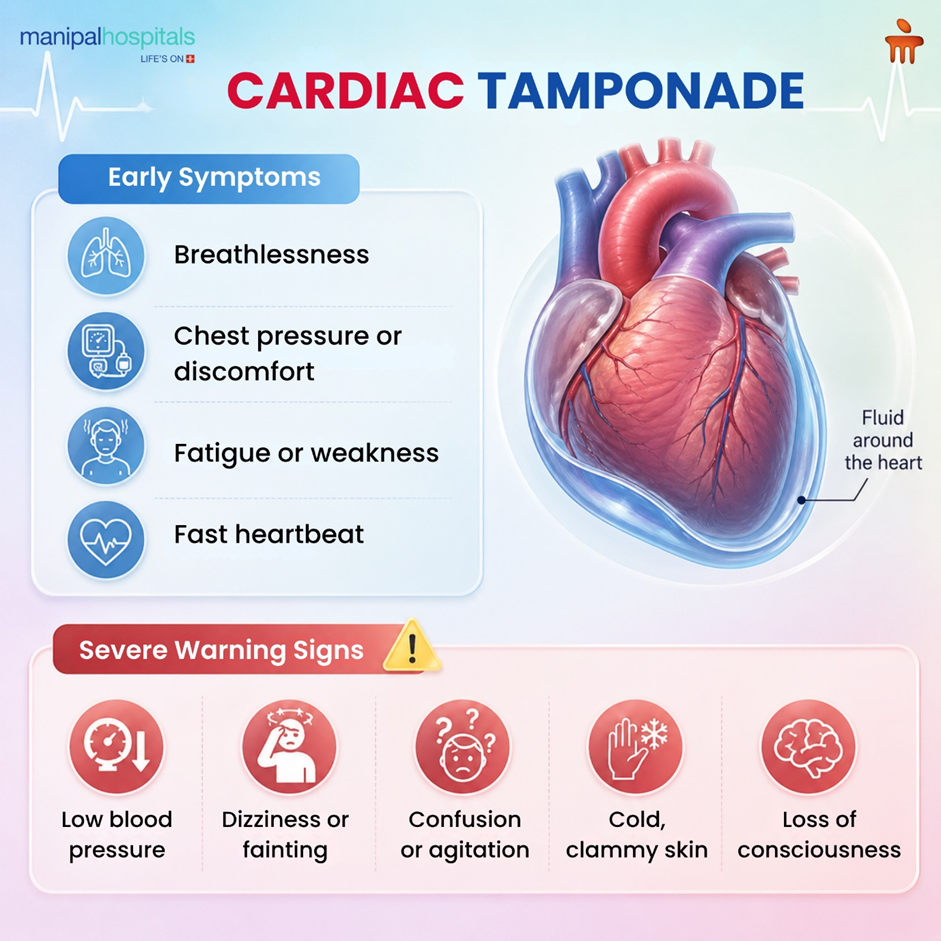
Therefore, early detection of this disease is extremely important since it can cause serious effects on the functioning of the heart.
What Causes Cardiac Tamponade
Understanding the causes of cardiac tamponade helps identify patients at higher risk.
Common causes include:
-
Chest trauma or injury: Trauma or injury to the chest wall causes internal bleeding.
-
Pericarditis: Inflammation results in fluid accumulation due to an infection or an autoimmune condition. The most common cause in India is tuberculosis.
-
Tumours: Certain cancers can lead to fluid accumulation within the pericardial sac.
-
Cardiac surgery or catheter-based procedures: This can be caused by complications during heart surgery or catheterisation.
-
Chronic kidney failure: Fluid retention associated with chronic kidney disease can contribute to pericardial effusion.
-
Hypothyroidism: Rarely, extremely low levels of thyroid hormone can also cause pericardial effusion, leading to tamponade.
-
Aortic dissection: Blood accumulates rapidly in the heart’s pericardial space.
Recognising these causes early can help guide timely diagnosis and treatment.
What Are the Signs of Cardiac Tamponade
It's important to know the signs early because the condition can get worse very quickly. Common symptoms include:
-
Breathlessness: This happens because the heart fails to pump effectively, resulting in poor circulation and breathing difficulties.
-
Pain or tightness in the chest: You may experience tightness in your chest.
-
Low blood pressure (hypotension): This causes you to feel dizzy or faint.
-
Fast heartbeat: The heart rate increases to compensate for reduced blood circulation.
-
Weakness: Weakness and fatigue may occur due to reduced oxygen delivery to tissues.
-
Swelling of the legs or abdomen: This condition is a result of prolonged development of symptoms.
Important signs to watch for:
-
Confusion or agitation: Can happen due to reduced blood supply to the brain, leading to lower awareness.
-
Clammy skin: Cold, clammy skin may indicate circulatory shock.
-
Loss of consciousness: It usually indicates poor blood circulation.
If you suddenly develop these symptoms, don't ignore them. People with congenital heart conditions, HIV, kidney disease, cancer, TB, or autoimmune diseases are at risk of developing this condition.
How Is Cardiac Tamponade Diagnosed?
A combination of clinical examination and imaging tests is needed to diagnose this cardiac condition.
Diagnostic steps include:
-
Medical history: To identify potential risk factors such as trauma or infections.
-
Physical examination: Doctors may notice low blood pressure, raised neck veins, and muffled heart sounds.
-
Echocardiography: The primary imaging test used to confirm pericardial effusion and cardiac compression.
-
Electrocardiogram (ECG): To evaluate changes in the heart’s electrical activity.
-
Chest X-ray: It can demonstrate an enlarged heart shadow.
-
Computed tomography (CT) scan: Provides detailed imaging of the heart and surrounding structures.
Early diagnosis plays a critical role in selecting the most appropriate treatment approach.
Cardiac Tamponade vs Other Heart Conditions
The table below highlights the differences between cardiac tamponade and other common heart conditions.
|
Feature |
Cardiac Tamponade |
Heart Attack |
Heart Failure |
|
Cause |
Fluid around the heart |
Blocked artery |
Weak heart muscle |
|
Onset |
Sudden or gradual |
Sudden |
Gradual |
|
Pain |
Pressure or discomfort |
Severe chest pain |
Usually mild |
|
Blood Pressure |
Low |
Often high/normal |
Variable |
|
Breathing |
Severe difficulty |
Moderate |
Progressive |
|
Urgency |
Medical emergency |
Medical emergency |
Chronic condition |
Treatment for Cardiac Tamponade
The goal of cardiac tamponade treatment is simple but urgent: the fluid must be removed to take the pressure off the heart. Relieving the pressure around the heart often restores normal cardiac function rapidly.
-
Pericardiocentesis: This is the most common form of cardiac tamponade treatment. A doctor uses a needle and a thin tube (catheter) to drain the fluid from the sac around the heart. This is usually done while the doctor watches an echocardiogram to ensure the needle goes to exactly the right spot.
-
Pericardial Window: In some cases, especially if the fluid keeps coming back, a surgeon may perform a minor operation to cut a small "window" in the sac. This allows the fluid to drain into the chest cavity, where it can be absorbed by the body, preventing another episode of cardiac tamponade.
-
Surgical Repair: If the fluid is actually blood from a tear in the heart or a major artery, an open-heart surgery may be needed to fix the underlying injury.
Once the immediate pressure is gone, the team will continue with cardiac tamponade treatment by addressing the root cause.
Long-term management:
-
Treating the underlying cause, such as infection, kidney disease, or cancer.
-
Follow-up scans to check for fluid build-up again.
-
Managing overall heart health through regular care and lifestyle changes.
Patients requiring specialised cardiac care should seek timely evaluation for cardiac tamponade treatment at Sarjapur Road, a centre equipped to manage cardiac emergencies.
Complications of Cardiac Tamponade
If cardiac tamponade is not treated in time, it can quickly become dangerous. As pressure builds around the heart, it struggles to pump enough blood to the rest of the body. This can start affecting vital organs within a short time.
Some possible complications include:
-
Shock: Blood pressure drops, and the body cannot maintain proper circulation
-
Organ damage: The brain, kidneys, and other organs may not get enough oxygen
-
Cardiac arrest: In severe cases, the heart may stop beating
-
Life-threatening outcomes: Without urgent care, the condition can become fatal
Because of how fast this condition can worsen, getting medical help early makes a real difference.
When Should You Seek Immediate Medical Care
Cardiac tamponade requires urgent medical attention and should never be ignored. If you have a history of chest injury or surgery and have symptoms, you should not ignore them. It’s best not to delay medical attention in such situations.
Get an urgent visit with leading cardiology doctors near Sarjapur Road if you experience the following:
-
Severe breathlessness even while resting
-
Chest pressure along with dizziness
-
Fainting or feeling as if you might faint
-
Symptoms that get worse within a short time
-
Any concerning symptoms after chest injury or surgery
What makes this condition concerning is not just the symptoms, but how quickly they can progress if ignored. Early medical intervention significantly improves outcomes.
Conclusion
Cardiac tamponade may initially present with mild symptoms but can progress rapidly into a life-threatening emergency. The excellent news is that one can get positive outcomes with early diagnosis and appropriate treatment.
Immediate medical evaluation is essential if symptoms are suggestive of cardiac tamponade. Access to advanced cardiology care from Manipal Hospitals, Sarjapur Road, and expert guidance to the appropriate facilities, such as cardiac tamponade treatment from top cardiology doctors at Manipal Hospital, Sarjapur Road, can help healthcare providers detect and treat the condition swiftly.
Immediate medical evaluation is essential if symptoms are suggestive of cardiac tamponade. Access to the appropriate facilities, such as cardiac tamponade treatment in Sarjapur Road, enables healthcare providers to detect and treat issues swiftly.
FAQ's
In some cases, fluid accumulates gradually, causing mild symptoms at first. However, slow accumulation can suddenly worsen. To avoid severe complications, it is essential to monitor the condition regularly.
While trauma is a common cause, infections, autoimmune diseases, and kidney conditions can also lead to cardiac tamponade.
There are high risks for relapses since the condition may recur in case the underlying problem remains untreated. Proper monitoring, regular imaging, and timely treatment of the main cause may reduce such risks considerably.
A rapid accumulation will be deadly in minutes or hours. Other instances take time, but once symptoms appear, the patient should begin treatment immediately.
Any fluid collection in the pericardium is termed a pericardial effusion. When this effusion becomes severe enough to compress the heart, reducing its ability to pump, it becomes cardiac tamponade.
Share this article on: