8 Min Read
Almost everyone gets headaches, and most go away with rest, food, or water. However, some headaches point to a serious nerve or brain issue that needs quick medical attention. A major problem today is self-diagnosis. Many people search for symptoms online and overuse painkillers without knowing the real cause, while others panic and fear a stroke or tumour over a normal headache. This confusion delays the right care.
Migraines are more than just bad headaches; they cause throbbing pain, nausea, and a sudden hatred for bright lights. However, severe head pain can also be a warning sign for much bigger issues, like internal bleeding, high pressure inside the skull, or an infection. If your headaches are consistently cutting into your sleep, work, or daily life, it is time to stop guessing. A proper checkup is the only way to find out what is actually going on and rule out a serious emergency. This blog explains when a headache requires an expert evaluation, the critical warning signs you should never ignore, and what to expect during a neurological check-up.
Synopsis
- Migraine vs Serious Neurological Conditions
- What Neurological Conditions Can Cause Migraines
- Stages of a Migraine
- How a Migraine Brain Differs from Serious Neurological Conditions
- How Diagnostics Distinguish Migraines from Serious Neurological Conditions
- Treating Migraines vs. Managing Serious Neurological Conditions
- Conclusion
Migraine vs Serious Neurological Conditions
While minor headaches can often be managed at home, certain signs mean you should see a specialist instead of just taking another painkiller. It is a good idea to get a professional neurological check-up if your head pain is becoming more frequent, starts disrupting your daily routine, or wakes you up from sleep at night.
Other clear signs that require expert attention include repeated vision changes, unexplained vomiting, weakness, numbness, or sudden changes in your memory and behaviour.
Migraines themselves vary widely. Some people only experience mild, brief episodes, while others suffer from intense attacks that last for days. When the pain begins to take over your week, transitioning to structured chronic migraine care becomes essential. Delaying a consultation because you assume the pain is just stress-related can cause the underlying issue to worsen.
What Neurological Conditions Can Cause Migraines
Some headaches behave entirely differently from typical episodes and require urgent medical attention. Neurologists use specific clinical signs to separate standard headaches from conditions like brain bleeding, raised intracranial pressure, or infections. The table below outlines the critical variations you should never ignore:
|
Headache Feature |
Possible Underlying Concern |
|
Sudden explosive headache |
Brain bleeding or a ruptured aneurysm |
|
Persistent morning headache |
Raised pressure inside the skull |
|
Headache accompanied by a fever |
Brain infection, such as meningitis |
|
Sudden vision loss with head pain |
Nerve or blood vessel disorder |
|
Headache starting after a head injury |
Internal bleeding or a concussion |
|
Pain that gets progressively worse over weeks |
Structural neurological issues |
For people who frequently experience migraines, an attack can sometimes start with an "aura"—causing you to see flashing lights or zigzag lines or feel a tingling sensation in your face or hands. Because a migraine aura can closely mimic the warning signs of a stroke, getting a professional assessment at an early headache diagnosis clinic is vital to tell the two conditions apart safely.
Furthermore, relying too heavily on daily painkillers can actually trigger medication-overuse headaches, making your pain more frequent. This is why obtaining advanced neurology care from a neurologist for headaches is so important; it shifts your focus from temporary relief to a safe, long-term management plan.
Stages of a Migraine
Migraines aren’t just an adult problem; kids get them too. But since younger children can’t always explain what hurts, it can be harder to spot. Instead of pain on just one side of the head, kids often feel it all over. They might also get stomach aches, get really cranky, or want to hide away from bright lights and loud sounds. If a little kid suddenly stops playing, goes quiet, or just wants to sleep it off, a migraine could be the reason.
Management typically starts with stabilising daily habits like sleep, hydration, and screen time. If lifestyle changes are not enough, consulting a migraine specialist ensures proper monitoring. Parents should seek immediate medical evaluation if a child’s headaches occur alongside severe warning signs like seizures, confusion, fainting, or persistent vomiting.
How a Migraine Brain Differs from Serious Neurological Conditions
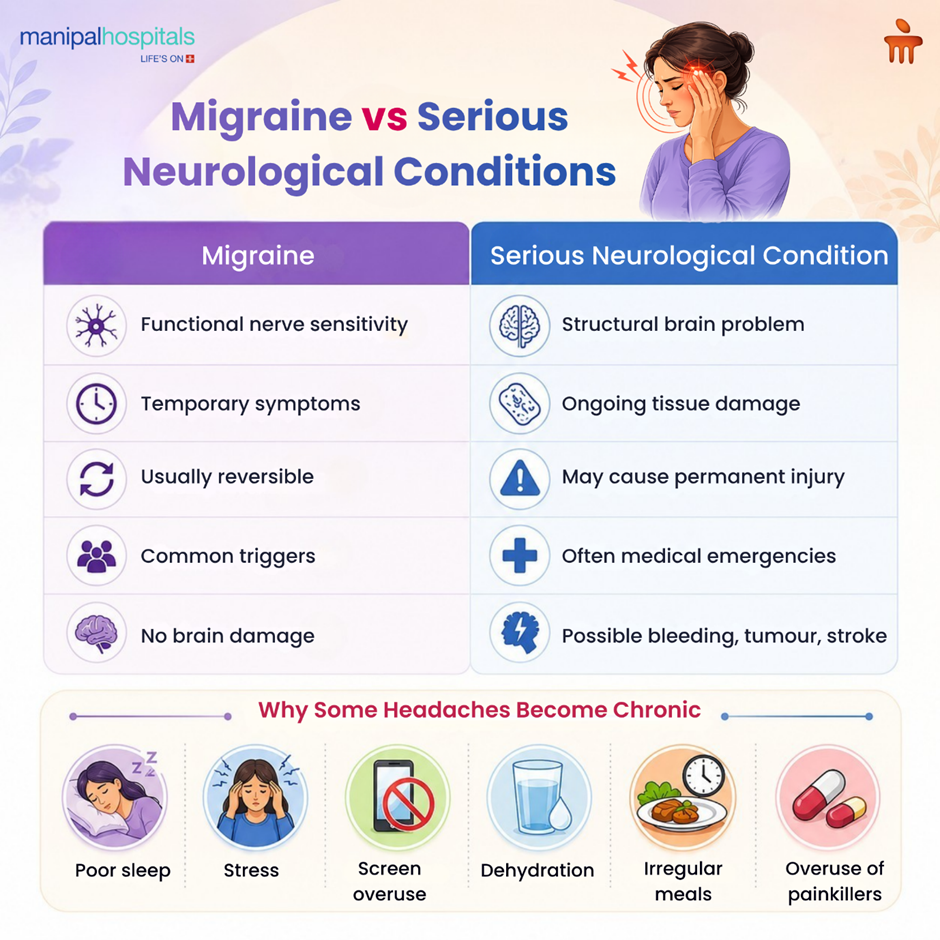
To understand the difference between a primary headache like a migraine and a serious underlying condition, it helps to look at what is happening inside the brain. A migraine is fundamentally a functional issue involving temporary neurovascular sensitivity, whereas serious neurological conditions often stem from structural changes or acute tissue damage.
The differences generally break down across these key pathways:
-
Electrical Processing vs. Structural Changes: A migraine attack involves a temporary wave of altered nerve cell activity across the cortex. While intense, it does not damage brain tissue. Conversely, serious neurological conditions like brain tumours or ruptured aneurysms involve physical, structural changes or anatomical shifts within the skull that create localised pressure and require urgent severe headache treatment.
-
Chemical Fluctuations vs. Vascular Blockages: Migraines are heavily influenced by shifts in chemical messengers like serotonin, which causes blood vessels to swell temporarily. In contrast, dangerous conditions like ischaemic strokes or cerebral venous thrombosis involve actual physical blockages or blood clots that cut off normal oxygen delivery to brain cells.
-
Fluid Pressure Balance: A standard migraine does not alter the fluid environment surrounding your brain. However, serious conditions like hydrocephalus or brain infections cause a dangerous, progressive buildup of cerebrospinal fluid pressure, directly straining the optic nerves and brain tissue.
How Diagnostics Distinguish Migraines from Serious Neurological Conditions
A thorough clinical evaluation is the most reliable way to determine whether your symptoms point to a primary migraine or a more dangerous underlying medical issue. Because the two can feel remarkably similar, specialists rely on a precise, step-by-step diagnostic process to find the answer:
-
Detailed Clinical Review: The process begins with an in-depth look at your symptom history, mapping out your specific headache patterns, triggers, and past treatments.
-
Physical Neurological Checks: A specialist evaluates your reflexes, muscle strength, vision, and physical balance to detect any subtle changes in how your nervous system is functioning.
-
Advanced Brain Imaging: If your symptoms are atypical or shift unexpectedly, high-resolution MRI or CT scans are performed to view the physical anatomy inside the skull.
These advanced imaging tools allow doctors to look beneath the surface and definitively rule out serious underlying conditions such as vascular abnormalities, fluid buildup, or hidden tumours. This clear distinction ensures your headache diagnosis assessment is fully accurate, giving you complete peace of mind before starting treatment.
Treating Migraines vs. Managing Serious Neurological Conditions
Once a clear distinction is made between a primary migraine and a secondary neurological issue, a targeted clinical plan is established. While serious structural conditions require urgent surgical or specialised medical interventions, standard migraine management focuses on breaking the cycle of chronic attacks through a highly tailored approach:
-
Preventive Medical Therapies: Prescribed treatments taken consistently over time to reduce the underlying hyperexcitability of the brain, lowering the overall frequency and severity of future attacks.
-
Acute Rescue Interventions: Specific, fast-acting medications used at the very first sign of an attack to stop the pain pathway before it escalates, preventing prolonged nerve inflammation.
-
Targeted Lifestyle Modifications: Establishing strict baseline habits such as consistent sleep windows, stable hydration, and identifying personal sensory triggers to naturally support the nervous system.
-
Ongoing Clinical Supervision: Regular neurological follow-ups to adapt the therapy as patterns change, preventing the risk of medication-overuse headaches and ensuring long-term recovery.
Conclusion
Distinguishing between a standard migraine and a serious underlying neurological condition is critical for ensuring timely and accurate medical care. Frequent headaches and migraines are incredibly common, but relying on over-the-counter painkillers day after day is not a sustainable solution. For expert neurological assessment, advanced diagnostic imaging, and comprehensive headache management, consult the best neurology specialists near Sarjapur Road, Bangalore, and the best neurology hospital in Sarjapur Road, Bangalore, for headache treatment. The hospital offers personalised care plans tailored to individual health needs.
FAQ's
A migraine commonly causes throbbing pain, nausea, and light sensitivity, while dangerous headaches may involve sudden, explosive pain, weakness, confusion, seizures, or speech difficulty that requires urgent evaluation.
Yes. Emotional stress, poor sleep, dehydration, and irregular eating habits can trigger migraine attacks by affecting brain chemicals, blood vessels, and neurological activity over prolonged periods.
MRI or CT scan images of the brain are useful to exclude stroke, haemorrhage, tumours, infection, or blood vessel disorders when there are atypical features of a headache or if the headache pattern suddenly changes.
No. Children may get migraine headaches or other neurological headache problems. Migraines with other symptoms such as nausea, vomiting, and a change in behaviour must be evaluated by a neurologist.
Too much consumption of the painkiller can lead to medication-overuse headaches, where the headache becomes more frequent despite the consumption of painkillers without treating the underlying condition in the brain.
Share this article on: