7 Min Read
Hearing that you might need brain or spine surgery can feel overwhelming. Many people instinctively want to pause, gather more opinions, or hope that the problem settles on its own. That reaction is completely natural. After all, surgery involving the brain or spine carries emotional weight, and it’s common to wonder whether waiting might be the safer option.
But when certain neurological conditions are left untreated for too long, the situation can quietly worsen. Nerves may sustain lasting damage, tumours may grow, or spinal instability may progress. What may have been a manageable condition can slowly evolve into something that can become difficult to treat.
Understanding the risks and complications of brain or spine surgery is important, but so is recognising the risks of delaying it when a specialist recommends intervention. This blog explains why timing matters, what can happen when treatment is postponed, how doctors evaluate urgency, and how modern medicine supports safe brain surgery recovery treatment and early treatment for spine disorders.
Synopsis
Why Some Brain and Spine Conditions Cannot Wait
Unlike many other health conditions, disorders affecting the brain and spine can worsen quickly if left untreated. The brain and spinal cord control movement, sensation, memory, and vital body functions. The effects can spread quickly when these structures experience compression or damage.
In some instances, the symptoms may not appear immediately. For example, numbness, headaches, or weakness in the limbs may not appear to be serious problems. In reality, they may be signs of underlying problems that are still developing in the background.
Examples of serious medical problems that may require timely medical attention include:
-
Brain tumours that grow in size, increasing pressure in the skull
-
Herniated discs that compress nerves in the spine
-
Tumours or cysts in the spinal cord
-
Degenerative spine disease that compresses nerves
-
Brain haemorrhages or other vascular problems
-
Progressive instability or fractures in the spine
Timely intervention can prevent long-term neurological deficits. That is why specialists often emphasise early treatment for spine disorders, especially when nerve compression is already present.
What Happens When Surgery Is Delayed
Choosing to postpone surgery does not always cause immediate complications. However, for many neurological conditions, the underlying disease process continues to evolve. Over time, the body’s ability to recover from nerve injury becomes limited.
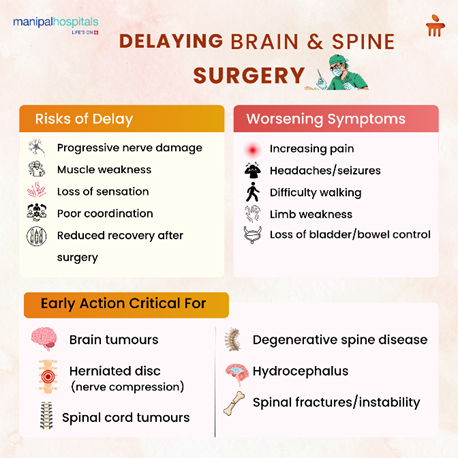
Several problems may develop when recommended surgery is delayed:
Progressive Nerve Damage
Nerves are sensitive to prolonged pressure. When compression continues for weeks or months, nerve fibres may begin to lose function. This can result in:
-
Persistent numbness or tingling
-
Muscle weakness
-
Loss of coordination
-
Reduced sensation in the limbs
Once nerve damage becomes severe, recovery after surgery may be incomplete.
Worsening Structural Changes
Spinal conditions such as slipped discs or spinal stenosis often worsen with time. The surrounding joints, ligaments, and discs may deteriorate further, making surgical correction more complex.
Increased Neurological Symptoms
The following symptoms may result from delayed treatment:
-
Headaches or seizures
-
Trouble walking
-
Loss of bladder or bowel control
-
Weakening of the limbs
These symptoms indicate increasing pressure on vital nerves or the brain.
Decreased Surgical Success
In many cases, early treatment enables surgeons to operate on the patient before permanent nerve damage has occurred. When surgery is performed later, the procedure may still relieve pressure, but the damaged nerves may not fully recover.
When Doctors Recommend Immediate Surgery
Not every neurological condition requires urgent surgery. Many cases are carefully monitored before deciding on intervention. However, certain warning signs indicate that waiting could pose significant risks.
Doctors may advise prompt surgery if you experience:
-
Rapidly worsening limb weakness
-
Loss of bladder or bowel control
-
Severe spinal cord compression
-
Brain tumours causing pressure on vital structures
-
Persistent seizures linked to a brain lesion
-
Spinal fractures affecting nerve stability
These situations require careful evaluation because delaying treatment could lead to permanent neurological impairment.
Brain and Spine Conditions Where Timing Matters Most
There are certain conditions of the brain that have shown a remarkable improvement when treated early. The following table shows conditions where the timing of surgery matters most:
|
Condition |
Why Early Surgery Matters |
Potential Consequence of Delay |
Typical Recovery Outlook |
|
Brain Tumour |
Removing the tumour before it compresses vital brain areas preserves neurological function |
Tumour growth may increase pressure, causing seizures or cognitive decline |
Earlier surgery often allows faster neurological recovery |
|
Herniated Disc with Nerve Compression |
Relieves pressure on affected spinal nerves |
Long-term nerve compression may cause chronic numbness or weakness |
Good recovery when decompression occurs early |
|
Spinal Cord Tumour |
Prevents permanent spinal cord damage |
Progressive paralysis or loss of sensation |
Early intervention offers better preservation of movement |
|
Hydrocephalus |
Restores normal brain fluid circulation |
Increased intracranial pressure can affect memory and coordination |
Timely shunt placement improves long-term outcomes |
|
Degenerative Cervical Myelopathy |
Prevents worsening spinal cord compression |
Difficulty walking and loss of hand function |
Surgery stabilises the spine and prevents further deterioration |
How Doctors Determine the Right Time for Surgery
A decision about brain or spine surgery is never made lightly. Specialists carefully analyse symptoms, imaging results, and neurological findings before recommending intervention.
Several factors guide this decision:
-
Severity of symptoms: Progressive weakness, coordination issues, or worsening pain often indicate nerve involvement that requires prompt attention.
-
Imaging findings: MRI and CT scans reveal structural changes such as tumours, disc herniations, or spinal cord compression.
-
Rate of disease progression: Some conditions grow slowly, while others worsen rapidly. Monitoring the speed of change helps determine urgency.
-
Impact on daily life: As symptoms begin to affect walking, hand function, speech, and memory, doctors may prescribe treatment sooner.
This evaluation is vital in considering the risks and complications associated with surgery of the brain or spine compared to the risks associated with postponing treatment. Expert neurosurgeons at an advanced brain and spine treatment hospital in Sarjapur Road, Bangalore, can guide you through diagnosis, treatment planning, and recovery.
What Recovery from Brain or Spine Surgery Looks Like
One of the most daunting aspects of preparing for surgery is the recovery process. Thanks to advancements in neurosurgery, recovery has become safer and more organised than ever before.
Contemporary brain surgery recovery treatment aims to regain neurological function while allowing the body to heal. Recovery may involve:
-
Neurological checks post-operatively
-
Physiotherapy to regain strength and mobility
-
Occupational therapy for daily functioning
-
Pain management programs
-
Return to normal activities
In the case of spinal surgery, rehabilitation can help to regain balance, posture, and movement. Most patients experience improvement in a few weeks, although it may take months to fully recover.
Conclusion
Waiting before making a decision about surgery is understandable, especially when the brain or spine is involved. Taking time to understand the diagnosis, discuss options, and seek expert advice is always valuable. However, some neurological conditions continue to progress silently, and delaying treatment may reduce the chances of full recovery. Recognising the potential risks and complications of brain or spine surgery alongside the risks of postponing it helps you make an informed decision. Early evaluation, timely intervention, and structured rehabilitation can protect nerve function and improve long-term outcomes.
If you are experiencing persistent neurological symptoms or have been advised to consider surgery, consulting experienced specialists can provide clarity and reassurance. For comprehensive care and specialist consultation, consider reaching out to a brain specialist doctor in Sarjapur Road, Bangalore. Specifically, those looking for spine surgeons in Sarjapur Road, Bangalore, can get a detailed consultation at Manipal Hospitals.
FAQ's
Specialists rely on a combination of neurological examination, imaging tests such as MRI scans, and symptom progression. The goal is to understand whether the condition is stable or worsening, in which case, surgery is recommended.
Yes, some spinal conditions can initially be managed with non-surgical approaches. These may include physiotherapy, anti-inflammatory medications, epidural injections, and lifestyle modifications. However, when nerve compression leads to persistent weakness, numbness, or loss of mobility, surgical intervention may become the most effective way to relieve pressure and restore function.
Certain habits, like poor posture, prolonged sitting, obesity, and lack of physical activity, can increase strain on spinal discs and joints. Maintaining a healthy weight, strengthening core muscles, and practicing ergonomic habits can support spinal health.
Symptoms such as persistent limb weakness, sudden difficulty walking, loss of bladder control, severe headaches, seizures, or unexplained balance problems should always be evaluated by a specialist.
Modern neurosurgery uses advanced technologies and techniques, such as intraoperative neuronavigation, high-resolution microscopes, neuromonitoring, and minimally invasive surgical approaches, to operate with greater accuracy.
Share this article on: