7 Min Read
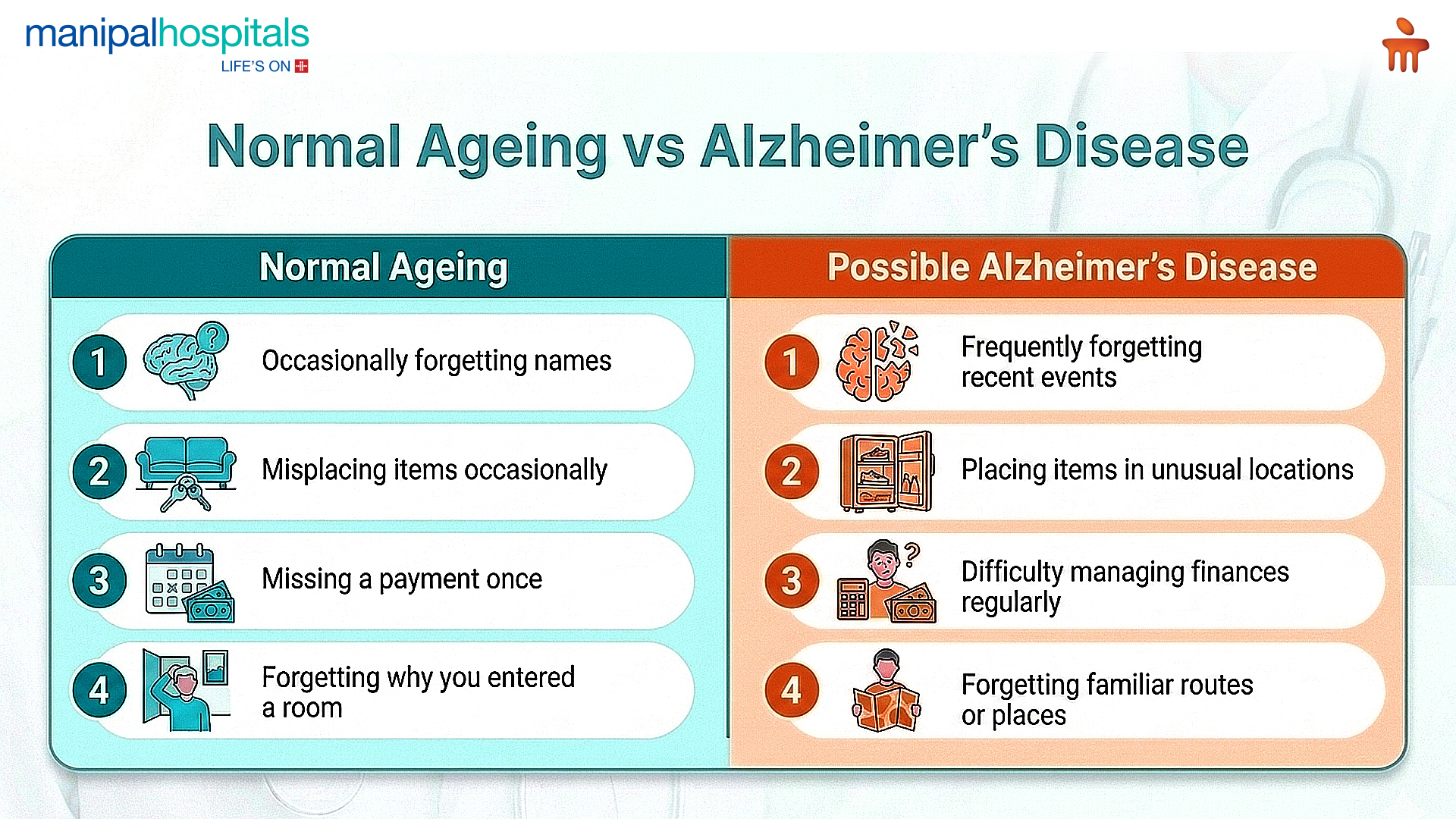
As we observe World Alzheimer’s Day 2026, it is important to raise awareness of Alzheimer’s disease and its impact on individuals, families, and communities. Alzheimer’s disease is the most common cause of dementia, a condition that affects memory, thinking, behaviour, and the ability to carry out daily activities. While occasional forgetfulness can be a normal part of ageing, persistent memory problems and cognitive changes should never be ignored.
One of the greatest challenges with Alzheimer’s disease is that its early symptoms are often mistaken for normal aging. However, recognising the warning signs early can make a significant difference. Studies have shown that timely diagnosis and appropriate care can improve quality of life for more than 70% of patients and caregivers. Early intervention also enables individuals to maintain independence for longer and access the support they need.
At Manipal Hospitals Kharadi, our specialists believe that awareness and early detection are key to managing Alzheimer’s disease effectively. Understanding the early signs can help individuals and families seek medical advice at the right time and plan for a healthier future.
Synopsis
What is Alzheimer’s Disease?
Alzheimer’s disease is a progressive neurological disorder that gradually damages brain cells and affects cognitive functions. It is characterised by abnormal protein deposits in the brain known as amyloid plaques and tau tangles. These changes interfere with communication between brain cells, eventually leading to cell death and shrinking of brain tissue.
The condition usually develops slowly and worsens over time. Although memory loss is one of the most recognised symptoms, Alzheimer’s disease can also affect language, reasoning, judgement, behaviour, and emotional well-being.
Globally, more than 55 million people live with dementia, and Alzheimer’s disease accounts for nearly 60–70% of all cases. In India, millions of families are affected by dementia-related conditions, making awareness and early diagnosis increasingly important.
Understanding Early Signs of Dementia
The early stages of Alzheimer’s disease can be subtle. Symptoms often develop gradually, making them difficult to recognise initially. However, identifying these signs early can help individuals receive appropriate treatment and support.
1. Memory Loss That Affects Daily Life
One of the most common warning signs is forgetting recently learned information. Individuals may repeatedly ask the same questions, forget important dates, or rely heavily on reminders and family members to remember everyday tasks.
While everyone occasionally forgets things, persistent memory loss that disrupts daily activities may indicate a more serious issue.
2. Difficulty Planning and Solving Problems
People with early Alzheimer’s disease may struggle with tasks that require concentration and organisation. They may find it difficult to follow a familiar recipe, manage household finances, or complete routine calculations.
These challenges often become noticeable when previously simple tasks begin taking significantly longer than usual.
3. Trouble Completing Familiar Tasks
Routine activities such as driving to a familiar location, operating household appliances, or managing work responsibilities may become increasingly difficult.
Individuals may become confused about steps involved in tasks they once performed effortlessly.
4. Confusion with Time and Place
Another common symptom is losing track of dates, seasons, or the passage of time. Some individuals may forget where they are or how they arrived at a particular location.
This confusion can cause anxiety and make everyday situations more challenging.
5. Problems with Visual and Spatial Awareness
Alzheimer’s disease can sometimes affect vision and spatial perception. Individuals may have difficulty judging distances, recognising objects, reading text, or navigating familiar environments.
These changes may increase the risk of falls and accidents.
6. Difficulty Finding the Right Words
People in the early stages of dementia may struggle to follow conversations or find the appropriate words while speaking. They may pause frequently, repeat themselves, or use incorrect names for familiar objects.
Communication difficulties can lead to frustration and social withdrawal.
7. Frequently Misplacing Items
Everyone misplaces things occasionally. However, individuals with Alzheimer’s disease often place items in unusual locations and cannot retrace their steps to find them.
For example, they may put keys in the refrigerator or leave important documents in unexpected places.
8. Poor Judgement and Decision-Making
Changes in judgement can appear early in the disease process. A person may make unusual financial decisions, neglect personal hygiene, or fail to recognise potentially risky situations.
Family members are often the first to notice these behavioural changes.
9. Withdrawal from Social Activities
Individuals experiencing cognitive decline may begin avoiding social interactions, hobbies, sports, or work-related activities. They may feel embarrassed about their difficulties or struggle to follow conversations.
Social withdrawal is an important warning sign that should not be overlooked.
10. Changes in Mood and Personality
Alzheimer’s disease can significantly affect emotional well-being. People may become more anxious, suspicious, irritable, fearful, or depressed.
These changes often occur gradually and may be mistaken for stress or emotional fatigue.
Why Early Diagnosis Matters
Although there is currently no cure for Alzheimer’s disease, early diagnosis offers several important benefits.
-
Access to Treatment - Medications and supportive therapies can help manage symptoms and slow disease progression in some individuals. The earlier treatment begins, the greater the potential benefit.
-
Better Planning - An early diagnosis allows patients and families to make informed decisions about healthcare, finances, legal matters, and future care arrangements while the individual can actively participate.
-
Improved Quality of Life - Timely intervention enables patients to access cognitive rehabilitation programmes, counselling services, and lifestyle modifications that support independence and well-being.
-
Family Support and Education - Families can connect with support groups and healthcare professionals who can guide them in managing symptoms and caregiving challenges.
Steps to Support Brain Health
While Alzheimer’s disease cannot always be prevented, several healthy lifestyle habits may reduce the risk of cognitive decline and support overall brain health.
-
Engage in regular physical activity.
-
Follow a balanced diet rich in fruits, vegetables, and whole grains.
-
Maintain healthy blood pressure, cholesterol, and blood sugar levels.
-
Get sufficient sleep each night.
-
Stay mentally active through reading, puzzles, and learning new skills.
-
Maintain strong social connections and community involvement.
-
Avoid smoking and excessive alcohol consumption.
These habits contribute to better cardiovascular health, which is closely linked to brain function.
When Should You Consult a Specialist?
If you or a loved one experiences persistent memory loss, confusion, language difficulties, or behavioural changes that interfere with daily life, it is important to seek medical advice promptly.
At Manipal Hospitals, our experienced neurologist in kharadi provide comprehensive evaluations, advanced diagnostic testing, and personalised treatment plans for patients with memory disorders and dementia. Early assessment can help identify the cause of symptoms and ensure appropriate management.
World Alzheimer’s Day 2026 serves as an important reminder that recognising the early signs of dementia can make a meaningful difference. Memory loss that affects daily life should never be dismissed as a normal part of ageing. Early diagnosis, timely treatment, and ongoing support can help individuals maintain independence, improve quality of life, and navigate the challenges of Alzheimer’s disease more effectively.
At Manipal Hospitals Kharadi, we are committed to promoting awareness, encouraging early detection, and providing compassionate neurological care for patients and families affected by Alzheimer’s disease. If you notice warning signs in yourself or a loved one, do not delay seeking professional guidance. Early action can help build a better future for everyone affected by dementia.
FAQ's
No. Occasional forgetfulness is common with ageing. However, persistent memory loss that interferes with daily activities should be evaluated by a healthcare professional.
Dementia is a general term for cognitive decline, while Alzheimer’s disease is the most common cause of dementia.
There is no guaranteed way to prevent Alzheimer’s disease, but maintaining a healthy lifestyle may reduce the risk and support brain health.
Most cases occur after the age of 65, although early-onset Alzheimer’s can develop in younger individuals.
Early diagnosis allows access to treatment, support services, future planning, and lifestyle interventions that can improve quality of life.
Share this article on: