6 Min Read
Bone pain is something many people experience at some point in life. It is often blamed on ageing, overexertion, poor posture, or arthritis. While these causes are common, persistent or unexplained bone pain should never be ignored. In some cases, it can be an early warning sign of a serious condition known as multiple myeloma, a type of blood cancer that affects the bone marrow.
Multiple Myeloma may not receive as much attention as other cancers, but it affects thousands of individuals every year. Because its symptoms often resemble those of more common health conditions, diagnosis can sometimes be delayed. Understanding the signs and seeking medical attention early can make a significant difference in treatment outcomes and quality of life.
At Manipal Hospitals Pune, our team of haematologists and cancer specialists focuses on early diagnosis, advanced treatment, and comprehensive support for patients living with blood cancers, including multiple myeloma.
Synopsis
What Is Multiple Myeloma?
Multiple Myeloma is a cancer that develops in plasma cells, a type of white blood cell found in the bone marrow. Plasma cells play an important role in the immune system by producing antibodies that help the body fight infections.
In Multiple Myeloma, these plasma cells become abnormal and multiply uncontrollably. Instead of producing healthy antibodies, they create abnormal proteins that can interfere with the body's normal functions.
As the number of myeloma cells increases, they crowd out healthy blood-forming cells in the bone marrow and damage the bones. This can lead to a range of health problems, including anaemia, weakened immunity, kidney damage, and severe bone pain.
Why Does Multiple Myeloma Cause Bone Pain?
Our bones are constantly being broken down and rebuilt through a process called bone remodelling. Myeloma cells disrupt this balance by stimulating bone breakdown while preventing new bone formation.
As a result, bones become weaker. Patients may develop small holes or lesions in their bones, making them prone to fractures even after minor injuries.
Bone pain associated with Multiple Myeloma is often:
-
Persistent and ongoing
-
Most commonly felt in the back, ribs, hips, or pelvis
-
Worse during movement
-
More noticeable at night
Many patients describe it as a deep, aching pain that does not improve with rest.
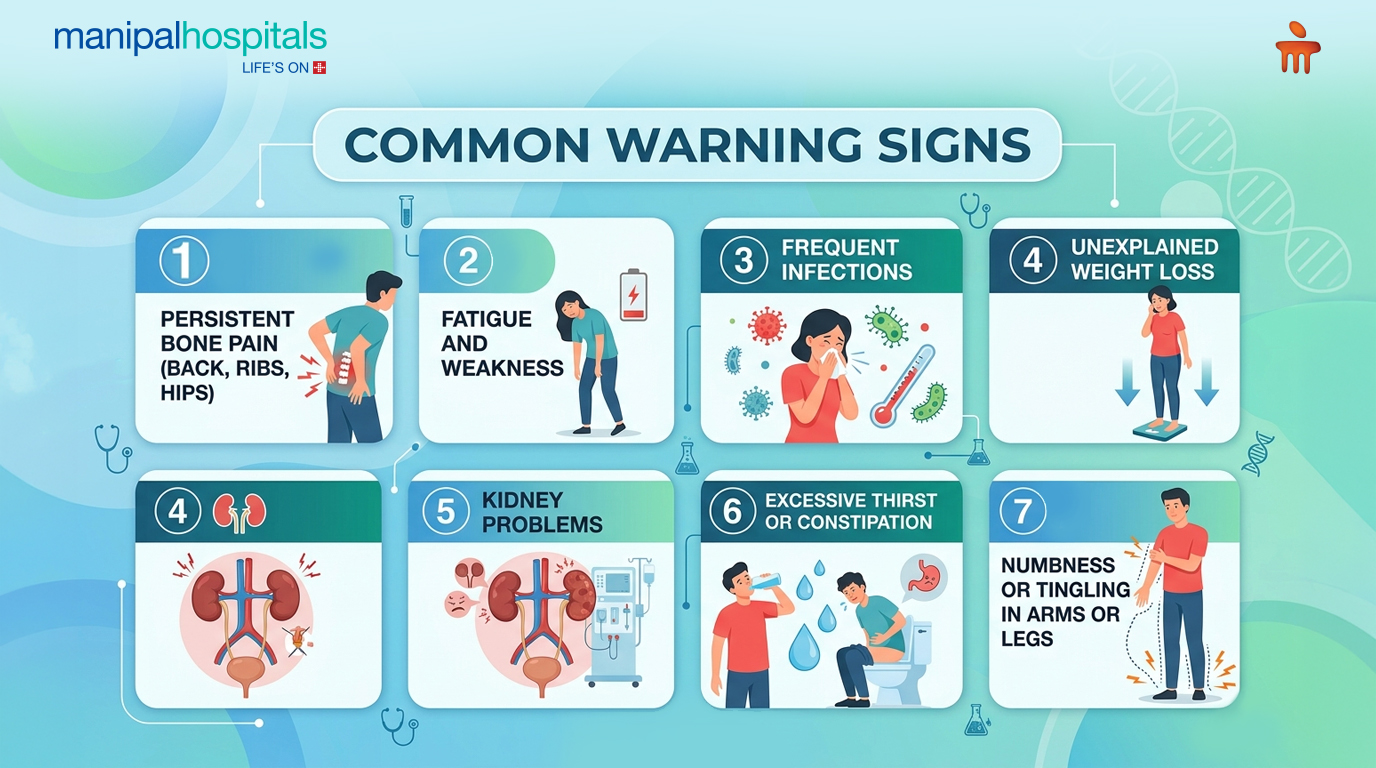
Common Symptoms of Multiple Myeloma
The symptoms of Multiple Myeloma can vary from person to person. Some individuals may experience only mild symptoms initially, while others may notice several warning signs.
1. Persistent Bone Pain
This is one of the most common symptoms. Pain in the spine, ribs, pelvis, or long bones should be evaluated, especially if it lasts for several weeks without a clear cause.
2. Fatigue and Weakness
Myeloma can reduce the production of healthy red blood cells, leading to anaemia. This often causes:
-
Extreme tiredness
-
Weakness
-
Shortness of breath
-
Reduced exercise tolerance
3. Frequent Infections
Because abnormal plasma cells cannot effectively fight infections, patients may experience:
-
Recurrent chest infections
-
Sinus infections
-
Urinary tract infections
-
Slow recovery from illnesses
4. Unexplained Weight Loss
Sudden or unexplained weight loss can be a warning sign of many cancers, including Multiple Myeloma.
5. Kidney Problems
The abnormal proteins produced by myeloma cells can damage the kidneys. Symptoms may include:
-
Swelling in the feet and ankles
-
Reduced urine output
-
Shortness of breath
-
Elevated kidney function test results
6. High Calcium Levels
Bone destruction releases calcium into the bloodstream. Elevated calcium levels can cause:
-
Excessive thirst
-
Frequent urination
-
Nausea
-
Confusion
7. Numbness and Tingling
Collapsed vertebrae or bone lesions may put pressure on nerves, resulting in numbness, tingling, or weakness in the limbs.
Who Is at Risk of Multiple Myeloma?
Although the exact cause remains unknown, certain factors can increase the risk of developing Multiple Myeloma.
These include:
-
Age above 60 years
-
Male gender
-
Family history of blood cancers
-
Obesity
-
Exposure to radiation or certain industrial chemicals
-
History of monoclonal gammopathy of undetermined significance (MGUS)
Having one or more risk factors does not mean a person will develop the disease, but regular health monitoring may be beneficial.
How Is Multiple Myeloma Diagnosed?
Diagnosing Multiple Myeloma requires a combination of laboratory tests, imaging studies, and specialised procedures.
Blood Tests
Blood tests help identify:
-
Anaemia
-
High calcium levels
-
Kidney dysfunction
Abnormal proteins associated with myeloma
Urine Tests
These tests detect abnormal proteins known as Bence Jones proteins that are commonly produced by myeloma cells.
Bone Marrow Biopsy
A small sample of bone marrow is collected, usually from the hip bone, to confirm the presence of cancerous plasma cells.
Imaging Tests
Advanced imaging techniques help identify bone damage and disease spread.
These may include:
-
X-rays
-
MRI scans
-
CT scans
-
PET scans
At Manipal Hospitals Kharadi, patients benefit from advanced diagnostic facilities that enable accurate and timely diagnosis of blood cancers.
Treatment Options for Multiple Myeloma
Significant advancements in cancer care have transformed the management of Multiple Myeloma. Today, many patients experience longer survival and improved quality of life.
Treatment plans are personalised based on the patient's age, overall health, and stage of disease.
Chemotherapy
Chemotherapy uses medications to destroy cancer cells or slow their growth.
Targeted Therapy
Targeted drugs attack specific molecules involved in cancer cell growth while minimising damage to healthy cells.
Immunotherapy
Immunotherapy strengthens the body's natural immune response against myeloma cells and has become an important treatment option in recent years.
Stem Cell Transplantation
Autologous stem cell transplantation involves collecting a patient's healthy stem cells before administering high-dose chemotherapy. The stem cells are then returned to help rebuild healthy bone marrow.
Radiation Therapy
Radiation may be used to relieve pain or treat specific areas of bone damage.
Supportive Care
Managing symptoms is an essential part of treatment and may include:
-
Pain management
-
Bone-strengthening medications
-
Blood transfusions
-
Kidney support therapies
-
Infection prevention measures
The cancer specialists in Kharadi at Manipal Hospitals Pune work closely with patients and their families to create personalised treatment plans aimed at achieving the best possible outcomes.
Living Well with Multiple Myeloma
A diagnosis of blood cancer can feel overwhelming, but many patients continue to lead active and fulfilling lives during and after treatment.
Some practical steps include:
Do's
-
Follow your treatment schedule carefully
-
Eat a balanced and nutritious diet
-
Stay hydrated
-
Engage in doctor-approved physical activity
-
Attend regular follow-up appointments
-
Report any new symptoms promptly
Don'ts
-
Ignore persistent bone pain
-
Lift heavy objects without medical advice
-
Skip medications or appointments
-
Use supplements without consulting your doctor
-
Delay seeking help for infections or unusual symptoms
Why Early Detection Matters
One of the biggest challenges with Multiple Myeloma is that symptoms can be vague and easily mistaken for other conditions. Unfortunately, delayed diagnosis can allow the disease to progress and cause more extensive bone and organ damage.
Early detection offers several benefits:
-
Earlier access to treatment
-
Better symptom control
-
Reduced risk of fractures
-
Improved kidney protection
-
Enhanced quality of life
-
Better long-term outcomes
If bone pain persists despite rest or treatment, it is important to seek medical evaluation rather than assuming it is a normal part of ageing.
Persistent bone pain should never be dismissed as just another sign of getting older. While many cases are caused by common conditions, some may signal a more serious underlying disease, such as Multiple Myeloma.
Recognising the symptoms early and seeking expert medical care can make a significant difference in treatment success and overall well-being.
At Manipal Hospitals Kharadi, our dedicated team of haematologists, oncologists, and cancer care specialists provides comprehensive diagnosis, advanced therapies, and compassionate support for patients with Multiple Myeloma and other blood cancers. Through timely intervention and personalised care, we strive to help every patient achieve the best possible quality of life.
FAQ's
Yes. Multiple Myeloma is a blood cancer that affects plasma cells in the bone marrow.
Persistent bone pain, especially in the back, ribs, or hips, is often one of the earliest symptoms.
Although it is generally not considered curable, modern treatments can achieve long-term remission and significantly improve survival.
The condition is more common in adults over 60 years of age and may be associated with certain genetic and environmental risk factors.
You should seek medical advice if bone pain persists for several weeks, worsens over time, or is accompanied by fatigue, weight loss, infections, or weakness.
Share this article on: