5 Min Read
Oral cancer, also known as mouth cancer, is a serious yet often preventable and treatable condition, especially when detected early. Despite growing awareness, many individuals still ignore the early signs of oral cancer, mistaking them for minor oral issues. At Manipal Hospitals Kharadi, specialists emphasise that recognising symptoms early can significantly improve treatment outcomes and survival rates.
Let’s understand oral cancer symptoms, causes, and why timely action can truly save lives.
Synopsis
What is oral cancer?
Oral cancer refers to the abnormal growth of cells in any part of the mouth or oral cavity. This includes the lips, tongue, gums, inner cheeks, roof of the mouth (palate), and floor of the mouth. In some cases, it can also affect the throat and tonsils.
In India, oral cancer is one of the most common cancers, largely due to tobacco use and lifestyle habits. Unfortunately, many cases are diagnosed at advanced stages, making treatment more complex. This is why awareness of early signs of oral cancer is essential.
Why Early Detection of Oral Cancer Matters
Early detection plays a crucial role in improving survival rates. When oral cancer is identified in its initial stages, the 5-year survival rate can be as high as 80–85%. However, delayed diagnosis reduces this significantly.
At Manipal Hospitals Kharadi, doctors often highlight that patients who seek help early require less aggressive treatment, experience faster recovery, and have better overall outcomes. Early-stage cancers are easier to manage and may not require extensive surgery or chemotherapy.
Early Signs and Oral Cancer Symptoms You Should Never Ignore
Oral cancer symptoms can be subtle at first, which makes them easy to overlook. Here are some key warning signs:
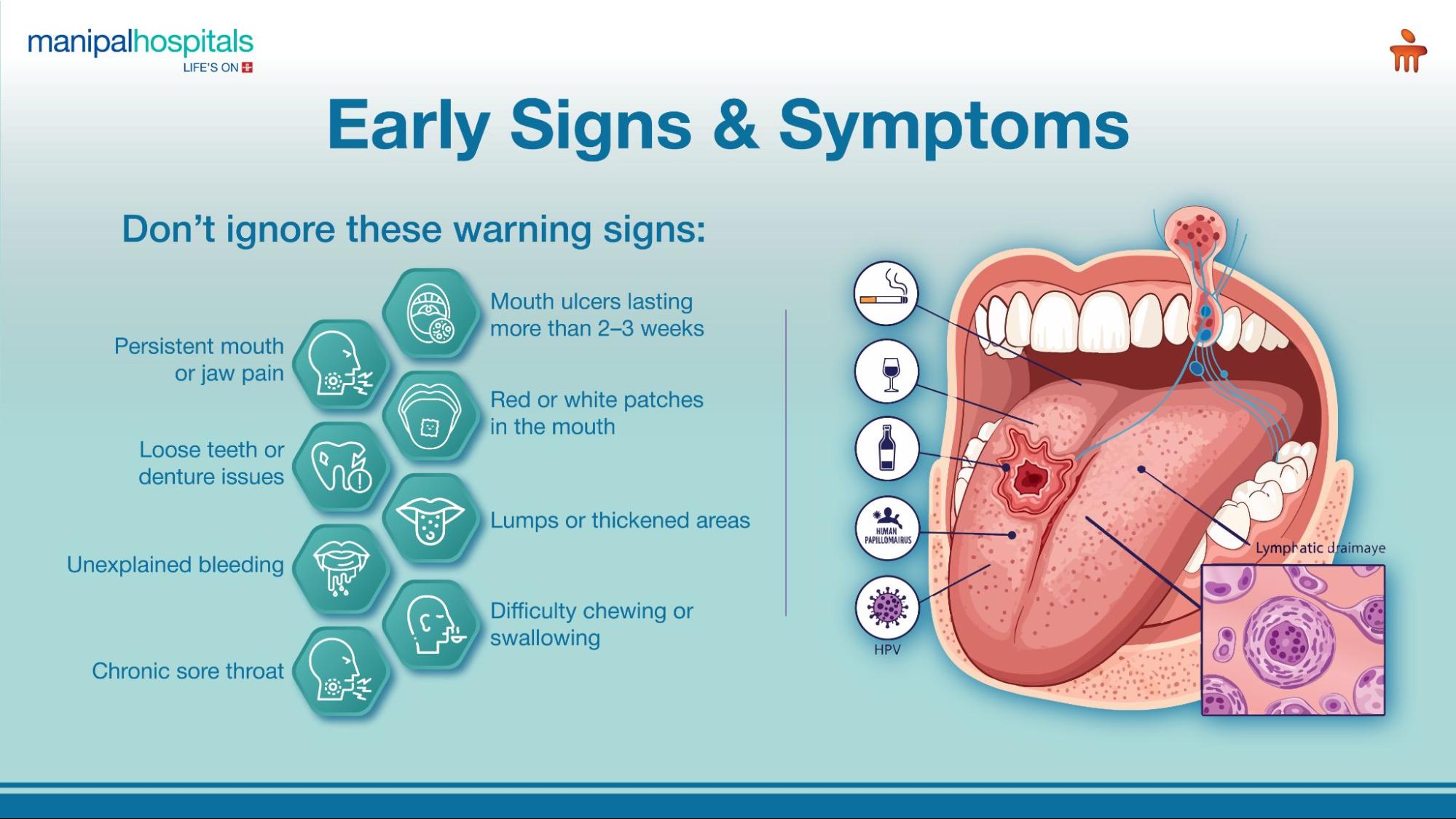
1. Persistent Mouth Ulcers
A mouth ulcer that does not heal within 2–3 weeks is one of the most common early signs of oral cancer. It may appear painless initially but can worsen over time.
2. Red or White Patches
Unusual red (erythroplakia) or white (leukoplakia) patches inside the mouth or on the tongue can be precancerous changes and require medical evaluation.
3. Lumps or Thickened Areas
Any unexplained swelling, lump, or thickening in the mouth, lips, or neck should be checked immediately.
4. Difficulty in Swallowing or Chewing
If you frequently feel discomfort while eating or notice food getting stuck, it could indicate a deeper issue.
5. Persistent Pain or Numbness
Unexplained numbness or pain in the mouth, jaw, or neck area is a red flag.
6. Voice Changes
A hoarse voice lasting more than two weeks should not be ignored.
7. Loose Teeth or Denture Problems
Sudden loosening of teeth or ill-fitting dentures can be linked to underlying oral conditions.
8. Unexplained Bleeding
Bleeding from the mouth without injury or a dental cause requires immediate attention.
9. Chronic Sore Throat
A persistent sore throat or the sensation of something stuck in the throat may indicate oral or throat cancer.
What Causes Oral Cancer? Key Risk Factors
Understanding oral cancer causes can help in prevention. The most common risk factors include:
-
Tobacco Use: Smoking cigarettes, cigars, or chewing tobacco significantly increases risk.
-
Alcohol Consumption: Heavy drinking, especially combined with tobacco, raises cancer risk.
-
HPV Infection: Certain strains of human papillomavirus (HPV), particularly HPV-16, are linked to oral cancers.
-
Sun Exposure: Prolonged sun exposure increases the risk of lip cancer.
-
Poor Nutrition: Diets low in fruits and vegetables may contribute to cancer development.
-
Poor Oral Hygiene: Neglecting oral care can increase susceptibility to infections and abnormalities.
A Real-Life Example
A 45-year-old patient visited Manipal Hospitals Kharadi with a small ulcer on the tongue that had persisted for over a month. Initially dismissed as a minor issue, it was later diagnosed as early-stage oral cancer. Thanks to timely intervention, the patient underwent a minimally invasive procedure and recovered well.
This example highlights how early detection can make a life-saving difference.
Care Essentials: Do’s and Don’ts
Do’s
-
Perform regular self-examinations of your mouth
-
Maintain proper oral hygiene
-
Visit your dentist regularly
-
Eat a healthy, balanced diet
-
Limit alcohol intake
-
Use sun protection for lips
Don’ts
-
Don’t ignore symptoms lasting more than 2–3 weeks
-
Don’t use tobacco in any form
-
Don’t delay medical consultation
-
Don’t rely on self-diagnosis
Why Choose Manipal Hospitals Kharadi for Oral Cancer Care?
At Manipal Hospitals Kharadi, patients receive comprehensive cancer care supported by advanced diagnostics and a multidisciplinary team. From early screening to personalised treatment plans, the focus remains on accurate diagnosis, effective treatment, and holistic recovery.
Oral cancer may start silently, but your body often gives early warning signs. Paying attention to these symptoms and seeking timely medical help can make all the difference. Early diagnosis not only improves survival rates but also ensures a better quality of life.
Conclusion
If you notice any unusual or persistent symptoms, don’t delay. Book a consultation with experts at Manipal Hospitals Kharadi and take the first step towards better oral health.
Disclaimer: This article is for informational purposes only and does not replace professional medical advice. Always consult a qualified healthcare provider for diagnosis and treatment.
FAQ's
If it persists beyond 2–3 weeks or shows signs of bleeding or growth, consult a doctor.
While not completely preventable, avoiding tobacco and alcohol and maintaining oral hygiene can reduce risk.
Tobacco users, heavy drinkers, and individuals with HPV infection are at higher risk.
A doctor examines your mouth, throat, and neck for any abnormalities or lumps.
Not always, but they can be precancerous and should be checked.
Stages range from 0 (precancerous) to IV (advanced cancer with spread).
Share this article on: