5 Min Read
It often starts with something small. You reach up to grab a file, stretch your arm while waking up, or try to lift a grocery bag, and suddenly there’s a sharp pain in your shoulder. At first, you ignore it. Maybe it’s just fatigue. But over time, the pain becomes persistent, disturbing your sleep and limiting simple daily movements.
This is how shoulder impingement syndrome typically presents. It is one of the most common causes of shoulder pain seen in adults today, especially among working professionals, athletes, and individuals with poor posture habits. At Manipal Hospitals, a leading orthopaedic hospital in Pune, specialists frequently manage such cases and emphasise that early diagnosis and timely treatment can lead to successful recovery in over 90% of patients.
Synopsis
- What Exactly is Shoulder Impingement Syndrome?
- Shoulder Impingement Symptoms: Recognising Early Signs
- Causes and Risk Factors
- Diagnosis: Getting the Right Assessment
- Effective Treatment Options
- Surgical Treatment (When Needed)
- Care Essentials: Do’s and Don’ts
- Prevention: Keeping Your Shoulders Healthy
- Conclusion
What Exactly is Shoulder Impingement Syndrome?
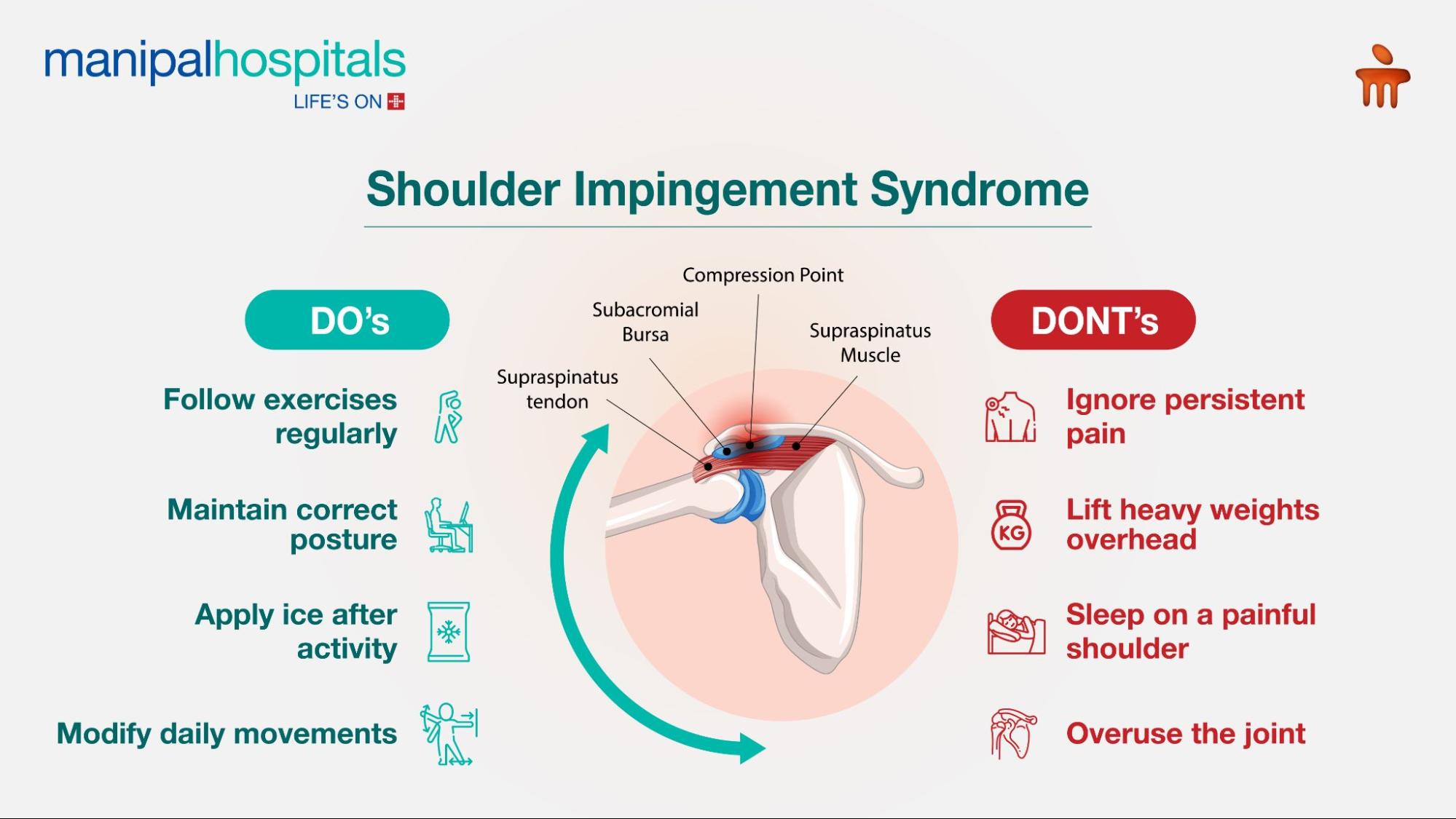
The shoulder is a highly mobile joint, allowing a wide range of motion. However, this flexibility also makes it vulnerable to injury. Shoulder impingement occurs when the rotator cuff tendons or the bursa (a cushioning sac) get compressed in a narrow space between the upper arm bone (humerus) and the acromion (part of the shoulder blade).
You can think of it as a narrow passageway. When inflammation develops due to overuse or injury, the space becomes even tighter. As a result, every time you lift your arm, the tendons get “pinched,” causing pain and irritation.
Over time, this can lead to worsening inflammation, reduced movement, and even tendon damage if left untreated.
Shoulder Impingement Symptoms: Recognising Early Signs
One of the biggest challenges with this condition is that symptoms often begin mildly and gradually worsen. Being aware of the warning signs can help you seek timely care.
Common symptoms include:
-
Pain while lifting the arm, especially overhead
-
Difficulty reaching behind your back
-
Shoulder pain that worsens at night
-
A dull, constant ache even at rest
-
Weakness in the affected arm
-
Reduced range of motion
-
Clicking or catching sensation during movement
Many patients visiting Manipal Hospital Kharadi report night pain as their most troubling symptom, often affecting their sleep quality and overall well-being.
Causes and Risk Factors
Shoulder impingement doesn’t usually happen overnight. It develops due to a combination of lifestyle habits, repetitive stress, and age-related changes.
Some common causes include:
-
Repetitive overhead activities such as swimming, tennis, or gym workouts
-
Occupational strain in painters, carpenters, or desk workers
-
Poor posture, especially rounded shoulders from prolonged screen time
-
Bone spurs, which narrow the joint space
-
Inflammation of the bursa (bursitis)
-
Tendonitis of the rotator cuff
-
Age-related degeneration
-
Sudden injury or fall
For example, a software professional working long hours without ergonomic support may gradually develop shoulder stiffness and pain, which later progresses into impingement.
Diagnosis: Getting the Right Assessment
Accurate diagnosis is essential for effective treatment. At Manipal Hospital Pune, specialists follow a systematic approach:
-
Detailed medical history to understand pain patterns and triggers
-
Physical examination to assess movement, strength, and specific impingement signs
-
Imaging tests, such as:
-
X-rays to detect bone abnormalities
-
MRI scans to evaluate soft tissues, inflammation, or tears
-
Ultrasound for dynamic assessment and guided injections
This comprehensive evaluation ensures that the treatment plan is tailored to the patient’s exact condition.
Effective Treatment Options
The encouraging news is that most cases of shoulder impingement can be treated without surgery.
Conservative Treatment
This is the first and most effective approach for the majority of patients:
-
Rest and activity modification
Avoid movements that trigger pain while maintaining gentle mobility
-
Physiotherapy (key to recovery)
A structured program focuses on the following:
-
Strengthening rotator cuff muscles
-
Improving flexibility
-
Correcting posture
-
Restoring normal shoulder mechanics
- Ice therapy and anti-inflammatory measures
Helps reduce swelling and discomfort
-
Injections (if required)
Used to control inflammation and enable better participation in physiotherapy
Studies suggest that 70–90% of patients show significant improvement with physiotherapy alone, making it the cornerstone of treatment.
Surgical Treatment (When Needed)
In cases where symptoms persist despite months of conservative care, surgery may be recommended.
Arthroscopic subacromial decompression is the most common procedure:
-
Minimally invasive technique
-
Removes inflamed tissue and bone spurs
-
Creates more space for tendons
-
Faster recovery compared to open surgery
This procedure has a success rate of over 90%, especially when followed by proper rehabilitation.
Care Essentials: Do’s and Don’ts
Managing shoulder impingement requires active participation from the patient.
DO:
-
Follow your physiotherapy routine consistently
-
Apply ice after activity
-
Maintain correct posture
-
Modify daily movements to avoid strain
DON’T:
-
Ignore persistent pain
-
Lift heavy objects overhead
-
Sleep on the affected shoulder
-
Continue activities that worsen symptoms
Small daily changes can significantly speed up recovery.
Prevention: Keeping Your Shoulders Healthy
Preventing shoulder impingement is possible with simple lifestyle adjustments:
-
Strengthen shoulder and back muscles regularly
-
Maintain good posture, especially during desk work
-
Take breaks during repetitive activities
-
Warm up before exercise and stretch afterward
-
Ensure proper ergonomics at your workstation
These preventive measures are strongly recommended by experts at Manipal Hospital Kharadi, especially for individuals in sedentary jobs.
Conclusion
Shoulder impingement syndrome is common but highly treatable. The key lies in early recognition, proper diagnosis, and a structured rehabilitation plan. Ignoring symptoms can lead to long-term complications, while timely intervention can restore full function and eliminate pain.
At Manipal Hospital Pune, the focus is on personalised care combining advanced diagnostics, expert physiotherapy, and minimally invasive procedures when required. Whether your symptoms are mild or severe, the right guidance can help you regain mobility and confidence.
If shoulder pain is limiting your daily life, don’t wait. Seek expert care and take the first step towards a pain-free future.
Disclaimer: This article is for informational purposes only and does not replace professional medical advice. Please consult a qualified orthopaedic specialist for diagnosis and treatment.
FAQ's
Most patients recover within 6–12 weeks with proper physiotherapy, although full recovery may take a few months.
Yes, if untreated, it can lead to rotator cuff tears and chronic pain.
Yes, but only guided exercises. Incorrect movements can aggravate the problem.
Not necessarily. Most patients improve with non-surgical treatment.
Recurrence is possible if posture and activity habits are not corrected.
Share this article on: