8 Min Read
It usually happens in a second.
You’re walking normally, maybe a little distracted, and suddenly your foot twists awkwardly. That sharp pain in your ankle makes you stop instantly. At first, you think, “It’s nothing, I’ll be fine.” But within minutes, the swelling starts—and walking becomes difficult.
This is how most people experience a sprained ankle. And honestly, it’s one of those ankle injuries that people tend to ignore until it starts affecting daily life.
At Manipal Hospital Kharadi, doctors often see patients who waited too long, thinking the pain would just go away. Let’s talk about it in a simple, real way so you don’t make the same mistake.
Synopsis
- What Exactly is a Sprained Ankle?
- Why Do Sprained Ankles Happen So Easily?
- Sprained Ankle Symptoms You Shouldn’t Ignore
- Not All Sprains Are the Same
- What Should You Do Immediately?
- Treatment for Sprained Ankle
- How to Heal a Sprained Ankle Overnight – The Truth
- Simple Recovery Tips That Actually Help
- When Should You Really Worry?
- What Happens If You Ignore It?
- A Real-Life Situation
- Conclusion
What Exactly is a Sprained Ankle?
Think of your ankle like a hinge supported by strong bands called ligaments. These ligaments keep your joint stable.
Now imagine stretching a rubber band too far. That’s exactly what happens in a sprain. The ligaments either stretch too much or tear.
Sometimes it’s mild, sometimes serious, but your body always gives you signals.
Why Do Sprained Ankles Happen So Easily?
If you’re wondering, “How did this even happen to me? ”, you’re not alone.
The truth is, a sprained ankle doesn’t always need a big fall. It can happen during very normal activities like:
-
Walking on an uneven road
-
Missing a step while going downstairs
-
Running or playing sports
-
Wearing heels or unstable footwear
-
Even getting up in a hurry
I’ve seen people sprain their ankle just while getting off a bike or stepping on a pothole. It’s that common.
Sprained Ankle Symptoms You Shouldn’t Ignore
Here’s the thing your body always tells you when something isn’t right.
-
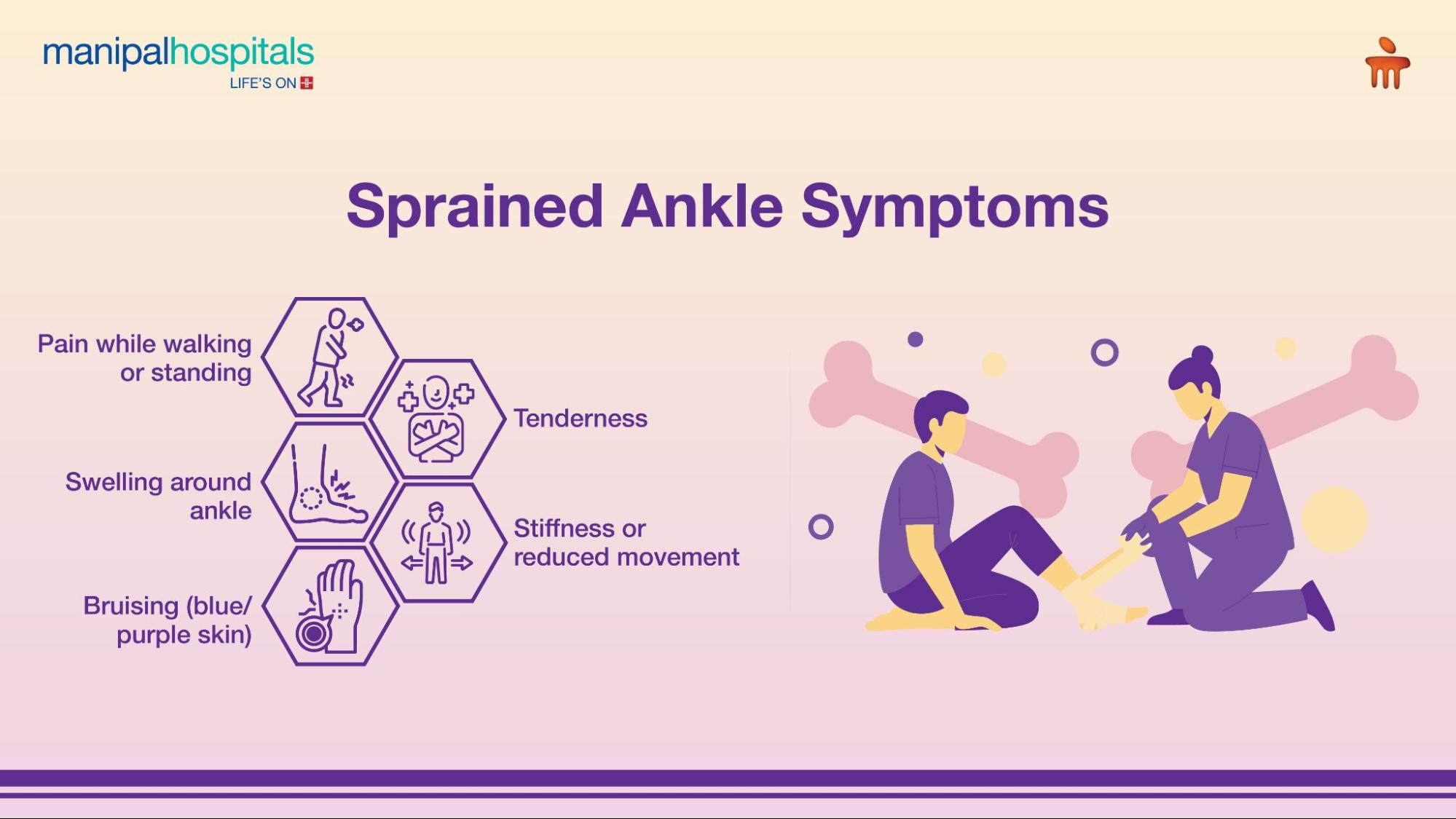
Some common sprained ankle symptoms include:
-
Pain, especially when you try to stand or walk
-
Swelling that increases within hours
-
A bluish or purple bruise
-
Tenderness when you touch the area
-
Stiffness or difficulty moving your ankle
And in some cases, people even say they heard a small “pop” when the injury happened.
If you’re unable to walk at all, don’t ignore it—it could be more than just a sprain.
Not All Sprains Are the Same
One mistake many people make is assuming all sprains are “minor.”
In reality, there are three types:
-
Mild sprain – slight stretch, manageable pain
-
Moderate sprain – partial tear, swelling, difficulty walking
-
Severe sprain – complete tear, intense pain, instability
At Manipal Hospital Kharadi, orthopedic specialists always check this carefully before deciding on the treatment for a sprained ankle.
What Should You Do Immediately?
The first 1–2 days really matter.
If you’ve just injured your ankle, don’t overthink it—just remember this simple rule: R.I.C.E
-
Rest – Stop walking; give it a break
-
Ice – Apply ice for 15–20 minutes
-
Compression – Use a bandage to control swelling
-
Elevation – Keep your foot raised
A lot of people skip this step and regret it later. This simple care can reduce swelling faster than you think.
Treatment for Sprained Ankle
Now comes the part everyone worries about—“Do I need treatment, or will it heal on its own?”
The answer depends on the severity.
For mild to moderate sprains:
-
Pain relief medicines
-
Ankle support or brace
-
Physiotherapy exercises
-
Gradual return to normal activity
For severe sprains:
-
Immobilisation (boot or cast)
-
Supervised rehab
-
Rarely, surgery
Doctors at Manipal Hospital Kharadi usually focus a lot on rehabilitation because healing is not just about pain going away it’s about regaining strength.
How to Heal a Sprained Ankle Overnight – The Truth
Let’s clear this myth once and for all.
You cannot fully heal a sprained ankle overnight.
But yes, you can reduce pain and swelling quickly if you:
-
Use ice regularly
-
Keep your foot elevated while resting
-
Avoid putting weight on it
-
Take proper medication
Healing takes time:
-
Mild: around 1–2 weeks
-
Moderate: 3–6 weeks
-
Severe: a few months
Rushing recovery often makes things worse.
Simple Recovery Tips That Actually Help
From what doctors and patients both experience, these small things make a big difference:
-
Start gentle movements once the pain reduces
-
Don’t skip physiotherapy
-
Wear comfortable, supportive footwear
-
Avoid sports too early
-
Use an ankle brace if advised
It’s not about doing too much it’s about doing the right things consistently.
When Should You Really Worry?
Sometimes, it’s not “just a sprain.”
-
You should seek medical help if:
-
You cannot stand or walk
-
Swelling doesn’t reduce after a few days
-
Pain keeps increasing
-
You feel numbness
-
You’ve had repeated ankle injuries
In such cases, visiting an orthopaedic specialist at Manipal Hospital Kharadi can prevent long-term damage.
What Happens If You Ignore It?
This is where many people go wrong.
Ignoring a sprained ankle can lead to:
-
Weak ankles
-
Repeated injuries
-
Chronic pain
-
Joint instability
I’ve seen patients come back months later saying, “It never healed properly.” And most of the time, it’s because they didn’t rest or rehabilitate it well.
A Real-Life Situation
A young professional once visited Manipal Hospital Kharadi after months of ankle discomfort.
He had twisted his ankle while playing cricket but didn’t take it seriously. He kept walking, traveling, and even working out.
What started as a mild sprain turned into a recurring problem. His ankle would give way unexpectedly.
With proper physiotherapy and care, he recovered but it took much longer than it should have
Conclusion
A sprained ankle may feel like a small issue in the beginning, but it deserves proper attention. Understanding sprained ankle symptoms, following the right treatment for a sprained ankle, and knowing when to worry about a sprained ankle can save you from long-term trouble.
At the end of the day, your body heals well but only if you give it the care it needs.
And if you’re ever unsure, getting it checked at Manipal Hospital Kharadi is always a safer choice than waiting it out.
FAQ's
If you can’t walk, have severe pain, or see deformity, it could be a fracture. An X-ray will confirm it.
Rest, ice, compression, elevation, and physiotherapy are key.
Mild cases allow limited walking, but moderate to severe sprains need rest.
Anywhere from 1 week to a few months, depending on severity.
If pain, swelling, or difficulty walking persists beyond a few days.
Share this article on: