7 Min Read
Have you ever woken up in the morning and felt like your joints simply did not want to cooperate? Maybe your knees feel tight when you get out of bed, your fingers seem stiff after a long night's sleep, or your shoulders ache after sitting at your desk for hours. Joint stiffness is a common problem that affects people of all ages, but it is often ignored until it starts interfering with daily life.
At Manipal Hospital Pune, our orthopaedic specialists frequently meet patients who believe joint stiffness is a normal part of ageing. While ageing can contribute to reduced flexibility, persistent stiffness may indicate an underlying condition that needs attention. Understanding the causes, treatment options, and preventive measures can help you maintain healthy joints and enjoy an active lifestyle.
Synopsis
What Is Joint Stiffness?
Joint stiffness refers to difficulty moving a joint freely. It can occur in any joint, including the knees, hips, shoulders, ankles, wrists, and fingers. Some people experience stiffness only in the morning, while others notice it after sitting or remaining inactive for a prolonged period.
In many cases, stiffness improves with movement. However, when it becomes frequent, severe, or persistent, it should not be ignored.
Why Do Joints Become Stiff?
Joint stiffness can result from several factors, ranging from simple lifestyle habits to chronic medical conditions.
Osteoarthritis
One of the most common causes of joint stiffness is osteoarthritis. This condition develops when the protective cartilage between bones gradually wears away. As a result, the bones rub against each other, causing pain, stiffness, and reduced mobility.
People with osteoarthritis often experience morning stiffness that improves within 30 minutes of movement.
Rheumatoid Arthritis
Unlike osteoarthritis, rheumatoid arthritis is an autoimmune condition. The immune system mistakenly attacks the lining of the joints, leading to inflammation, swelling, and prolonged stiffness.
Many patients describe the stiffness as lasting for several hours after waking up, making everyday tasks difficult.
Lack of Physical Activity
Modern lifestyles often involve long hours of sitting. Whether working at a desk or spending time in front of a screen, inactivity can reduce joint flexibility and weaken surrounding muscles.
Think of a door hinge that is rarely used—it becomes harder to move. Joints behave similarly when they are not regularly exercised.
Previous Injuries
Old injuries can continue to affect joint health long after the initial healing process. Ligament injuries, fractures, and dislocations may leave behind scar tissue or altered joint mechanics that contribute to stiffness.
Ageing
As we grow older, the natural cushioning within our joints gradually decreases. The body also produces less synovial fluid, which helps lubricate the joints. This can lead to stiffness and reduced flexibility over time.
Other Medical Conditions
Several health conditions can contribute to joint stiffness, including:
-
Gout
-
Lupus
-
Bursitis
-
Tendinitis
-
Thyroid disorders
-
Certain infections
Proper diagnosis is essential to identify the exact cause and begin appropriate treatment.
Common Symptoms Associated with Joint Stiffness
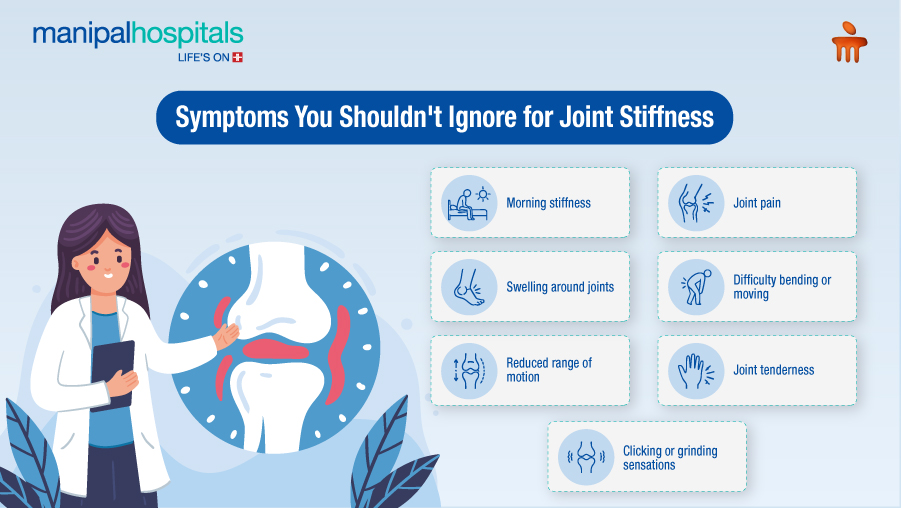
Joint stiffness rarely occurs alone. Many people also experience:
-
Joint pain
-
Swelling around the joint
-
Reduced range of motion
-
Tenderness
-
Warmth or redness
-
Difficulty performing daily activities
-
Clicking or grinding sensations
If these symptoms persist for weeks, seeking medical evaluation is important.
How Joint Stiffness Affects Daily Life
Many patients underestimate how significantly joint stiffness can affect quality of life.
Simple activities such as climbing stairs, carrying groceries, driving, gardening, or even opening a jar may become challenging. Over time, persistent stiffness can reduce independence, limit participation in hobbies, and affect mental well-being.
At Manipal Hospital Kharadi, we encourage patients to address symptoms early before they begin to impact overall health and mobility.
Effective Treatments for Joint Stiffness
The good news is that most cases of joint stiffness can be managed successfully with the right approach.
Regular Exercise
Movement is one of the best medicines for stiff joints.
Low-impact activities such as the following:
-
Walking
-
Swimming
-
Cycling
-
Yoga
-
Stretching exercises
Help improve flexibility and maintain joint function.
Many patients notice significant improvement after adopting a consistent exercise routine.
Physiotherapy
Physiotherapy plays a crucial role in managing joint stiffness.
A physiotherapist develops personalised exercises designed to:
-
Improve flexibility
-
Strengthen muscles
-
Enhance balance
-
Reduce pain
-
Improve posture
Targeted rehabilitation can significantly improve mobility and help prevent future problems.
Weight Management
Excess body weight places additional pressure on joints, particularly the knees and hips.
Even modest weight loss can reduce joint stress and improve mobility. For many individuals, maintaining a healthy weight is one of the most effective long-term strategies for joint health.
Heat and Cold Therapy
Heat therapy helps relax muscles and improve circulation. Warm showers, heating pads, and warm compresses can be particularly beneficial in the morning.
Cold therapy may help reduce inflammation and swelling following physical activity.
Medications
Depending on the underlying condition, doctors may recommend the following:
-
Pain-relieving medications
-
Anti-inflammatory medicines
-
Disease-modifying drugs for autoimmune conditions
-
Joint injections
Medication plans should always be guided by a healthcare professional.
Advanced Orthopaedic Treatments
In severe cases where joint damage significantly affects quality of life, advanced procedures may be considered.
Modern orthopaedic care includes minimally invasive treatments and joint replacement surgeries that can restore mobility and relieve pain.
The orthopaedic team at Manipal Hospital Kharadi offers comprehensive evaluation and advanced treatment options tailored to each patient's needs.
Simple Do's and Don'ts for Healthy Joints
Do's
-
Stay physically active every day
-
Maintain a healthy body weight
-
Stretch regularly
-
Drink plenty of water
-
Follow a balanced diet rich in fruits and vegetables
-
Use proper posture while sitting and standing
-
Seek medical advice if symptoms persist
Don'ts
-
Avoid prolonged sitting
-
Ignore recurring joint pain
-
Skip warm-up exercises before physical activity
-
Lift heavy objects incorrectly
-
Self-medicate without consulting a doctor
-
Delay treatment for persistent symptoms
Can Joint Stiffness Be Prevented?
While not every cause of joint stiffness can be prevented, several healthy habits can reduce your risk significantly.
Stay Active
Regular movement keeps joints lubricated and flexible. Aim for at least 30 minutes of moderate physical activity most days of the week.
Eat for Joint Health
-
Include foods rich in:
-
Omega-3 fatty acids
-
Calcium
-
Vitamin D
-
Antioxidants
These nutrients support healthy bones and joints.
Stay Hydrated
Water plays a vital role in maintaining the lubrication of joints. Proper hydration helps cartilage function effectively and reduces friction between bones.
Protect Your Joints
Use proper techniques when lifting heavy objects and wear protective equipment during sports activities.
Schedule Regular Health Check-ups
Early detection of arthritis and other joint conditions can prevent long-term complications and preserve mobility.
When Should You See a Doctor?
You should consult a healthcare professional if:
-
Stiffness lasts longer than a few weeks
-
Symptoms are worsening
-
Joint swelling is present
-
Daily activities become difficult
-
You experience unexplained pain or fatigue
-
Morning stiffness lasts more than an hour
Early diagnosis often leads to better treatment outcomes and improved quality of life.
Joint stiffness may seem like a minor inconvenience, but it can be an early sign of an underlying health condition that deserves attention. Whether it is caused by arthritis, inactivity, injury, or ageing, timely intervention can make a significant difference.
With the right combination of lifestyle modifications, physiotherapy, medical care, and preventive strategies, most people can regain mobility and continue enjoying an active, fulfilling life.
If you are experiencing persistent joint pain and stiffness, the expert orthopaedic specialists in kharadi, Pune can help identify the cause and create a personalised treatment plan designed to restore comfort, flexibility, and confidence in movement.
FAQ's
Morning joint stiffness is commonly associated with arthritis, particularly rheumatoid arthritis and osteoarthritis. It occurs due to reduced joint movement during sleep and inflammation within the joints.
Not always. While arthritis is a common cause, stiffness can also result from inactivity, injury, dehydration, or other inflammatory conditions.
Yes. Regular low-impact exercise improves flexibility, strengthens muscles, and helps maintain healthy joint movement.
Proper hydration supports joint lubrication and may help reduce discomfort associated with stiffness.
Consult a doctor if stiffness is persistent, severe, accompanied by swelling, or affects your ability to perform daily activities.
Share this article on: