7 Min Read
Receiving a diagnosis of ovarian or uterine cancer can feel overwhelming. Along with the emotional impact, many women and their families are left with important questions about treatment, recovery, and long-term health. One of the most effective treatment approaches for both conditions is surgery. Understanding the available surgical pathways can help patients make informed decisions and approach treatment with greater confidence.
At Manipal Hospitals, patients receive personalised cancer care backed by advanced technology, experienced specialists, and a multidisciplinary approach to treatment. At Manipal Hospital Kharadi, our expert gynaecologic oncology team focuses on delivering comprehensive and compassionate care tailored to every patient's needs.
Synopsis
Understanding Ovarian Cancer
Ovarian cancer develops in the ovaries, the organs responsible for producing eggs and female hormones. Often referred to as a "silent disease," ovarian cancer may not cause noticeable symptoms in its early stages. As a result, many cases are diagnosed at an advanced stage.
Common Ovarian Cancer Symptoms
Women should consult a doctor if they experience the following:
-
Persistent bloating or abdominal swelling
-
Pelvic discomfort or pain
-
Feeling full quickly while eating
-
Changes in bowel habits
-
Unexplained weight changes
-
Fatigue that does not improve with rest
Recognising these symptoms early and seeking medical attention can significantly improve treatment outcomes.
Surgical Treatment for Ovarian Cancer
Surgery remains the cornerstone of ovarian cancer treatment. The primary goal is to remove cancerous tissue and determine the extent of disease spread.
Total Abdominal Hysterectomy with Bilateral Salpingo-Oophorectomy
This is the most common surgical procedure for ovarian cancer. It involves the removal of:
-
Uterus
-
Cervix
-
Both ovaries
-
Both fallopian tubes
This procedure helps eliminate the primary source of cancer and reduces the risk of recurrence.
Debulking Surgery
When ovarian cancer has spread beyond the ovaries, surgeons perform debulking surgery to remove as much visible tumour tissue as possible.
Studies have consistently shown that patients with minimal residual disease after surgery often experience better treatment outcomes and longer survival rates.
Omentectomy
The omentum is a fatty layer that covers abdominal organs. Since ovarian cancer commonly spreads to this area, surgeons often remove it during treatment.
Lymph Node Assessment
Nearby lymph nodes may be removed and examined to determine whether cancer has spread beyond the ovaries.
Fertility-Preserving Surgery
For younger women diagnosed with early-stage ovarian cancer, fertility preservation may be possible. In carefully selected cases, only one ovary and fallopian tube may be removed while preserving the uterus and the unaffected ovary.
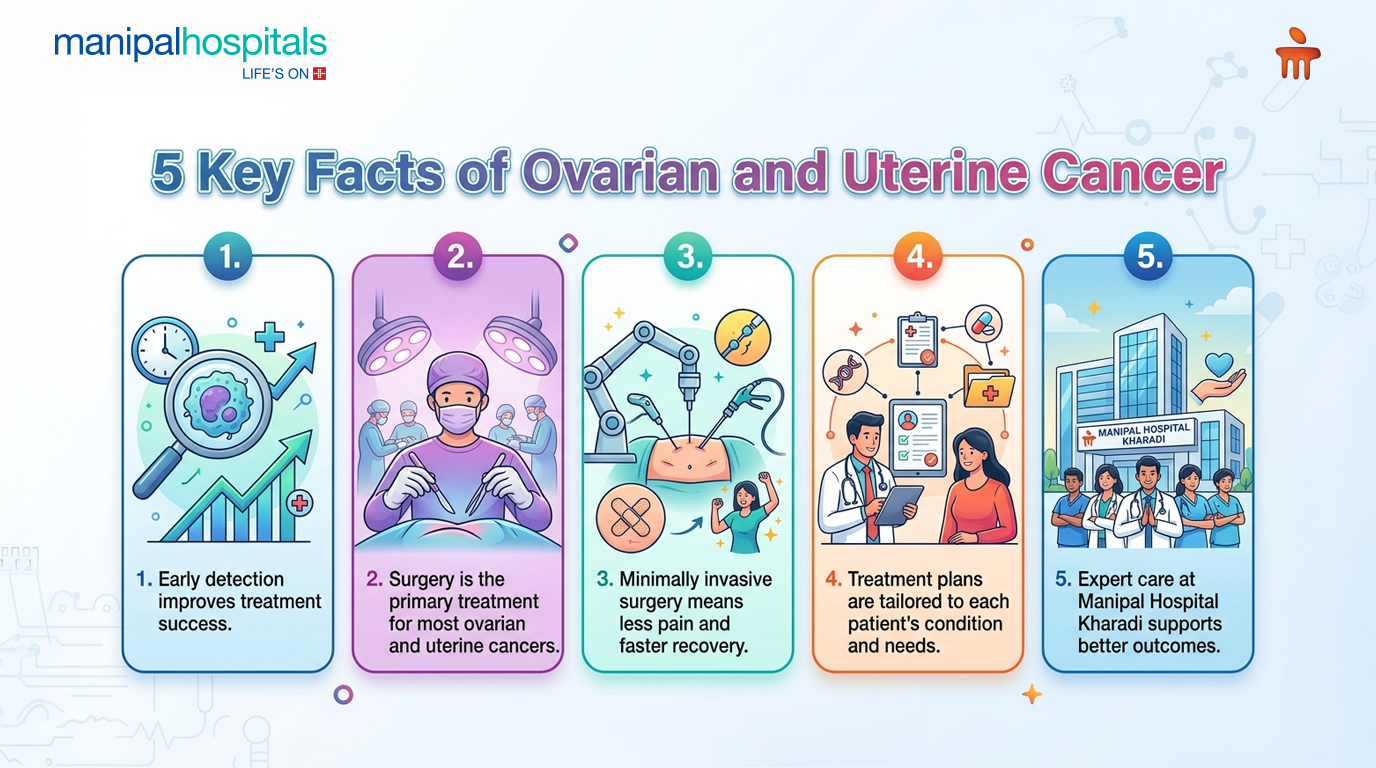
At Manipal Hospital Kharadi, advanced laparoscopic and robotic-assisted techniques are available for eligible patients, helping reduce pain, minimise scarring, and promote faster recovery.
Understanding Uterine Cancer
Uterine cancer, also known as endometrial cancer, develops in the lining of the uterus. Unlike ovarian cancer, uterine cancer often presents with clear warning signs, leading to earlier diagnosis and treatment.
Common Uterine Cancer Symptoms
The most important symptom is abnormal vaginal bleeding, including:
-
Bleeding after menopause
-
Unusually heavy periods
-
Bleeding between menstrual cycles
Any abnormal bleeding should be evaluated by a healthcare professional, as early diagnosis greatly improves treatment success.
Surgical Treatment for Uterine Cancer
For most women, surgery is the primary treatment option.
Total Hysterectomy
This procedure involves removing:
-
The uterus
-
The cervix
-
A hysterectomy can be performed through the following methods:
-
Open surgery
-
Laparoscopic surgery
-
Robotic-assisted surgery
-
Vaginal surgery
The choice depends on the stage of cancer and the patient's overall health.
Bilateral Salpingo-Oophorectomy (BSO)
Many patients also undergo removal of both ovaries and fallopian tubes to reduce the risk of cancer spread and recurrence.
Lymph Node Mapping and Biopsy
Surgeons may assess lymph nodes to determine whether cancer has spread beyond the uterus.
Modern sentinel lymph node mapping techniques allow surgeons to identify and evaluate only key lymph nodes, reducing complications while maintaining diagnostic accuracy.
Minimally Invasive Surgery
Minimally invasive procedures have transformed uterine cancer treatment. Benefits include:
-
Smaller incisions
-
Less post-operative pain
-
Reduced blood loss
-
Shorter hospital stays
-
Faster return to daily activities
At Manipal Hospital Kharadi, robotic and laparoscopic surgery options help patients recover comfortably while maintaining excellent treatment outcomes.
Factors That Influence Surgical Decisions
Every cancer diagnosis is unique. Treatment recommendations are based on several important factors.
Cancer Stage
The stage determines how far the cancer has spread and helps guide the extent of surgery required.
Cancer Grade
Higher-grade cancers tend to grow more aggressively and may require more comprehensive treatment.
Patient's Age and Health
Existing medical conditions, fitness levels, and overall health play a significant role in treatment planning.
Fertility Goals
Younger women who wish to have children in the future may be eligible for fertility-preserving options.
Personal Preferences
Patients are actively involved in decision-making, ensuring treatment plans align with their values and priorities.
The multidisciplinary cancer team at Manipal Hospital Kharadi includes gynaecologic oncologists, medical oncologists, radiation specialists, radiologists, pathologists, and dedicated nursing professionals who work together to create customised treatment plans.
Preparing for Surgery: Important Do's and Don'ts
Do's
Follow Your Doctor's Instructions
Carefully follow all preoperative instructions regarding medications, diet, and investigations.
Stay Informed
Ask questions about your diagnosis, treatment plan, and expected recovery timeline.
Build a Support System
Arrange help from family members or carers during the recovery period.
Focus on Nutrition
A healthy diet before and after surgery can support healing and improve recovery.
Attend Follow-Up Visits
Regular follow-ups help monitor recovery and identify any concerns early.
Don'ts
Don't Ignore Symptoms
Persistent symptoms should never be dismissed or delayed.
Don't Self-Medicate
Always discuss supplements or medications with your doctor before surgery.
Don't Overexert Yourself
Recovery takes time. Avoid heavy lifting and strenuous activities until your doctor approves.
Don't Skip Follow-Up Appointments
Regular monitoring is essential for long-term health and early detection of recurrence.
Why Choose Manipal Hospital Kharadi for Gynaecologic Cancer Care?
Women facing ovarian or uterine cancer require specialised care from experienced experts. Manipal Hospital Kharadi combines advanced technology with personalised treatment strategies to deliver comprehensive cancer care.
Key advantages include the following:
-
Experienced gynaecologic oncology specialists
-
Advanced robotic and laparoscopic surgery facilities
-
Comprehensive cancer diagnosis and staging
-
Multidisciplinary treatment planning
-
Personalised rehabilitation and recovery support
-
Patient-centred care focused on comfort and emotional well-being
At Manipal Hospital Kharadi, every patient receives a treatment plan designed around their unique medical needs, ensuring the highest standards of safety, precision, and compassion throughout the cancer journey.
Ovarian and uterine cancers can be challenging diagnoses, but advances in surgical treatment have significantly improved outcomes for many women. Early diagnosis, expert surgical care, and personalised treatment planning remain the foundation of successful cancer management.
If you experience persistent ovarian cancer symptoms or abnormal uterine bleeding, seeking timely medical advice can make a significant difference. The experienced gynaecologists at Manipal Hospital Kharadi are committed to guiding patients through every stage of diagnosis, treatment, recovery, and long-term care.
FAQ's
Recovery varies depending on the procedure performed. Open surgery may require 4–6 weeks, while minimally invasive surgery often allows recovery within 2–4 weeks.
In selected cases, hormone therapy may be considered. However, surgery remains the most effective treatment for most uterine cancer patients.
Yes. Robotic-assisted surgery is considered safe for eligible patients and offers benefits such as smaller incisions, less pain, and faster recovery.
In carefully selected early-stage cases, fertility-preserving surgery may be an option. A gynaecologic oncologist can determine suitability.
Most patients require follow-up visits every 3–6 months initially, with frequency decreasing over time based on recovery and overall health.
Share this article on: