5 Min Read
Every year on World Hypertension Day (May 17th), we’re reminded of something many of us tend to ignore: our blood pressure.
Let me share something real. A patient once walked into Manipal Hospital Kharadi just for a routine check-up. No symptoms, no complaints, just a general visit. When his blood pressure was checked, it was dangerously high. He was shocked because he “felt completely fine".
That’s exactly how hypertension works. It doesn’t knock loudly; it quietly builds up in the background.
In India, nearly 1 in 4 adults lives with high blood pressure. What’s worrying is that many don’t even know it. But here’s the good news: you can control it and, in many cases, even prevent it with simple lifestyle changes.
Synopsis
Understanding High Blood Pressure in Simple Terms
Think of your blood vessels like pipes and your heart like a pump. When the pressure inside those pipes is too high for too long, it starts causing damage.
Here’s a quick breakdown:
-
Normal: Below 120/80 mmHg
-
Slightly High: 120–129 / <80 mmHg
-
High (Stage 1): 130–139 / 80–89 mmHg
-
Very High (Stage 2): 140+/90+ mmHg
The tricky part? Most people don’t feel anything unusual. No pain, no warning signs—just silent damage over time. That’s why doctors at Manipal Hospital Kharadi always stress one thing: “Check your blood pressure regularly, even if you feel fine.”
Why World Hypertension Day Matters
World Hypertension Day is not just about awareness; it’s about action.
It’s a reminder to:
-
Check your blood pressure
-
Understand your risk
-
Start making small, healthier choices
Because when it comes to hypertension, early action can truly save lives.
How to Lower Blood Pressure Naturally (Realistic & Practical Tips)
You don’t always need drastic changes. In fact, small, consistent steps work best. Here’s what actually helps:
Start With Your Plate
Food plays a bigger role than most people realise.
At Manipal Hospital Kharadi, doctors often recommend a simple rule: eat fresh, eat balanced, and eat mindfully.
Include:
-
Fruits and vegetables
-
Whole grains
-
Lean protein
Reduce:
-
Salt (this is a big one!)
-
Packaged and processed foods
-
Even cutting down a little salt can show results within weeks.
Move Your Body Every Day
You don’t need to become a fitness freak. Just stay active.
-
Take a 30-minute walk
-
Use stairs instead of lifts
-
Dance, cycle, or even play a sport
Regular movement helps your heart work more efficiently, and that naturally lowers blood pressure.
In fact, staying active can reduce your hypertension risk by over 30%.
Watch Your Weight (Without Obsessing)
Extra weight means extra pressure on your heart.
The good part? Even losing a few kilos can make a noticeable difference.
You don’t need crash diets; just focus on consistency.
Slow Down & Manage Stress
Life is busy, and stress is almost unavoidable. But how you handle it matters.
Simple things that work:
-
Deep breathing
-
Meditation
-
Spending time doing what you enjoy
Even 10 minutes of calm can help your body reset.
Cut Smoking & Limit Alcohol
This is non-negotiable for heart health.
-
Smoking damages your blood vessels almost immediately
-
Alcohol, in excess, raises blood pressure
Quitting might feel difficult, but the benefits start almost instantly.
Don’t Ignore Sleep
Sleep is not a luxury; it’s essential.
Lack of sleep can increase blood pressure without you realising it.
Aim for 7–9 hours of good-quality sleep every night.
Daily Care: Simple Do’s & Don’ts
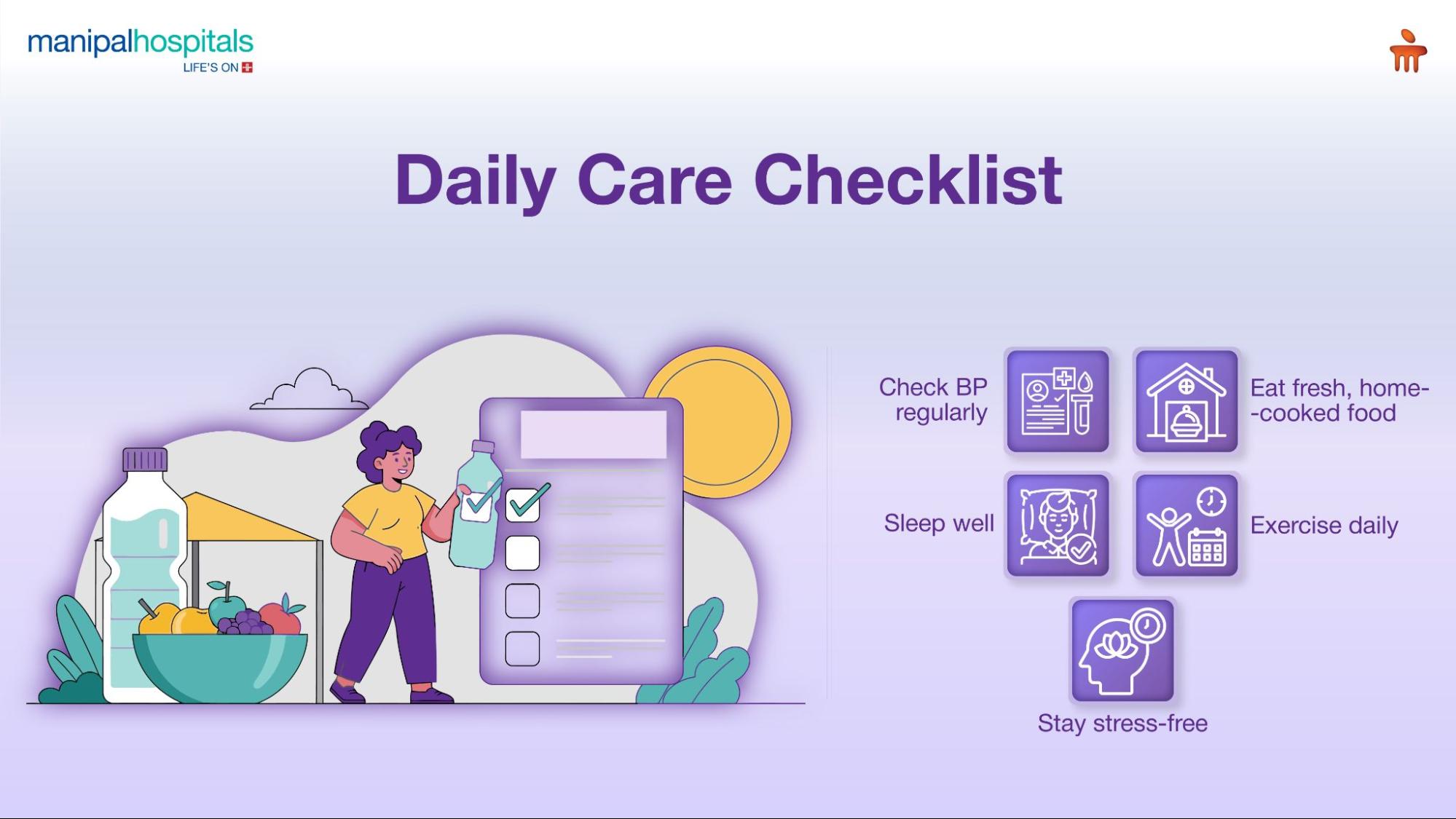
Do’s
-
Check your BP regularly
-
Eat fresh, home-cooked food
-
Stay active
-
Manage stress
-
Get proper sleep
-
Visit your doctor when needed
Don’ts
-
Don’t ignore high readings
-
Don’t overconsume salt
-
Don’t smoke
-
Don’t sit all day without movement
-
Don’t rely only on home remedies if BP is high
-
Taking care of your heart doesn’t require big, complicated changes. It’s about small daily habits, eating better, moving more, sleeping well, and staying mindful.
This World Hypertension Day, take that first step. Check your blood pressure. Talk to a doctor if needed.
And if you’re looking for expert care, the team at Manipal Hospital Kharadi is always there to guide you with the right advice and treatment.
Disclaimer
This content is for informational purposes only and should not replace professional medical advice. Always consult a qualified healthcare provider for proper diagnosis and treatment.
FAQ's
Anything consistently above 130/80 mmHg is considered high.
Yes, especially in the early stages. Lifestyle changes can make a big difference.
Some people notice changes in a few weeks, but consistency is key.
If your readings are high repeatedly, don’t wait; consult a specialist.
Stress may not directly cause long-term hypertension, but repeated stress can lead to temporary spikes. Over time, unhealthy coping habits like overeating, smoking, or poor sleep can increase your risk.
Yes, it’s becoming increasingly common among people in their 20s and 30s due to sedentary lifestyles, stress, and poor eating habits. That’s why early screening is important.
Share this article on: