5 Min Read
When it comes to taking care of your heart, most people wait until symptoms become serious. But the truth is, your heart often gives subtle warning signs much earlier. This is where diagnostic tests like the treadmill test and Holter monitoring test play a crucial role.
If you’ve been advised to undergo these tests or are simply curious about what a treadmill test is and how it works, this guide explains everything in a natural, easy-to-understand, handwritten-style format.
Synopsis
- What is a treadmill test?
- Why Doctors Recommend a Treadmill Test
- Treadmill Test Procedure (Simple Explanation)
- What is a Holter monitoring test?
- Holter Monitoring Test Procedure
- Treadmill Test vs Holter Monitoring
- When Should You Consider These Tests?
- A Simple Real-Life Insight
- Tips Before Going for These Tests
- Why Choose Manipal Hospital Kharadi?
- Conclusion
What is a treadmill test?
The treadmill test, commonly called TMT, is a heart test that checks how your heart performs when your body is physically active.
Think of it like this: when you walk fast or climb stairs, your heart has to work harder. If there is any blockage or problem with blood flow, it may show up during this activity. That’s exactly what this test helps identify.
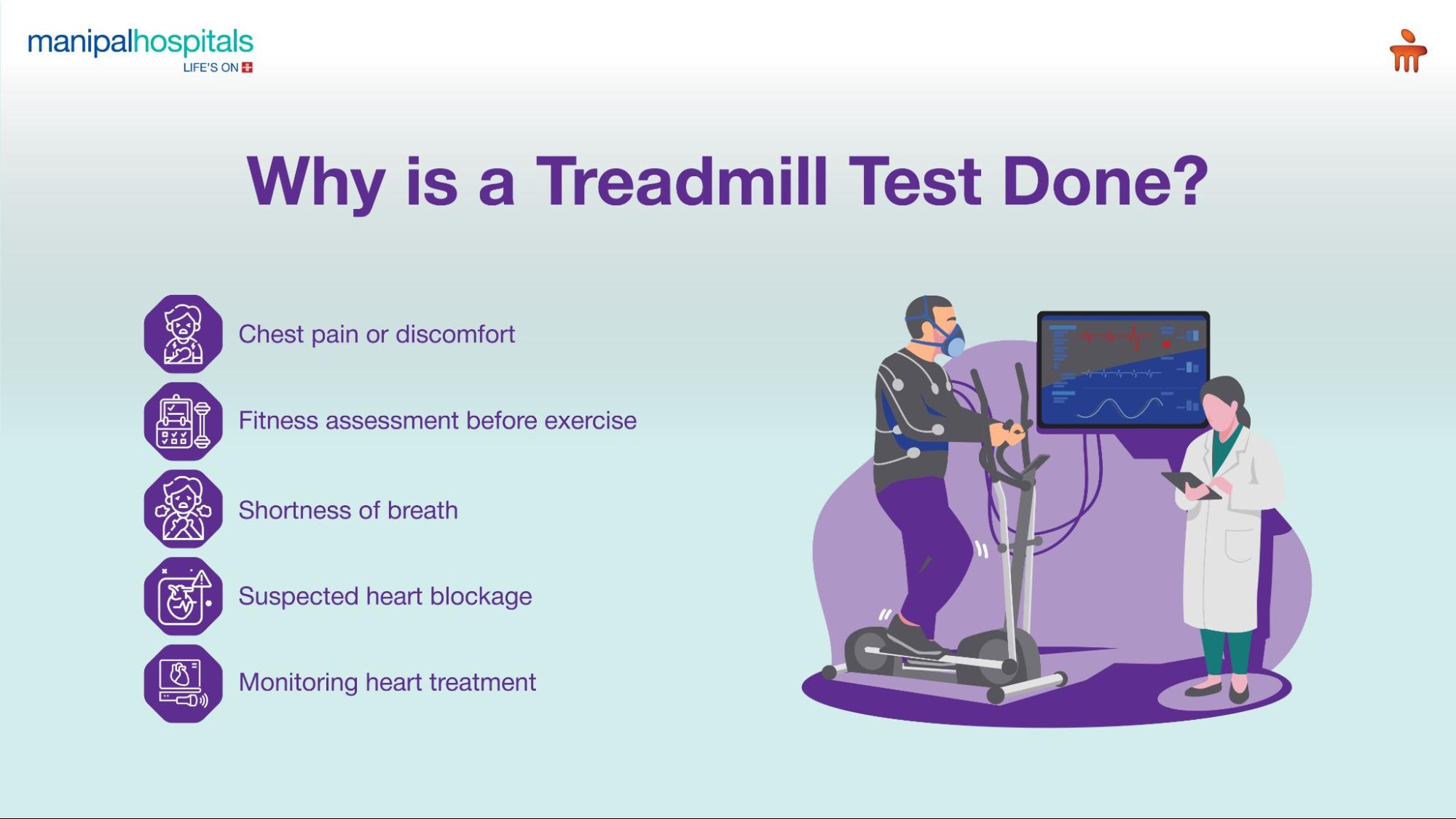
Why Doctors Recommend a Treadmill Test
A treadmill test is usually suggested if you have:
-
Chest pain or heaviness
-
Shortness of breath during activity
-
Suspected heart blockage
-
History of heart disease
-
Need for fitness evaluation before exercise
At Manipal Hospital Kharadi, the treadmill test is done under expert supervision to ensure both safety and accuracy.
Treadmill Test Procedure (Simple Explanation)
Many people feel nervous before the test, mainly because they don’t know what to expect. The treadmill test procedure is actually quite simple and safe.
Step 1: Getting Ready
You will be asked to:
-
Wear comfortable clothes and walking shoes
-
Avoid heavy meals before the test
-
Inform your doctor about current medications
Step 2: Before You Start
-
Small electrodes are placed on your chest
-
Your heart rate and blood pressure are recorded at rest
Step 3: Walking on the Treadmill
-
You begin walking slowly
-
The speed and incline increase gradually
-
Your heart activity is continuously monitored
Step 4: During the Test
You may feel slightly tired, just like during a brisk walk. The doctor will keep checking for:
-
Chest discomfort
-
Dizziness
Step 5: Recovery Phase
-
The treadmill slows down
-
Your vitals are monitored until they return to normal
The full treadmill test procedure usually takes around 20 to 30 minutes.
What is a Holter monitoring test?
Unlike TMT, which checks your heart during exercise, the Holter monitoring test records your heart activity over a longer period, typically 24 to 48 hours.
It is especially useful when symptoms come and go and are not captured in a short ECG test.
Why is Holter monitoring important?
A Holter monitoring test helps detect the following:
-
Irregular heartbeat (arrhythmias)
-
Sudden palpitations
-
Unexplained dizziness
-
Silent heart rhythm issues
This test gives doctors a complete picture of how your heart behaves during your normal daily routine.
Holter Monitoring Test Procedure
The process is simple, comfortable, and completely non-invasive.
Step 1: Device Attachment
-
Small sensors are attached to your chest
-
These are connected to a portable recording device
Step 2: Go About Your Day
You can:
-
Work
-
Walk
-
Sleep
Basically, carry on with your usual activities while the device records your heart rhythm.
Step 3: Recording Symptoms
You may be asked to note the following:
-
When you feel symptoms
-
What activity were you doing at that time
Step 4: Test Completion
-
After 24–48 hours, the device is removed
-
The recorded data is analysed by a cardiologist
At Manipal Hospital Kharadi, Holter monitoring is done using advanced, patient-friendly devices for accurate results.
Treadmill Test vs Holter Monitoring
Let’s simplify the difference:
-
Treadmill test → Checks how your heart performs under stress
-
Holter monitoring test → Checks how your heart behaves over time
Both tests are equally important and are often used together for a complete heart evaluation.
When Should You Consider These Tests?
You should not ignore early warning signs. Consider getting a treadmill test or Holter monitoring test if you experience the following:
-
Frequent chest pain
-
Irregular heartbeat
-
Breathlessness even with mild activity
-
Dizziness or fainting
-
Family history of heart disease
Early detection can prevent serious complications later.
A Simple Real-Life Insight
A patient in Pune once ignored mild chest discomfort, assuming it was due to stress. A routine check-up led to a treadmill test, which revealed early signs of reduced blood flow to the heart.
In another case, a young adult experiencing occasional palpitations underwent a holter monitoring test, which helped detect irregular heart rhythms that were otherwise missed.
These situations clearly show how timely testing can make a big difference.
Tips Before Going for These Tests
-
Stay relaxed and do not panic
-
Follow your doctor’s instructions carefully
-
Wear comfortable clothing
-
Avoid caffeine before TMT
Keep a note of your symptoms (for Holter monitoring)
Why Choose Manipal Hospital Kharadi?
At Manipal Hospital Kharadi, you benefit from:
-
Experienced cardiology specialists
-
Advanced diagnostic technology
-
Safe and comfortable testing environment
-
Quick and reliable reports
Whether it is understanding what a treadmill test is or undergoing a Holter monitoring test, expert care ensures accurate diagnosis and peace of mind.
Conclusion
Your heart works non-stop for you—so it deserves timely attention. Tests like the treadmill test and Holter monitoring test are simple yet powerful tools to detect hidden heart problems early.
If you have been advised to take these tests, don’t delay. A small step today can protect your heart for years to come.
FAQ's
A treadmill test evaluates heart performance during exercise and is recommended for people with chest pain or suspected heart issues.
No, it is not painful. You may feel slightly tired, similar to brisk walking.
It records your heart rhythm over 24–48 hours, helping detect irregularities that may not appear in a short ECG.
Yes, you can sleep and perform most daily activities while wearing the device.
Yes, both tests are safe when done under proper medical supervision, like at Manipal Hospital Kharadi.
Share this article on: