8 Min Read
Watching someone suddenly lose awareness, stare blankly, or experience uncontrolled movements can be frightening, especially when the terms "seizure" and "epilepsy" start being mentioned together. For many people, the two words seem to mean the same thing, which often leads to confusion after a first episode.
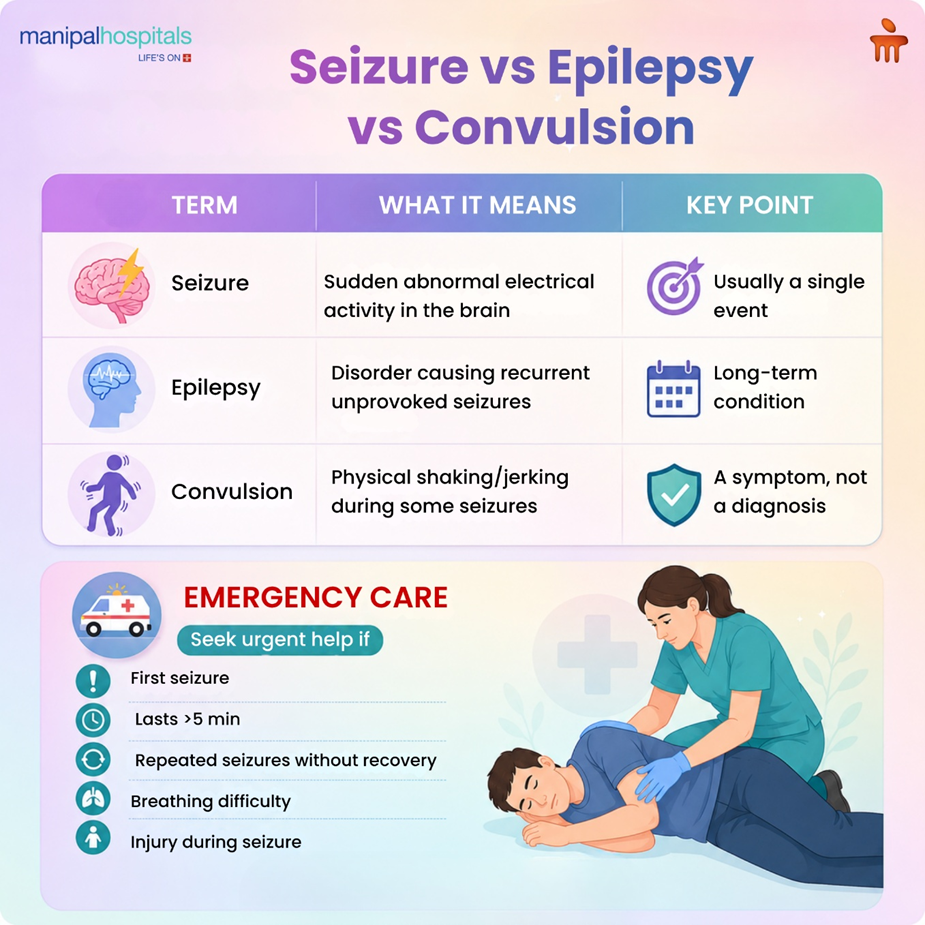
In reality, they are closely related but not identical. The difference between the two becomes clearer when you understand it clinically. A seizure is a single episode caused by sudden, abnormal electrical activity in the brain. Epilepsy is a condition where a person has repeated seizures that are not triggered by a temporary cause. One seizure on its own does not mean epilepsy.
In this blog, an experienced neurologist in Hebbal, Bengaluru, explains in detail the difference between the two and what it means for you. This way, you would be getting a comprehensive idea about the seizure, the diagnosis of epilepsy, and the relationship between the two.
Synopsis
What Is a Seizure?
A seizure happens when there is a sudden surge of abnormal electrical activity in the brain. This disrupts how signals are sent and received for a short time. Because the brain controls many functions, the symptoms can vary a lot from one person to another. Some episodes are obvious. Some are easy to miss. In some people, no clear cause is found for a single seizure. That does not mean epilepsy. The context, trigger, and pattern over time help doctors decide what it represents.
Doctors group seizures based on where they begin:
-
Focal seizures: Start in one specific part of the brain. Symptoms depend on that area
-
Generalised seizures: Involve both sides of the brain from the start and often affect consciousness
A seizure can affect:
-
Movement: Jerking of arms or legs, stiffening, sudden falls
-
Awareness: Staring spells, not responding, confusion after the episode
-
eSensation: Tingling, unusual smells or tastes, a sudden feeling of fear or déjà vu
-
Consciousness: Brief loss of awareness or complete blackout
Causes of seizures are important because many are triggered events, not a long-term condition:
-
Fever, especially in children
-
Head injury or trauma to the brain
-
Brain infections such as meningitis or encephalitis
-
Low blood sugar or other metabolic disturbances
-
Stroke or reduced blood flow to the brain
-
Substance or alcohol withdrawal
-
Certain medications or toxic exposures
What Is Epilepsy?
Epilepsy is a long-term condition in which a person has repeated seizures over time. A single seizure does not mean epilepsy. The key difference is that these episodes happen again without a clear temporary cause.
In epilepsy, the brain tends to produce sudden, abnormal electrical activity. Because of these factors, seizures can occur without warning. The way it appears can vary. Some people may have brief episodes with loss of awareness, while others may experience jerking movements or confusion after a seizure.
Epilepsy can occur at any age. It could start from childhood or develop during adulthood. The key is how it progresses over time.
Common causes include:
-
Genetic factors in some individuals
-
Structural changes in the brain, such as injury, birth defects, or malformations
-
Stroke or reduced blood flow to the brain
-
Brain infections such as meningitis or encephalitis
-
Brain tumours or previous head injury
What Is a Convulsion?
A convulsion is a symptom rather than a disease. This term describes an episode whereby the body begins to shake or jerk involuntarily. This happens due to abnormal impulses in the brain that interfere with muscle movements.
Convulsions are often seen in certain types of seizures, which is why the two terms are sometimes used as if they mean the same thing. However, they are not the same. A seizure starts in the brain, while a convulsion is how it may show up in the body.
Not all seizures entail shaking; sometimes a person may only stare blankly, have a look of confusion, or lose consciousness without any form of body movement at all. Moreover, shaking could occur even without a seizure being present.
Common causes of convulsions include:
-
Seizures related to conditions like Epilepsy
-
High fever, especially in young children (febrile seizures)
-
Head injury or trauma to the brain
-
Brain infections such as meningitis or encephalitis
-
Low blood sugar or other metabolic imbalances
-
Withdrawal from alcohol or certain substances
-
Exposure to toxins or certain medications
Differences Between Seizure, Epilepsy, and Convulsion
Understanding the basic difference between a seizure and epilepsy and a convulsion can make medical discussions much clearer and help patients better understand a diagnosis. The comparison below breaks it down for you:
|
Feature |
Seizure |
Epilepsy |
Convulsion |
|
Definition |
Sudden abnormal electrical activity in the brain |
Chronic neurological disorder with recurrent, unprovoked seizures |
Physical symptom with involuntary muscle jerking |
|
Frequency |
Can occur once or occasionally |
Recurrent episodes over time |
Occurs during some seizures |
|
Cause |
Often triggered by temporary factors |
Often unprovoked or due to an underlying brain condition |
Result of abnormal brain activity affecting muscles |
|
Diagnosis |
Based on a single clinical event |
Based on pattern and recurrence |
Not a diagnosis, only a symptom |
|
Brain involvement |
Temporary disturbance in activity |
Ongoing tendency for abnormal activity |
Visible physical response to brain signals |
How Doctors Diagnose Seizures and Epilepsy
Diagnosis depends on history, pattern, and specific tests. Understanding what is the difference between epilepsy and seizures becomes clearer during diagnosis, where recurrence and cause guide the final decision.
Diagnosing a Seizure
-
Doctors start with a detailed history of what exactly happened during the episode.
-
Description from a witness is often important if the person does not remember the event.
-
They look for possible triggers such as fever, injury, low blood sugar, or infection.
-
A single episode leads to evaluation of the underlying cause, not a long-term diagnosis.
-
Tests may include EEG to check for abnormal electrical activity in the brain and CT or MRI scans to identify structural problems.
Diagnosing Epilepsy
Doctors look for two or more unprovoked seizures or one with a high recurrence risk.
-
The absence of a temporary trigger becomes an important clue
-
EEG findings may show a tendency for repeated abnormal activity
-
Imaging helps identify long-term causes like injury or lesions
-
Other conditions that can mimic seizures are carefully ruled out
When Should You Seek Medical Help?
Some seizure situations need immediate medical attention.
-
First-time seizure: Such an event always needs medical evaluation to understand the cause.
-
Seizure lasting more than 5 minutes: Longer episodes need urgent care.
-
Repeated seizures without recovery: If awareness does not return between episodes, get help immediately.
-
Injury during the episode: Any fall or head injury should be checked.
-
Breathing difficulty: Irregular or delayed breathing needs attention.
Unusual or prolonged symptoms after the event: Ongoing confusion or difficulty waking up should not be ignored.
Conclusion
If you or someone around you has had a seizure, do not assume what it means on your own. One episode does not always point to epilepsy, but it should not be ignored either. What matters is the pattern, the cause, and how the episode presents. Getting this distinction right early with the support of specialised neurology care near Hebbal can change how the condition is managed.
If you are unsure about what the episode means, it is best to get it checked. A detailed history, along with the right tests, helps doctors understand what is happening and what to expect next. Our experienced neurologists at Manipal Hospital Hebbal, Bengalore, focus on careful assessment and clear guidance so you know exactly where you stand and what steps to take next.
FAQ's
Yes, and this is something we see regularly. If you’ve had a single seizure, it may be linked to a trigger like fever, low sugar, an injury, or an infection. It does not always mean a long-term condition.
Not all seizures cause convulsions. Sometimes a person may simply stare, go still, or stop mid-activity suddenly, with no shaking at all. This can happen without any obvious warning signs, either.
Doctors look at whether seizures happen repeatedly over time. If seizures happen again without a clear reason, it raises concern for epilepsy. One isolated episode is handled differently.
Yes, epilepsy can start at any age. It may follow a stroke, head injury, or infection. Sometimes, despite tests, doctors cannot find a clear cause in some people.
Not always. Many settle down on their own in a short time. But if a seizure lasts longer, repeats quickly, or affects breathing or causes injury, you should seek medical care right away.
Share this article on:


:_Symptoms,_Causes_Treatment.webp "Understanding TIA: Causes, Symptoms & Treatment Options")


.webp "Dr. Srinivas Raju | Neurology Specialist in Hebbal Bangalore | Manipal Hospitals")