7 Min Read
Experiencing persistent back pain can be debilitating, affecting every aspect of your daily life. Often, terms like "slipped disc" and "herniated disc" are used interchangeably, leading to confusion and anxiety. While closely related, understanding the nuances between these conditions is crucial for accurate diagnosis and effective treatment. At Manipal Hospitals, our spine specialists in Gurugram are dedicated to providing clarity and comprehensive care, helping you navigate these complex spinal issues.
Globally, a significant portion of adults, up to 80%, will experience back pain at some point in their lives, with disc-related issues being a common underlying cause. Understanding what's happening within your spine is the first step towards finding relief.
Synopsis
Understanding Your Spine: The Basics
Your spine is a marvel of engineering, providing support, flexibility, and protection for your spinal cord. It's made up of individual bones called vertebrae, stacked one upon another. Between each vertebra lies a soft, rubbery cushion known as an intervertebral disc. These discs act as shock absorbers, allowing your spine to bend and twist smoothly. Each disc has two main parts:
-
Annulus Fibrosus: The tough, fibrous outer ring.
-
Nucleus Pulposus: The soft, gel-like centre.
When these discs are healthy, they enable fluid movement and distribute pressure evenly across the spine.
Slipped Disc vs Herniated Disc: What's the Difference?
The terms "slipped disc" and "herniated disc" are often used to describe the same condition, where the inner material of a spinal disc protrudes. However, the term "slipped disc" is technically a misnomer, as discs don't actually "slip" out of place. Instead, they can bulge, protrude, or rupture. A herniated disc is a more accurate medical term describing this event.
-
Slipped Disc: This is a common, non-medical term often used by the public to describe any disc problem that causes pain, including a bulging or herniated disc. It implies the entire disc has moved, which doesn't happen.
-
Herniated Disc: This occurs when the soft, gel-like nucleus pulposus pushes through a tear or weakness in the tougher outer annulus fibrosus. This protrusion can compress nearby nerves, leading to pain, numbness, or weakness.
Essentially, a herniated disc is the specific medical condition that many people colloquially refer to as a "slipped disc." Our spine specialists in Gurugram emphasise accurate terminology for precise diagnosis and tailored disc herniation treatment plans.
Back Pain Causes: Why Does It Happen?
A herniated disc can result from a combination of factors, often occurring gradually over time or as a sudden event. Understanding these back pain causes can help in prevention and early intervention:
-
Age-Related Degeneration: As we age, our spinal discs naturally lose water content, becoming less flexible and more prone to tearing. This is one of the most common back pain causes.
-
Improper Lifting: Using your back muscles instead of your leg and thigh muscles to lift heavy objects can put immense strain on your discs.
-
Sudden Trauma or Injury: A fall, direct blow to the back, or a twisting injury can cause a disc to herniate.
-
Repetitive Motions: Certain occupations or activities involving repetitive bending, twisting, or prolonged sitting can increase disc stress.
-
Obesity: Excess body weight places additional stress on the discs in your lower back.
-
Genetics: Some individuals may be genetically predisposed to disc problems.
Recognizing the Symptoms
The symptoms of a herniated disc vary depending on its location in the spine (most commonly in the lower back or neck) and whether it's pressing on a nerve. Common symptoms include:
-
Localised Pain: Often felt in the lower back or neck, which might worsen with certain movements, coughing, or sneezing.
-
Radiating Pain (Sciatica): If the herniated disc is in the lower back, pain may shoot down into one or both legs, buttocks, and feet. This is known as sciatica, a common manifestation of nerve compression.
-
Numbness or Tingling: A sensation of "pins and needles" or numbness in the area served by the affected nerve.
-
Weakness: Muscles controlled by the affected nerve may weaken, leading to difficulty lifting objects, walking, or performing fine motor tasks.
-
Loss of Reflexes: In some cases, reflexes in the affected limb might be diminished or absent.
When to Seek Medical Attention
While many cases of back pain resolve with rest and conservative measures, it's important to know when to consult a medical professional. Seek immediate medical attention if you experience:
-
Worsening pain, numbness, or weakness that interferes with daily activities.
-
Bowel or bladder dysfunction (incontinence or difficulty urinating).
-
Numbness in the inner thighs, buttocks, or back of the legs (saddle anaesthesia).
-
Sudden, severe weakness or paralysis.
These could indicate a more serious condition like cauda equina syndrome, requiring urgent intervention.
Disc Herniation Treatment: Your Path to Recovery
The good news is that most individuals with a herniated disc do not require surgery. Our approach at Manipal Hospitals is always to explore the least invasive options first, focusing on effective disc herniation treatment.
Conservative Management
For the vast majority of patients (over 90%), non-surgical treatments prove highly effective. Studies show that over 90% of individuals with a herniated disc find significant relief with non-surgical treatments within 6-12 weeks. These may include:
-
Rest: Short periods of rest (1-2 days) can help alleviate acute pain. Prolonged bed rest is generally not recommended as it can lead to muscle weakening.
-
Physical Therapy: A tailored exercise program focusing on strengthening core muscles, improving posture, and increasing flexibility is a cornerstone of disc herniation treatment.
-
Medication: Over-the-counter pain relievers, muscle relaxants, or anti-inflammatory drugs can help manage pain and inflammation. In some cases, stronger prescription medications may be prescribed.
-
Epidural Steroid Injections: These injections deliver anti-inflammatory medication directly to the affected area around the spinal nerves, providing temporary but significant pain relief, especially for sciatica treatment.
-
Heat and Cold Therapy: Applying ice packs or heat pads can help reduce pain and inflammation.
When is Surgery the Answer?
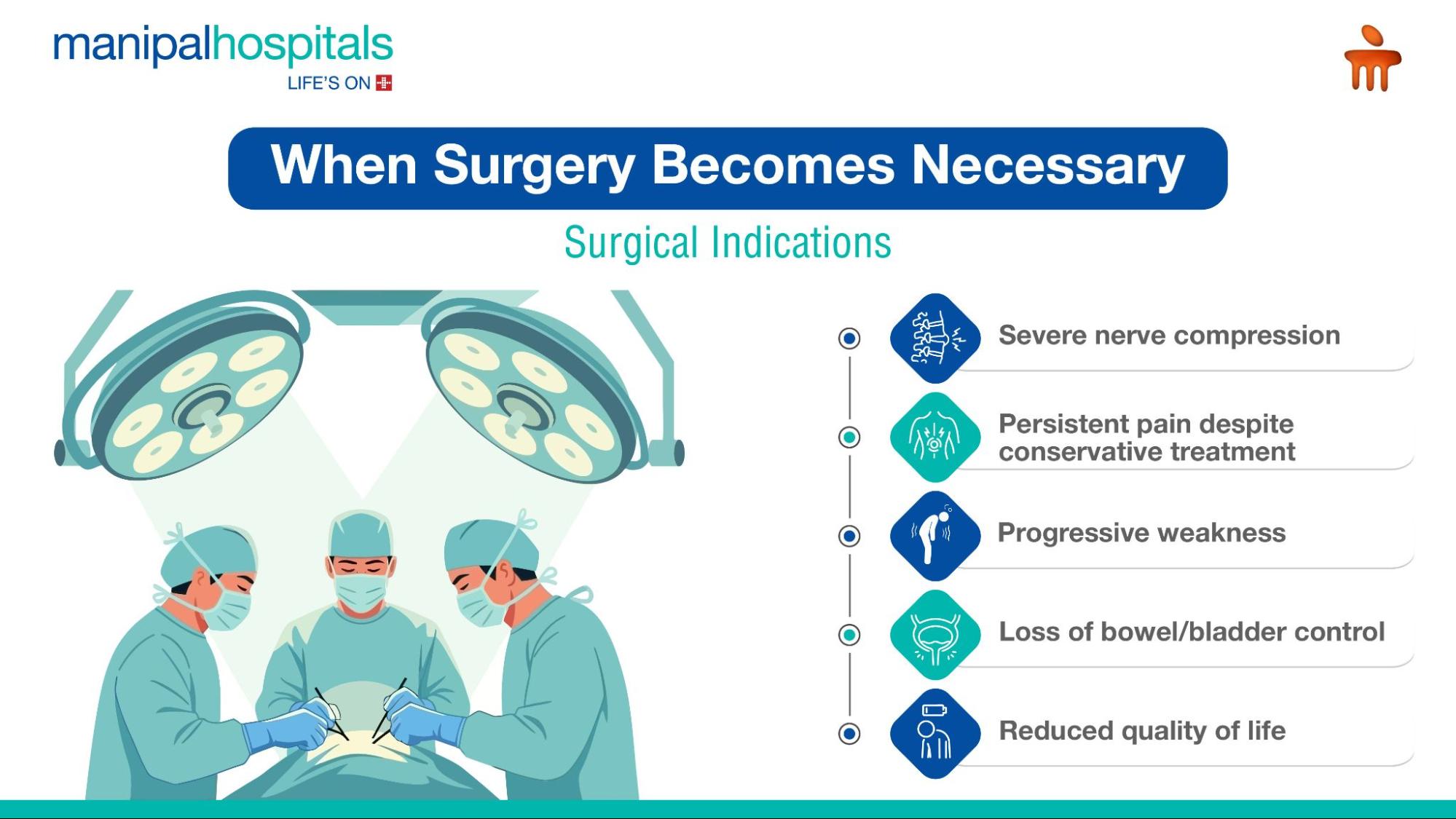
Surgery for a herniated disc is typically considered when conservative treatments have failed to provide adequate relief after several weeks or months, or if there are signs of severe nerve compression, progressive weakness, or cauda equina syndrome. Modern spinal surgery techniques are minimally invasive, leading to quicker recovery times and reduced discomfort. Our expert team ensures that surgical intervention is only recommended when necessary, with reported success rates for appropriate cases exceeding 85% in significantly reducing pain and improving function.
Types of Surgical Procedures
-
Microdiscectomy: This is the most common surgical procedure for a herniated disc, especially in the lower back. It involves removing the protruding part of the disc that is pressing on the nerve. It is often performed using minimally invasive techniques.
-
Endoscopic Discectomy: In this procedure, the incision is only 7 mm. In general, this is considered to be the safest option.
-
Laminectomy: In some cases, a small portion of the bone (lamina) overlying the spinal canal may be removed to create more space for the nerves and alleviate pressure.
-
Spinal Fusion: For severe cases or recurrent instability, two or more vertebrae may be fused to stabilise the spine. This is a more extensive procedure reserved for specific indications.
If you are experiencing symptoms suggestive of a slipped or herniated disc, it's crucial to seek timely medical advice. Our expert team of spine specialists in Gurugram at Manipal Hospitals is here to provide accurate diagnosis, personalised disc herniation treatment plans, and compassionate care to help you regain your quality of life. Book an appointment with us today.
FAQ's
Many herniated discs can heal on their own or with conservative treatment over several weeks to months. The body often reabsorbs the protruding disc material over time, and inflammation subsides, relieving nerve compression.
Sciatica is a common symptom where pain radiates along the path of the sciatic nerve, which branches from your lower back through your hips and buttocks and down each leg. A herniated disc in the lumbar spine is one of the most common causes of sciatica, as the bulging disc can compress the nerve root.
Recovery time varies. With conservative treatment, many people experience significant improvement within 6-12 weeks. If surgery is required, recovery can take several weeks to a few months, depending on the type of surgery and individual factors.
Yes, targeted exercises, especially those prescribed by a physical therapist, are crucial for recovery. They help strengthen supporting muscles, improve flexibility, and reduce pressure on the disc. However, avoid exercises that worsen your pain.
While not always entirely preventable, you can significantly reduce your risk by maintaining a healthy weight, practising good posture, lifting objects correctly, engaging in regular core-strengthening exercises, and avoiding prolonged static positions.
Share this article on:


.webp "Liver Cancer Treatment")


--What-Every-Prostate-Cancer-Patient-Should-Know.webp "Prostate Cancer Surgery: LRP Procedure & Recovery Guide")