-Rajeev-Sood.webp "Dr Rajeev Sood | Urologist in Gurugram | Manipal Hospitals")
 7 Min Read
End-stage renal disease (ESRD), also known as chronic kidney failure, is a life-altering condition where the kidneys can no longer function adequately to remove waste products and excess fluid from the body. When kidney function drops to a critical level, patients require `renal failure treatment` to survive. The two primary treatments for ESRD are dialysis and kidney transplantation. Making an informed decision between these two significant options can be overwhelming for patients and their families. At Manipal Hospitals, `our nephrologists in Gurugram` are dedicated to guiding you through every step, ensuring you receive the best possible care. This article explores both treatments, highlighting their pros and cons, to help you understand which path might be better suited for your individual needs.
Synopsis
Understanding End-Stage Renal Disease (ESRD)
ESRD is the final, permanent stage of chronic kidney disease. At this point, the kidneys have lost almost all their ability to do their job effectively, leading to a dangerous build-up of toxins and fluids in the body. If left untreated, ESRD is fatal. The goal of `end-stage renal disease treatment` is to replace the function of the failed kidneys, thereby extending life and improving quality of life.
Dialysis: A Life-Sustaining Treatment
Dialysis is a medical procedure that removes waste products and excess fluid from the blood when the kidneys are unable to do so. It doesn't cure kidney failure but serves as a vital `renal failure treatment aid to sustain life. There are two main types:
-
Haemodialysis: This involves filtering your blood through an artificial kidney machine (dialyser) outside your body. It typically requires regular visits to a dialysis centre, usually three times a week for 3-5 hours per session. Home haemodialysis is also an option for some patients.
-
Peritoneal Dialysis (PD): This method uses the lining of your abdomen (peritoneum) as a natural filter. A sterile solution is introduced into your abdomen through a catheter, where it remains for several hours, absorbing waste products and excess fluid. The solution is then drained and replaced. PD can be performed at home, often overnight using an automated cycler, or manually throughout the day.
Advantages of Renal Dialysis
-
Availability: Dialysis is widely available and can be started relatively quickly, offering immediate `renal failure treatment` when needed.
-
No Surgery Required (initially): For many, especially those who are not candidates for surgery, dialysis is the only viable option.
-
Flexibility (PD): Peritoneal dialysis offers more flexibility and independence, as it can be done at home, often while sleeping, reducing the need for frequent hospital visits.
-
Bridging Therapy: It can serve as a crucial temporary measure while a patient waits for a suitable kidney transplant.
Disadvantages of Dialysis
-
Time-Consuming: Both types require significant time commitment, impacting daily life, work, and social activities.
-
Dietary and Fluid Restrictions: Patients on dialysis must strictly adhere to specific dietary and fluid intake guidelines.
-
Potential Complications: These can include infections (especially with PD), low blood pressure, muscle cramps, and fatigue.
-
Reduced Quality of Life: Many patients report a lower quality of life compared to those with a successful transplant due to the demanding nature of the treatment and associated symptoms.
Kidney Transplant: The Path to a New Lease on Life
A kidney transplant is a surgical procedure to place a healthy kidney from a deceased or living donor into a person whose kidneys have failed. It is often considered the most effective and preferred `end-stage renal disease treatment` for suitable candidates.
Kidney Transplants: Pros and Cons
Advantages of Kidney Transplant
-
Improved Quality of Life: Transplant recipients generally experience a significantly better quality of life compared to dialysis patients, with more energy, fewer dietary restrictions, and greater freedom. Studies show that over 85% of kidney transplant recipients report a marked improvement in their daily lives.
-
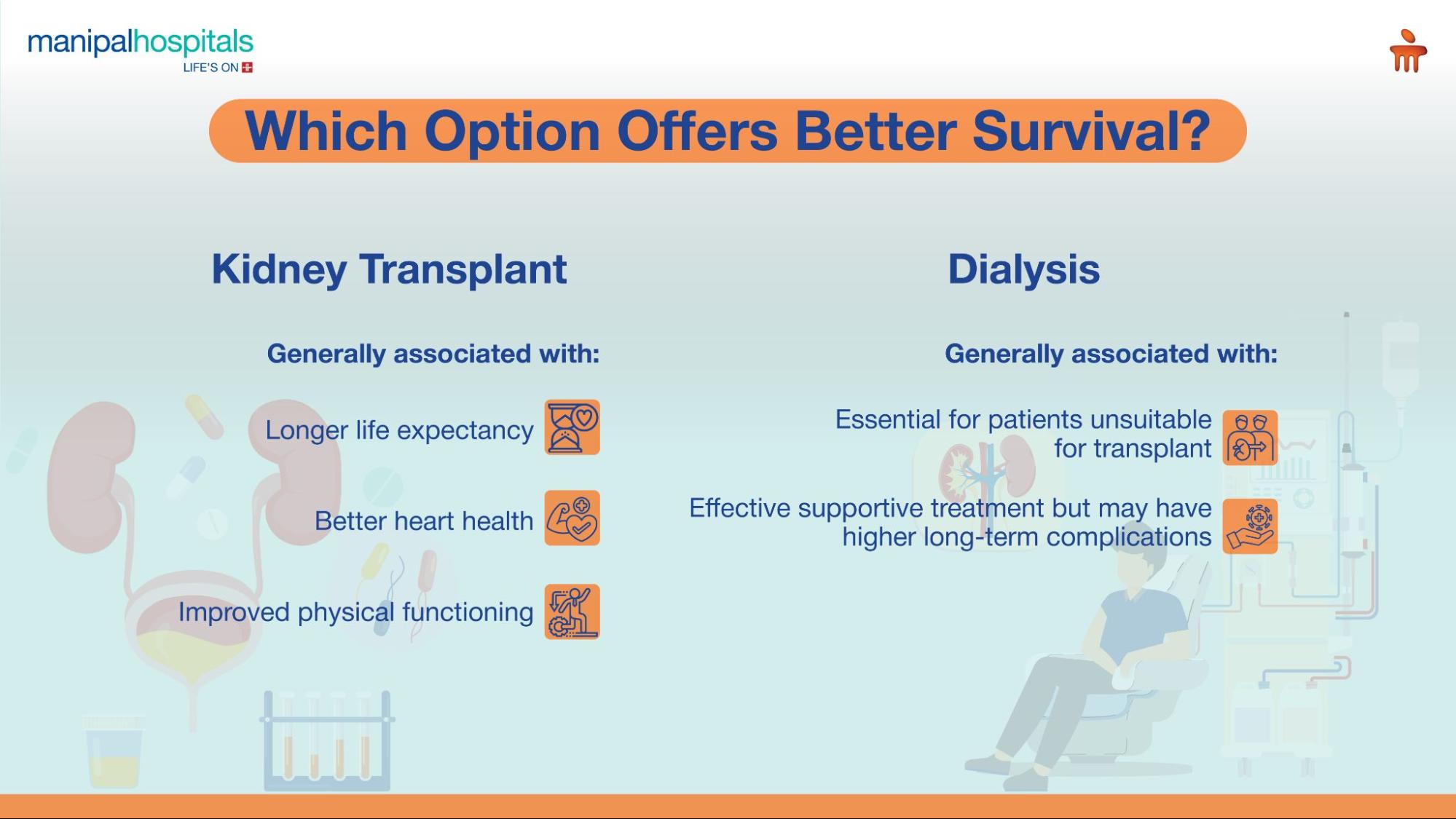
Increased Longevity: Successful kidney transplantation is associated with a longer life expectancy than long-term dialysis. Data suggests that patients who receive a kidney transplant live, on average, 10-15 years longer than those who remain on dialysis.
-
Freedom from Dialysis: A successful transplant means freedom from the rigorous schedule and restrictions of dialysis.
-
Better Health Outcomes: Transplants can reverse many complications of ESRD, such as anaemia, bone disease, and nerve damage.
-
High Success Rate: Modern medical advancements have led to remarkable success rates. Nationally, the one-year survival rate for kidney transplant recipients is impressively high, often exceeding 95% for living donor transplants and 90% for deceased donor transplants. Our dedicated team, including `our nephrologists in Gurugram`, works tirelessly to achieve these positive outcomes.
Disadvantages of Kidney Transplant
-
Major Surgery: Transplantation is a complex surgical procedure with inherent risks, including bleeding, infection, and damage to surrounding organs.
-
Lifelong Immunosuppression: To prevent the body from rejecting the new kidney, recipients must take immunosuppressant medications for the rest of their lives. These medications can have side effects, including increased risk of infection, certain cancers, diabetes, and bone thinning.
-
Donor Availability: There is a significant shortage of deceased donor kidneys, leading to long waiting lists. Living donation is an option, but it requires a suitable and willing donor.
-
Potential for Rejection: Despite immunosuppression, there is always a risk that the body may reject the transplanted kidney, necessitating a return to dialysis or another transplant.
-
Cost: While often more cost-effective in the long run, the initial cost of surgery and lifelong medication can be substantial.
Kidney Transplant vs. Dialysis: Making the Decision
The choice between a kidney transplant and dialysis is highly personal and depends on several factors:
-
Overall Health and Age: A patient's general health, presence of other medical conditions (comorbidities), and age play a significant role in determining eligibility for transplantation.
-
Donor Availability: The possibility of a living donor can significantly shorten the wait time for a transplant.
-
Lifestyle and Preferences: Some individuals may prefer the independence offered by home dialysis, while others prioritise the freedom and improved health associated with a successful transplant.
-
Financial Considerations: The long-term costs of medications, follow-up care, and the initial surgery must be considered, although insurance often covers a significant portion.
-
Medical Evaluation: Comprehensive assessments by a multidisciplinary team, including our nephrologists in Gurugram, surgeons, dietitians, and social workers, are crucial.
Conclusion
Both kidney transplant and dialysis are life-saving 'end-stage renal disease treatment' options, each with distinct advantages and disadvantages. While dialysis offers immediate life support, a successful kidney transplant generally provides a better quality of life and longer life expectancy for suitable candidates, with impressive success rates. The decision is a deeply personal one, best made in close consultation with your healthcare team, including our nephrologists in Gurugram who can assess your specific medical condition and lifestyle needs. Our commitment at Manipal Hospitals is to empower you with the information and support needed to make the best choice for your health and future.
If you are experiencing these symptoms or need guidance on `renal failure treatment 'options', it's crucial to seek timely medical advice. Book an appointment with our expert nephrologist at Manipal Hospitals Gurugram today.
FAQ's
Life expectancy on dialysis varies greatly depending on age, overall health, and treatment adherence. Some patients live for many years, even decades, on dialysis, but the average life expectancy is generally shorter than for transplant recipients.
The waiting time for a deceased donor kidney can range from a few months to several years, depending on the region, blood type, and other factors. A living donor transplant can often be scheduled much more quickly.
While generally less restrictive than on dialysis, transplant recipients still need to follow a healthy, balanced diet. Specific restrictions may apply based on individual medication side effects or kidney function. Your dietitian will provide personalised guidance.
Yes, a person can often receive a second (or even third) kidney transplant if the first one fails, provided they are medically suitable and a donor kidney is available.
Common side effects can include increased risk of infection, high blood pressure, diabetes, tremors, hair growth, and weight gain. Your doctor will monitor these closely and adjust medications as needed.
Share this article on:


--What-Every-Prostate-Cancer-Patient-Should-Know.webp "Prostate Cancer Surgery: LRP Procedure & Recovery Guide")


.webp "Liver Cancer Treatment")