-Rajeev-Sood.webp "Dr Rajeev Sood | Urologist in Gurugram | Manipal Hospitals")
 7 Min Read
--What-Every-Prostate-Cancer-Patient-Should-Know.webp "Prostate Cancer Surgery: LRP Procedure & Recovery Guide")
Receiving a diagnosis of prostate cancer can be a challenging moment, filled with questions and concerns about treatment options. At Manipal Hospitals, we understand these anxieties and are committed to providing comprehensive, compassionate care. One of the advanced and highly effective treatments for localised prostate cancer is Laparoscopic Radical Prostatectomy (LRP), a minimally invasive surgical procedure that offers significant advantages for patients.
For patients considering prostate cancer surgery, especially in the Delhi NCR region, our urologists in Gurugram are at the forefront of providing state-of-the-art care, leveraging their extensive expertise in advanced surgical techniques like LRP. We believe in empowering our patients with clear, accurate information to make informed decisions about their health journey. If you're seeking expert care, consider consulting with our urologists in Gurugram who specialise in these advanced procedures.
Synopsis
Understanding Laparoscopic Radical Prostatectomy (LRP)
Laparoscopic Radical Prostatectomy (LRP) is a sophisticated surgical technique used to remove the entire prostate gland, along with the seminal vesicles and sometimes nearby lymph nodes, to treat prostate cancer. Unlike traditional open surgery, which involves a large incision, LRP is a minimally invasive procedure performed through several small incisions (usually 4-5) in the abdomen.
During the procedure, a laparoscope (a thin, lighted tube with a camera) is inserted through one incision, projecting detailed images of the surgical area onto a monitor. Specialised surgical instruments are then inserted through the other small incisions to perform the prostate cancer surgery. This approach allows for greater precision and less trauma to surrounding tissues.
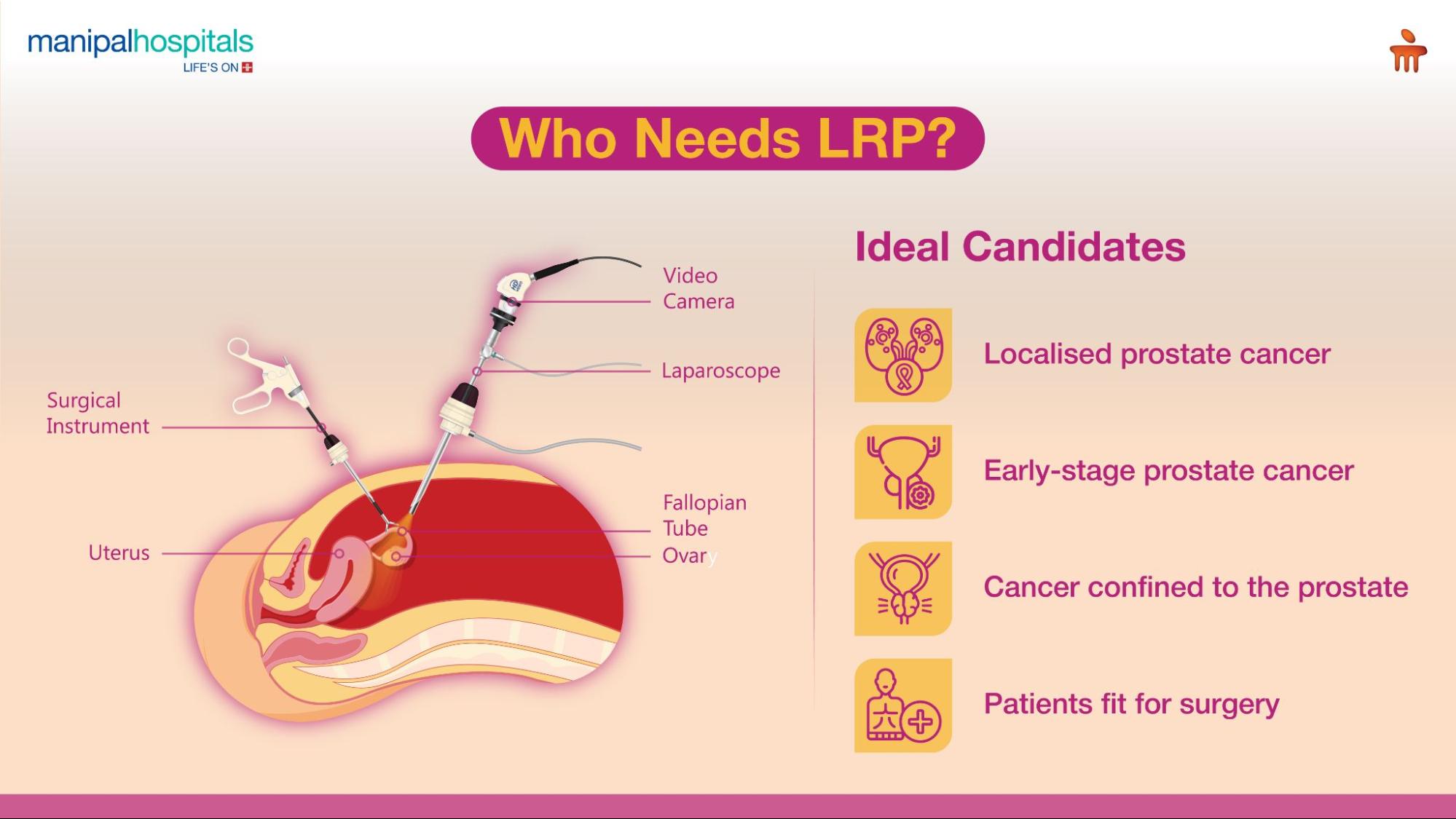
Advantages of Laparoscopic Prostatectomy
Laparoscopic prostatectomy, often referred to as laparoscopic radical prostatectomy, has revolutionised prostate cancer treatment due to its numerous benefits compared to traditional open surgery. These advantages contribute significantly to a better patient experience and recovery:
- Minimally Invasive: Smaller incisions lead to less scarring and improved cosmetic outcomes.
-
Reduced Blood Loss: Studies show that patients undergoing LRP typically experience significantly less blood loss, often reducing the need for blood transfusions.
-
Less Post-operative Pain: Smaller incisions mean less muscle cutting, resulting in reduced pain after surgery and less reliance on pain medication.
-
Shorter Hospital Stay: Patients often experience a shorter hospital stay, typically 1-3 days, compared to 3-7 days for open surgery.
-
Faster Recovery: A quicker return to normal activities and work is a common benefit, facilitating a smoother radical prostatectomy recovery.
-
Enhanced Precision: The magnified, high-definition view provided by the laparoscope allows surgeons to operate with exceptional precision, potentially improving outcomes related to nerve preservation (important for erectile function) and urinary continence.
The LRP Procedure: What to Expect
Understanding the steps involved in your prostate cancer surgery can help alleviate anxiety. Here's a general overview of what you can expect during an LRP:
-
Anaesthesia: The procedure is performed under general anaesthesia, meaning you will be asleep and feel no pain.
-
Incisions: Your surgeon will make 4-5 small incisions, each about 0.5 to 1 cm long, in your abdomen.
-
Gas Insufflation: Carbon dioxide gas is gently introduced into the abdomen to create space and provide a clear view for the surgeon.
-
Laparoscope Insertion: The laparoscope is inserted, and the images are projected onto a high-definition monitor.
-
Prostate Removal: Using specialised instruments, the surgeon carefully dissects and removes the entire prostate gland, seminal vesicles, and sometimes regional lymph nodes, depending on the cancer's stage. Our urologists in Gurugram employ advanced techniques to preserve critical nerves responsible for erectile function and urinary control whenever possible.
-
Reconstruction: After the prostate is removed, the bladder is reconnected to the urethra.
-
Catheter Placement: A temporary urinary catheter is placed to drain urine while the surgical area heals. This usually remains for 1-2 weeks.
-
Closure: The instruments are removed, the gas is released, and the small incisions are closed with sutures or surgical tape.
The entire procedure typically takes 2-4 hours, depending on individual patient factors and the complexity of the case. Manipal Hospitals boasts a success rate of over 95% in achieving complete tumour removal for localised prostate cancer with LRP, reflecting our commitment to excellent surgical outcomes.
Potential Risks and Complications
Like any major surgical procedure, LRP carries some potential risks, although the incidence of serious complications is low, especially in experienced hands. Our surgical teams are highly skilled and trained to minimise these risks. Potential complications include:
-
Urinary Incontinence: Some degree of temporary or, less commonly, persistent urinary leakage can occur. Most patients experience significant improvement within weeks to months. Around 90% of patients achieve satisfactory continence within one year post-surgery.
-
Erectile Dysfunction: Damage to nerves surrounding the prostate can affect erectile function. Nerve-sparing techniques are employed to mitigate this, with many men experiencing partial or full recovery of function over time.
-
Bleeding: While LRP significantly reduces blood loss compared to open surgery, minor bleeding can occur.
-
Infection: Any surgery carries a risk of infection, which is managed with sterile techniques and antibiotics.
-
Injury to Nearby Organs: Though rare, injury to the rectum or other pelvic organs is a potential risk.
-
Anaesthesia Risks: Standard risks associated with general anaesthesia.
It's important to discuss these potential risks thoroughly with your surgeon to understand how they might apply to your specific situation. Manipal Hospitals maintains a low complication rate for LRP, significantly below national averages, ensuring patient safety is paramount.
Recovery and Rehabilitation: The Road Ahead
The radical prostatectomy recovery period is crucial for optimal outcomes. While LRP offers a faster recovery than open surgery, it's still important to follow your medical team's instructions diligently.
Immediate Post-Operative Period:
-
Hospital Stay: Typically 1-3 days. You'll be monitored closely for pain management, fluid intake, and catheter function.
-
Catheter Care: The urinary catheter will remain in place for approximately 1-2 weeks to allow the bladder and urethra to heal. You will receive detailed instructions on how to care for it at home.
-
Pain Management: Mild pain or discomfort is common and can be managed with prescribed medications.
-
Early Mobilisation: You'll be encouraged to walk short distances soon after surgery to prevent complications like blood clots.
Weeks 1-6 Post-Surgery:
-
Catheter Removal: Once the surgical site has healed sufficiently, the catheter will be removed. You may experience temporary urinary leakage initially, which typically improves with time.
-
Pelvic Floor Exercises (Kegels): Starting pelvic floor exercises, often under the guidance of a physiotherapist, is crucial for regaining urinary control. Over 80% of patients show significant improvement in continence within 3 months of regular Kegel exercises.
-
Activity Restrictions: Avoid heavy lifting, strenuous activities, and prolonged sitting during this period to aid healing.
-
Diet: Maintain a healthy, balanced diet to support healing and prevent constipation.
Long-Term Recovery:
-
Follow-up Appointments: Regular follow-up appointments with your urologist are essential to monitor your recovery and cancer status.
-
Addressing Side Effects: If urinary incontinence or erectile dysfunction persists, various treatments and interventions are available, including medications, devices, or further therapies.
Our dedicated rehabilitation team at Manipal Hospitals is here to support you through every stage of your radical prostatectomy recovery, providing personalised guidance and care to help you return to your normal life as quickly and safely as possible.
If you are navigating a prostate cancer diagnosis and considering your treatment options, it's crucial to seek expert medical advice. Book an appointment with our expert urologists at Manipal Hospitals today to discuss if Laparoscopic Radical Prostatectomy is the right choice for you.
FAQ's
LRP is an excellent option for many patients with localised prostate cancer. However, the "best" treatment depends on various factors, including cancer stage, grade, your overall health, and personal preferences. Your urologist will discuss all suitable options with you.
While many patients return to light activities within 2-4 weeks, full recovery, especially regarding urinary continence and erectile function, can take several months to a year. Consistent adherence to rehabilitation protocols is key.
Yes, a urinary catheter is typically required for 1-2 weeks after LRP to allow the new connection between the bladder and urethra to heal properly.
For localised prostate cancer, LRP offers excellent long-term control. The chance of recurrence depends on the initial stage and grade of the cancer, but many patients remain cancer-free. Regular follow-up with PSA tests is crucial for monitoring.
Erectile dysfunction is a potential side effect, as the nerves responsible for erections are very close to the prostate. Nerve-sparing techniques aim to minimise this risk, and many men regain some or full function, though it can take time. Medications or other therapies can also help.
Share this article on:


.webp "Liver Cancer Treatment")