6 Min Read
.webp "Liver Cancer Treatment")
A diagnosis of liver cancer can feel overwhelming, but advances in liver cancer treatment have significantly improved outcomes for many patients. Among the most effective treatment options for selected cases is liver resection surgery, a procedure that removes the cancerous portion of the liver while preserving healthy tissue.
At the forefront of modern liver cancer treatment, our oncologists in Gurugram work closely with multidisciplinary teams to develop personalised treatment plans. Whether you have been diagnosed with primary liver cancer or a liver tumour that has spread from another organ, understanding your surgical options is essential for making informed decisions.
This comprehensive guide explains the different types of liver resection, who may be eligible, the potential risks, expected recovery, and how surgery fits into a broader liver cancer treatment strategy.
Synopsis
- What Is Liver Resection Surgery?
- Types of Liver Resection for Liver Cancer Treatment
- Who Is Eligible for Liver Cancer Surgery?
- Liver Resection and Hepatocellular Carcinoma Treatment
- How Is Liver Resection Surgery Performed?
- Risks and Complications of Liver Resection Surgery
- Recovery After Liver Cancer Surgery
- Liver Tumour Treatment Beyond Surgery
- Choosing the Right Specialist for Liver Cancer Treatment
- Conclusion
What Is Liver Resection Surgery?
Liver resection surgery is a procedure performed to remove a portion of the liver affected by cancer while preserving as much healthy liver tissue as possible. Because the liver has a remarkable ability to regenerate, many patients can regain normal liver function after surgery.
A liver resection may be recommended as part of liver cancer treatment for:
-
Primary liver cancer
-
Early-stage liver tumours
-
Selected metastatic liver tumours
-
Certain benign but symptomatic liver lesions
The procedure is also commonly referred to as hepatectomy surgery or liver cancer surgery, depending on the extent of liver tissue removed.
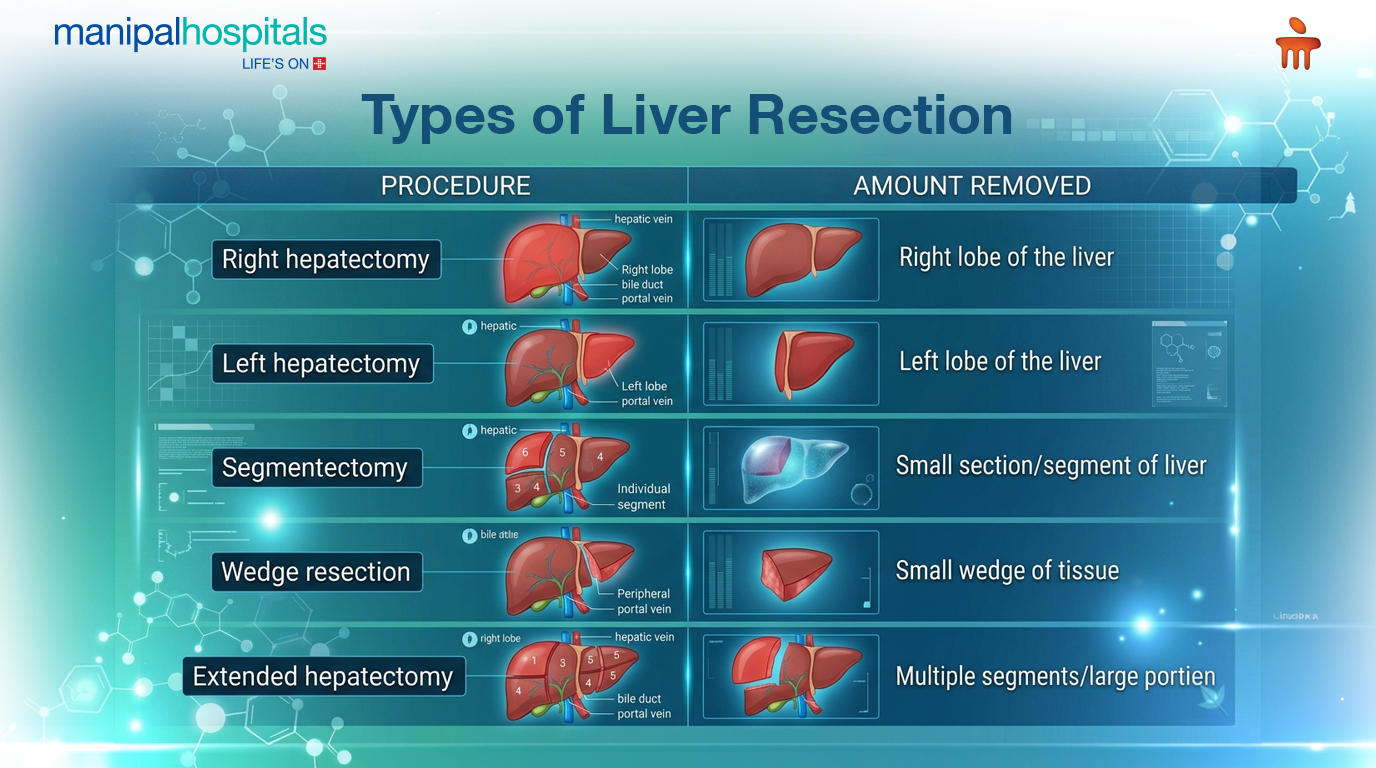
Types of Liver Resection for Liver Cancer Treatment
The type of liver resection surgery recommended depends on the size, location, and number of tumours.
Partial Hepatectomy
A partial hepatectomy involves removing only the segment of the liver containing the tumour while preserving healthy tissue.
This approach is commonly used when:
-
The tumour is localised
-
Liver function remains adequate
-
Sufficient healthy liver tissue can be preserved
A partial hepatectomy is among the most frequently performed procedures for curative liver cancer treatment.
Segmental Liver Resection
In this procedure, surgeons remove one or more anatomical liver segments affected by cancer.
Benefits include:
-
Preservation of healthy liver tissue
-
Improved postoperative liver function
-
Reduced surgical impact in selected patients
Lobectomy
A lobectomy involves the removal of an entire liver lobe.
This may be necessary when:
-
Tumours are large
-
Multiple lesions are confined to one lobe
-
Complete tumour clearance requires extensive resection
Extended Hepatectomy
This advanced form of hepatectomy surgery removes a larger portion of the liver when cancer involvement is more extensive.
The procedure is carefully planned to ensure that adequate liver function is maintained after surgery.
Who Is Eligible for Liver Cancer Surgery?
Not every patient with liver cancer is a candidate for liver cancer surgery.
Eligibility typically depends on:
Tumour Characteristics
Doctors assess:
-
Tumour size
-
Number of tumours
-
Tumour location
-
Vascular involvement
Liver Function
Healthy liver function is critical before undertaking liver resection surgery.
Assessment may include:
-
Liver function tests
-
Imaging studies
-
Evaluation for cirrhosis
-
Overall liver reserve
General Health Status
Patients must be medically fit enough to undergo major surgery.
Factors considered include:
-
Heart health
-
Lung function
-
Nutritional status
-
Existing medical conditions
Absence of Extensive Disease Spread
Patients with disease confined primarily to the liver are generally more suitable candidates for surgical liver tumor treatment.
Liver Resection and Hepatocellular Carcinoma Treatment
Hepatocellular carcinoma treatment often includes surgery when the cancer is detected at an early stage.
For suitable patients, liver resection surgery offers:
-
Potentially curative treatment
-
Improved long-term survival
-
Reduced tumour burden
-
Better disease control
Because hepatocellular carcinoma frequently develops in patients with chronic liver disease, treatment planning requires careful evaluation by specialists. Our oncologists in Gurugram work alongside hepatologists, radiologists, and liver surgeons to determine the most appropriate hepatocellular carcinoma treatment pathway for hepatocellular carcinoma.
How Is Liver Resection Surgery Performed?
Modern liver cancer treatment approaches may involve:
Open Liver Surgery
Traditional surgery uses a larger incision to provide direct access to the liver.
Advantages include:
-
Better visibility for complex cases
-
Ability to manage larger tumours
-
Greater flexibility during surgery
Minimally Invasive Liver Surgery
Selected patients may benefit from:
-
Laparoscopic surgery
-
Robotic-assisted surgery
Potential benefits include:
-
Smaller incisions
-
Reduced pain
-
Faster recovery
-
Shorter hospital stays
The surgical approach is tailored to the individual patient's needs and tumour characteristics.
Risks and Complications of Liver Resection Surgery
Like any major operation, liver resection surgery carries potential risks.
These may include:
-
Bleeding
-
Infection
-
Bile leakage
-
Blood clots
-
Liver failure
-
Respiratory complications
The overall risk depends on:
-
Extent of resection
-
Underlying liver function
-
Patient health status
-
Surgical complexity
Careful patient selection and advanced surgical techniques help minimise complications.
Recovery After Liver Cancer Surgery
Recovery varies from patient to patient.
Hospital Stay
Most patients remain in the hospital for:
-
3–7 days after minimally invasive surgery
-
5–10 days after open surgery
Early Recovery
During the first few weeks, patients may experience:
-
Fatigue
-
Mild discomfort
-
Reduced appetite
-
Temporary weakness
Returning to Daily Activities
Most individuals gradually resume normal activities within:
-
4–6 weeks for minimally invasive procedures
-
6–12 weeks for major open surgery
Long-Term Follow-Up
Following successful liver cancer treatment, regular monitoring remains essential.
Follow-up typically includes:
-
Imaging scans
-
Blood tests
-
Liver function assessment
-
Cancer surveillance
Our oncologists in Gurugram closely monitor patients after surgery to ensure optimal recovery and early detection of any recurrence.
Liver Tumour Treatment Beyond Surgery
Although surgery is often the preferred curative option, some patients may require additional liver tumour treatment strategies.
These may include:
-
Radiofrequency ablation
-
Microwave ablation
-
Targeted therapy
-
Immunotherapy
-
Chemotherapy
-
Transarterial chemoembolisation (TACE)
A multidisciplinary approach allows doctors to combine treatments when necessary for the best outcomes.
Choosing the Right Specialist for Liver Cancer Treatment
Successful outcomes depend on timely diagnosis, expert surgical care, and comprehensive follow-up.
When seeking liver cancer treatment, patients should consider:
-
Surgical expertise
-
Multidisciplinary cancer care
-
Advanced imaging capabilities
-
Access to minimally invasive techniques
-
Comprehensive postoperative support
Our cancer specialist in Gurugram can help evaluate treatment options and determine whether hepatectomy surgery is appropriate based on individual circumstances. Additionally, our oncologists in Gurugram provide evidence-based recommendations designed to maximise treatment success while preserving quality of life.
Conclusion
For eligible patients, liver resection surgery remains one of the most effective forms of liver cancer treatment. Whether performed as a partial hepatectomy, lobectomy, or more extensive hepatectomy surgery, the goal is to remove cancer while preserving healthy liver function.
Advances in surgical techniques, imaging, and multidisciplinary cancer care continue to improve outcomes for patients undergoing liver cancer surgery. If you or a loved one has been diagnosed with liver cancer, consulting our oncologists in Gurugram can help determine the most suitable treatment pathway and improve the chances of long-term disease control.
FAQ's
Success rates depend on tumour stage, liver function, overall health, and whether complete tumour removal is achieved. Early-stage cancers generally have better outcomes.
Yes. The liver has a unique regenerative capacity and can regrow much of its lost volume following a partial hepatectomy.
For selected patients with localised disease, liver resection surgery can offer a potentially curative liver cancer treatment option.
Recovery typically ranges from several weeks to a few months, depending on the extent of surgery and the patient's overall health.
Alternative liver cancer treatment options may include ablation therapies, targeted therapy, immunotherapy, embolisation procedures, or other specialised liver tumour treatment approaches.
Share this article on:


--What-Every-Prostate-Cancer-Patient-Should-Know.webp "Prostate Cancer Surgery: LRP Procedure & Recovery Guide")