8 Min Read
A cancer diagnosis can be a life-altering event, often bringing with it a whirlwind of emotions and decisions about treatment pathways. In the realm of oncology, advancements are continuously being made to enhance patient outcomes, improve quality of life, and expedite recovery. One such groundbreaking innovation transforming cancer care is robotic surgery. At Manipal Hospitals, we are committed to offering state-of-the-art treatments, and our oncologists in Gurugram are at the forefront of utilising these advanced techniques to provide patients with the best possible care. This minimally invasive approach is setting new benchmarks for precision and recovery, making it a pivotal option for many battling cancer.
Synopsis
Understanding Robotic Surgery for Cancer
Robotic surgery for cancer, often referred to as robot-assisted surgery, is a sophisticated form of minimally invasive surgery. Instead of traditional open surgery, which requires large incisions, or even conventional laparoscopic surgery, which uses small incisions but is manually controlled, robotic surgery employs a high-tech robotic system. This system consists of a surgeon's console, a patient-side cart with robotic arms, and a high-definition 3D vision system. The surgeon, seated at the console, controls the robotic arms, which hold tiny instruments and a camera. These instruments mimic the human hand's range of motion, but with enhanced dexterity, precision, and tremor filtration.
The procedure is performed through several small incisions, typically 0.8-1.0 cm in length, allowing for the precise removal of cancerous tissue while preserving surrounding healthy structures. This technological leap has significantly advanced surgical capabilities across various cancer types, offering hope for improved recovery and long-term results.
Unpacking the Advantages of Robotic Surgery for Faster Cancer Recovery
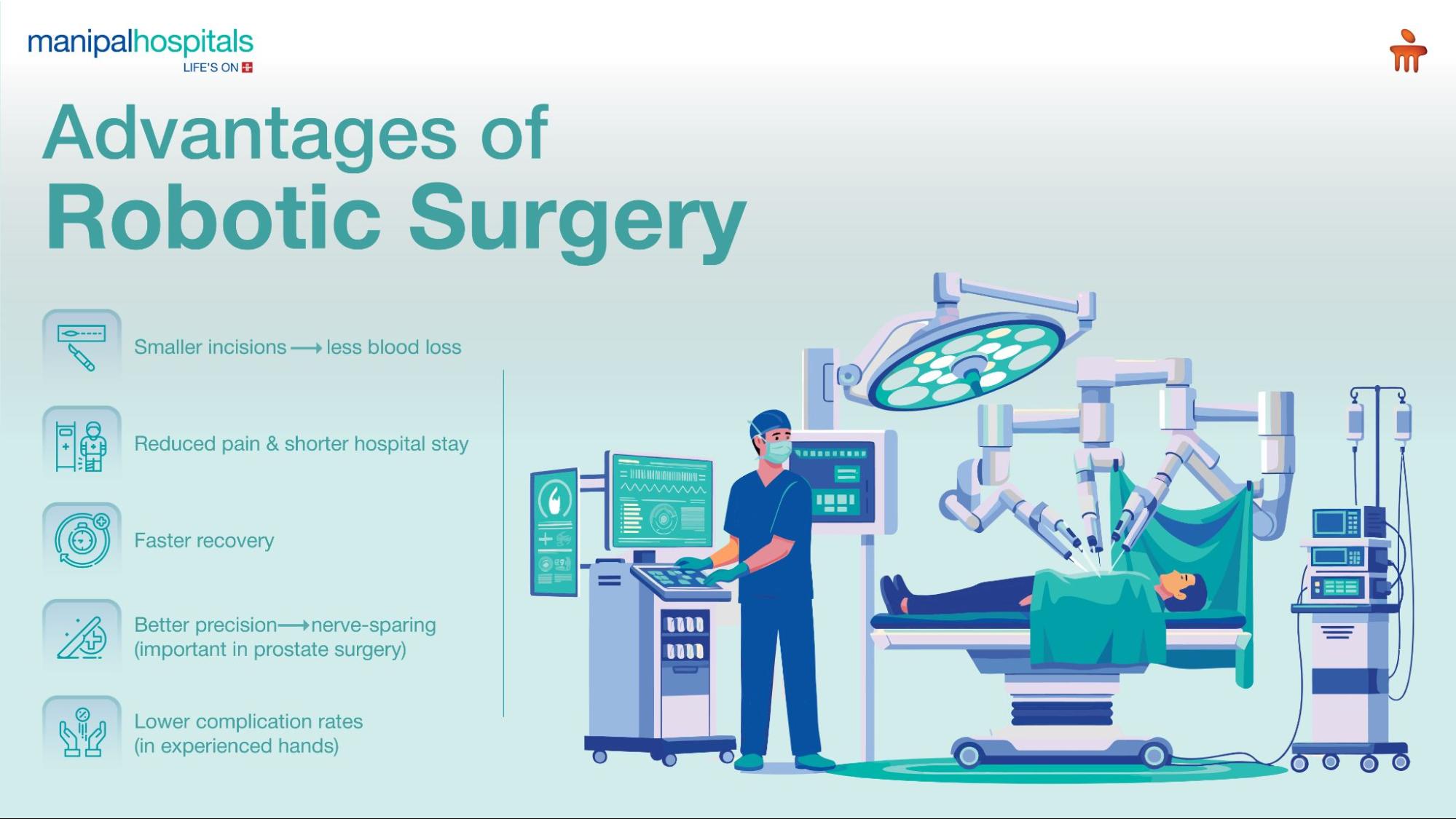
The shift towards robotic surgery for cancer treatment is driven by its numerous benefits, particularly in facilitating a quicker and more comfortable recovery for patients. The advantages of robotic surgery are multifaceted, impacting every stage from the operation itself to post-operative healing and long-term prognosis.
-
Enhanced Precision and Accuracy: The robotic system offers a magnified, high-definition 3D view of the surgical site, allowing surgeons unparalleled visualisation. The robotic instruments can rotate 360 degrees and articulate far beyond the capabilities of the human wrist, enabling the surgeon to perform intricate dissections and suturing with exceptional accuracy. This precision minimises damage to healthy tissues, particularly crucial when dealing with delicate structures around tumours. Studies indicate that robotic systems can improve surgical precision by up to 2.5 times compared to conventional laparoscopy, leading to more thorough removal of cancerous cells.
-
Minimally Invasive Nature: Unlike traditional open surgery, which involves large incisions, robotic surgery is performed through several small keyhole incisions. This significantly reduces trauma to the body, leading to less blood loss during the procedure. Patients typically experience 50% less blood loss compared to open surgery, reducing the need for transfusions and their associated risks.
-
Faster Recovery and Shorter Hospital Stays: One of the most significant advantages of robotic surgery is the accelerated recovery period. With smaller incisions and less tissue disruption, patients experience less post-operative pain and can often mobilise sooner. This leads to shorter hospital stays, with many patients going home within 2-3 days, as opposed to 7-10 days for open surgery. A quicker return to normal activities and a faster resumption of adjunctive therapies like chemotherapy or radiation are commonly observed, which is vital in cancer management.
-
Reduced Pain and Scarring: Smaller incisions translate directly to reduced post-operative pain. Patients often require fewer pain medications, contributing to a more comfortable recovery experience. Furthermore, the small incisions result in minimal scarring, offering a better cosmetic outcome, which can significantly impact a patient's self-esteem and body image during an already challenging time.
-
Lower Risk of Complications: The precision of robotic instruments and the reduced invasiveness of the procedure collectively contribute to a lower risk of complications such as infection, bleeding, and wound-related issues. This enhanced safety profile is a key consideration when deciding on treatment options.
-
Improved Functional Outcomes: For certain cancers, particularly those affecting the prostate, colon, or gynaecological organs, robotic surgery has demonstrated superior functional outcomes. For example, in prostate cancer, robotic prostatectomy often leads to better preservation of nerve bundles responsible for urinary and sexual function. Over 80% of patients report improved continence rates within a year post-surgery.
-
Addressing "Is Robotic Surgery Safe?" Patient safety is paramount. Robotic surgery, when performed by experienced surgeons, is considered extremely safe. The surgeon maintains complete control throughout the procedure, and the robotic system provides advanced visual feedback, enhancing the surgeon's ability to operate effectively and safely. Our expert team ensures that every precaution is taken to minimise risks and ensure the best possible outcomes for patients undergoing robotic surgery for cancer. Manipal Hospitals has a very high success rate for complex robotic cancer surgeries.
Cancers Where Robotic Surgery Excels
Robotic surgery has shown remarkable efficacy across a spectrum of cancer types, including:
-
Prostate Cancer: Robotic prostatectomy is now considered the gold standard due to its precision in nerve-sparing, leading to better functional outcomes.
-
Gynaecological Cancers: For cervical, uterine (endometrial), and ovarian cancers, robotic hysterectomy and lymphadenectomy offer significantly less invasive options.
-
Colorectal Cancer: Robotic colectomy and rectal resection provide superior visualisation in confined spaces, improving surgical margins and reducing recovery time.
-
Kidney Cancer: Robotic partial nephrectomy allows for the precise removal of kidney tumours while preserving healthy kidney tissue.
-
Head and Neck Cancers: Transoral Robotic Surgery (TORS) offers a minimally invasive approach to remove tumours from the throat and base of the tongue, avoiding traditional open surgery with its associated morbidity.
-
Lung Cancer: Robotic lobectomy and segmentectomy are increasingly performed for early-stage lung cancers, offering benefits over open thoracotomy.
Patient Experience and Outcomes with Robotic Surgery for Cancer in India
The adoption of robotic surgery for cancer in India is rapidly growing, with centres like Manipal Hospitals leading the way in integrating this advanced technology into mainstream oncology care. Indian patients are increasingly benefiting from the global trend towards minimally invasive cancer treatments. Our commitment to incorporating cutting-edge techniques ensures that patients have access to world-class care right here. Our oncologists in Gurugram, equipped with extensive training and experience, perform a wide range of robotic cancer procedures, delivering outcomes comparable to the best international standards. Patients treated with robotic surgery often report a significantly better quality of life post-operation, with many returning to work and daily activities up to 40% faster than those undergoing traditional open surgery.
If you or a loved one is facing a cancer diagnosis and wishes to explore advanced treatment options, it's crucial to seek expert medical advice. Book an appointment with our expert oncologists at Manipal Hospitals, Gurugram, today to understand if robotic surgery is the right choice for you.
FAQ's
While some discomfort is expected after any surgery, robotic surgery generally results in significantly less post-operative pain compared to open surgery due to smaller incisions and less tissue trauma. Pain can be effectively managed with prescribed medication.
Recovery times vary depending on the type of cancer, the individual's overall health, and the extent of the surgery. However, typically, patients recover much faster than with traditional open surgery, often returning to light activities within 1-2 weeks and full recovery within 4-6 weeks.
Not all cancers are suitable for robotic surgery. The applicability depends on the type, stage, and location of the tumour, as well as the patient's overall health. Your oncologist will assess your specific situation to determine if robotic surgery is the best option for you.
The cost of robotic surgery for cancer in India can vary significantly based on the hospital, the specific type of cancer, the complexity of the procedure, and the duration of hospital stay. While it may sometimes be more expensive than traditional surgery, the benefits of faster recovery and fewer complications can offset some of these costs in the long run. It's best to discuss this with the hospital's financial counsellor.
Yes, you will have small scars from the keyhole incisions, typically around 0.8-1.0 cm in length. These are significantly smaller and less noticeable than the large incisions from open surgery and tend to fade over time.
Share this article on:


.webp "Liver Cancer Treatment")

--What-Every-Prostate-Cancer-Patient-Should-Know.webp "Prostate Cancer Surgery: LRP Procedure & Recovery Guide")