7 Min Read
Blood cancer treatment has witnessed remarkable advancements over the last decade, but one innovation is transforming outcomes like never before—CAR T cell therapy. For patients with difficult-to-treat or relapsed blood cancers, this revolutionary treatment offers a personalised approach that harnesses the body's own immune system to fight cancer cells.
Our oncologists in Gurugram are helping patients access advanced therapies that were once considered experimental. As a breakthrough form of immunotherapy blood cancer treatment, CAR T cell therapy is creating new possibilities for patients who may have exhausted conventional options such as chemotherapy, radiation therapy, or stem cell transplantation.
In this comprehensive guide, we explain how CAR T cell therapy works, who may benefit from it, its success rates, potential risks, recovery expectations, and important information about CAR-T cell therapy cost.
Synopsis
- What Is CAR T Cell Therapy?
- How Does CAR T Cell Therapy Work?
- CAR T Cell Therapy for Blood Cancers: Who Can Benefit?
- Why CAR T Cell Therapy Is Considered a Breakthrough New Treatment for Blood Cancer
- Success Rates of CAR T Cell Therapy
- Potential Risks and Side Effects of CAR T Cell Therapy
- Recovery After CAR T Cell Therapy
- Understanding CAR-T Cell Therapy Cost
- Why Choose an Experienced Cancer Centre for CAR T Cell Therapy?
- The Future of Immunotherapy Blood Cancer Treatment
- Conclusion
What Is CAR T Cell Therapy?
CAR T cell therapy (Chimeric Antigen Receptor T-cell Therapy) is an advanced cancer treatment that modifies a patient's own T-cells—a type of white blood cell—to recognise and attack cancer cells more effectively.
Unlike conventional treatments that directly target cancer cells, CAR T cell therapy strengthens the body's immune response by genetically engineering immune cells to identify specific proteins present on cancer cells.
This innovative approach has emerged as one of the most promising forms of blood cancer treatment available today.
How Does CAR T Cell Therapy Work?
The process of CAR T cell therapy involves several carefully planned stages:
-
Collection of T Cells - Doctors collect T cells from the patient's blood through a procedure known as leukapheresis.
-
Genetic Modification - In a specialised laboratory, these T cells are genetically engineered to express chimeric antigen receptors (CARs), enabling them to recognise cancer cells.
-
Multiplication of Cells - The modified cells are grown into millions of copies to enhance their cancer-fighting capability.
-
Preparation Treatment - Before receiving the modified cells, patients may undergo low-dose chemotherapy to prepare the body.
-
CAR T Cell Infusion - The engineered cells are infused back into the bloodstream, where they seek out and destroy cancer cells.
The ability of CAR T cell therapy to continuously identify and attack cancer cells distinguishes it from many traditional treatments.
CAR T Cell Therapy for Blood Cancers: Who Can Benefit?
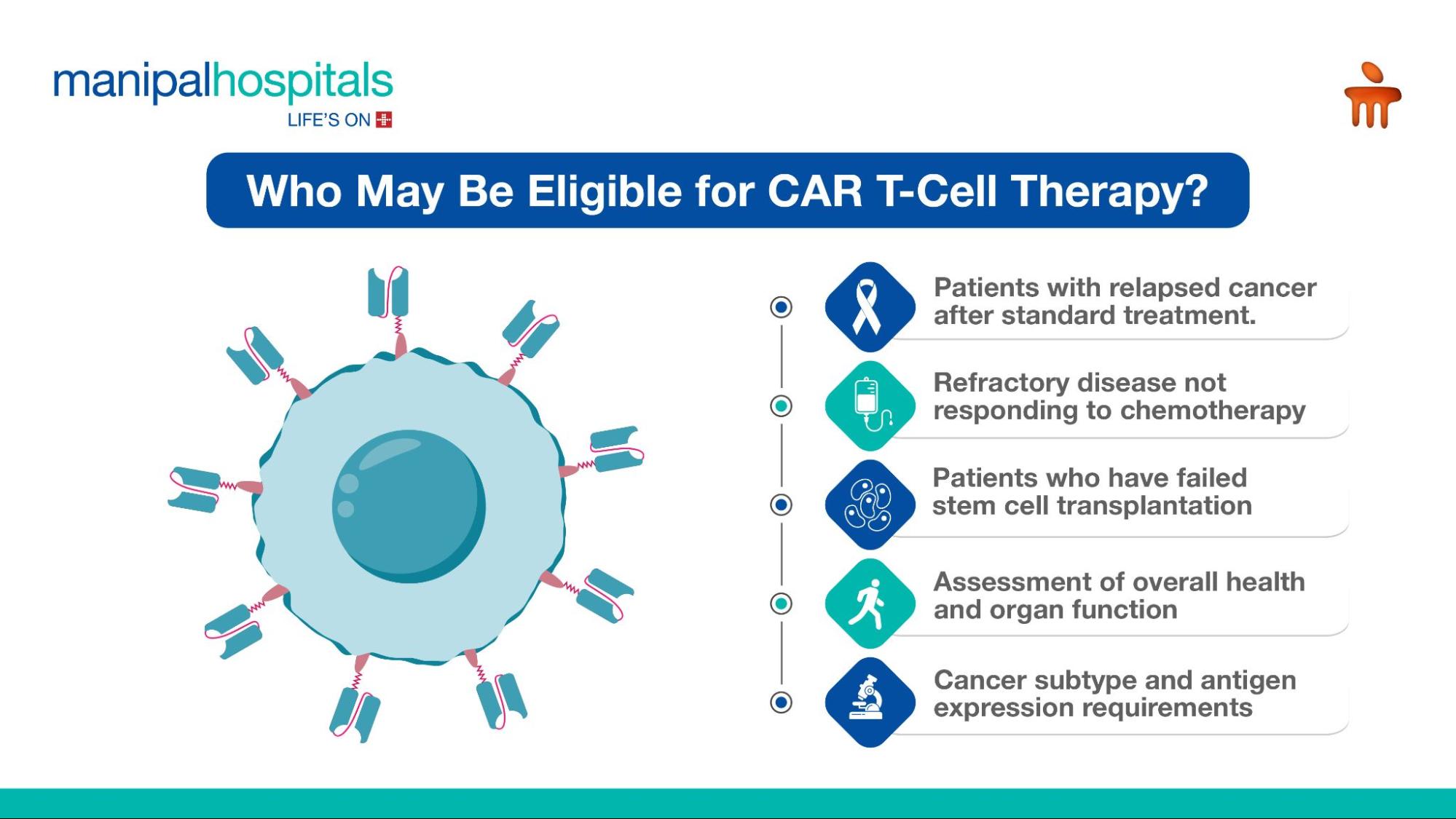
CAR T cell therapy is primarily used for specific blood cancers, particularly when standard treatments have not produced satisfactory results.
It may be recommended for:
-
Relapsed or refractory B-cell Acute Lymphoblastic Leukaemia (ALL)
-
Diffuse Large B-Cell Lymphoma (DLBCL)
-
Mantle Cell Lymphoma
-
Follicular Lymphoma
-
Certain cases of Multiple Myeloma
-
Other selected blood cancers based on eligibility criteria
Assessment by experienced specialists is essential to determine whether a patient is a suitable candidate. Our oncologists in Gurugram conduct comprehensive evaluations to ensure the most appropriate treatment plan.
Why CAR T Cell Therapy Is Considered a Breakthrough New Treatment for Blood Cancer
The emergence of CAR T cell therapy has transformed the treatment landscape for blood cancers.
Key advantages include:
-
Personalised Treatment - The therapy uses the patient's own immune cells, reducing the risk of rejection.
-
Targeted Cancer Destruction - Engineered T cells specifically attack cancer cells while minimising damage to healthy tissues.
-
Long-Term Response Potential - Many patients achieve durable remission even after multiple previous treatment failures.
-
Hope for Resistant Cancers - For patients whose disease has returned despite conventional therapies, CAR T cell therapy offers a valuable alternative.
These benefits have established CAR T cell therapy as a major milestone in immunotherapy blood cancer management.
Success Rates of CAR T Cell Therapy
Success rates vary depending on the type and stage of blood cancer, overall health status, and previous treatments.
Clinical studies have demonstrated encouraging outcomes, with many patients experiencing:
-
Complete remission
-
Significant tumour reduction
-
Extended progression-free survival
-
Improved quality of life
While outcomes differ among individuals, CAR T cell therapy continues to show promising results in patients with relapsed or refractory blood cancers.
Potential Risks and Side Effects of CAR T Cell Therapy
Like all advanced treatments, CAR T cell therapy can cause side effects that require careful monitoring.
Common risks include:
-
Cytokine Release Syndrome (CRS) - An inflammatory response that may cause fever, fatigue, low blood pressure, and breathing difficulties.
-
Neurological Effects- Some patients may experience confusion, headaches, tremors, or speech disturbances.
-
Reduced Blood Cell Counts - Temporary decreases in blood cell levels can increase infection risk.
-
Fatigue and Weakness - General tiredness may persist during the recovery period.
Fortunately, modern treatment centres have established protocols for managing these complications effectively.
Recovery After CAR T Cell Therapy
Recovery timelines vary between individuals.
Patients typically require:
-
Close observation following infusion
-
Regular blood tests and monitoring
-
Infection prevention measures
-
Follow-up imaging and assessments
Most patients can gradually resume daily activities as recovery progresses. Our oncologists at Manipal Hospitals in Gurugram provide personalised follow-up care to support long-term recovery and treatment success.
Understanding CAR-T Cell Therapy Cost
One of the most common concerns among patients and families relates to CAR-T cell therapy cost.
The overall CAR-T cell therapy cost can vary depending on:
-
Type of blood cancer being treated
-
Specific CAR T-cell product used
-
Hospital stay requirements
-
Management of side effects
-
Diagnostic investigations and follow-up care
Although CAR-T cell therapy costs may be higher than conventional treatments due to its highly specialised nature, many patients consider it a worthwhile investment because of its potential for long-term remission and improved survival outcomes.
Patients should discuss financial considerations, insurance coverage, and available support programmes before treatment planning.
Why Choose an Experienced Cancer Centre for CAR T Cell Therapy?
The success of CAR T cell therapy depends significantly on the expertise of the treatment team and the infrastructure available for advanced cancer care.
A specialised centre offers:
-
Multidisciplinary cancer specialists
-
Advanced laboratory support
-
Intensive monitoring facilities
-
Comprehensive rehabilitation services
-
Long-term survivorship care
Our oncologists in Gurugram work closely with multidisciplinary teams to deliver personalised treatment strategies designed around each patient's unique needs.
Additionally, consultation with our cancer specialist in Gurugram can help patients understand treatment eligibility, expected outcomes, and recovery planning.
The Future of Immunotherapy Blood Cancer Treatment
Research into CAR T cell therapy continues to evolve rapidly. Scientists are developing newer generations of engineered immune cells designed to improve effectiveness, reduce side effects, and expand treatment options for additional cancer types.
As innovation continues, CAR T cell therapy is expected to play an even greater role in the future of immunotherapy for blood cancer treatment, offering renewed hope to patients worldwide.
Conclusion
For many patients facing relapsed or treatment-resistant blood cancers, CAR T cell therapy represents a significant advancement in cancer care. By harnessing the power of the immune system, this revolutionary treatment has opened new possibilities for remission, survival, and improved quality of life.
As one of the most promising forms of blood cancer treatment, CAR T cell therapy continues to reshape the future of oncology and provide hope where conventional therapies may have fallen short.
FAQ's
CAR T cell therapy is primarily used to treat certain blood cancers such as leukaemia, lymphoma, and multiple myeloma, particularly when other treatments have failed.
Yes. CAR T cell therapy is an advanced form of immunotherapy blood cancer treatment that uses genetically modified immune cells to target cancer.
Many patients achieve remission or significant disease control. Success rates vary depending on the type of cancer and individual health factors.
Potential side effects include cytokine release syndrome, neurological symptoms, fatigue, and temporary reductions in blood cell counts.
Factors influencing CAR-T cell therapy cost include the specific therapy used, hospitalisation duration, supportive care requirements, and follow-up treatment needs.
Share this article on:


.webp "Liver Cancer Treatment")
--What-Every-Prostate-Cancer-Patient-Should-Know.webp "Prostate Cancer Surgery: LRP Procedure & Recovery Guide")