7 Min Read
Managing severe, long-term obesity is often a complex and frustrating reality. For many individuals, traditional methods like calorie-restrictive diets, intensive exercise plans, and behavioural changes offer limited or temporary success. When weight-related health conditions, such as type 2 diabetes, severe sleep apnea, or cardiovascular disease, begin to compromise longevity and daily well-being, lifestyle adjustments alone may no longer be sufficient. In these circumstances, metabolic and bariatric interventions offer a highly effective, evidence-based path forward to reclaim metabolic health.
Among these surgical options, gastric sleeve surgery has become one of the most frequently performed and widely accepted choices worldwide. It provides a structured, physiological approach to weight reduction that addresses both the physical capacity of the stomach and the hormonal signals that govern hunger. Understanding the procedural mechanics, expected health benefits, potential medical challenges, and the realities of life after the procedure can help individuals approach this medical turning point with clarity and confidence.
This blog from a top gastroenterology hospital in Doddaballapur, Bengaluru walks you through the entire journey: from what a gastric sleeve operation is and how it works, to the benefits you can realistically expect.
Synopsis
- When Weight Becomes a Health Crisis and Surgery Is Considered
- What Is Gastric Sleeve Surgery?
- What Is a Gastric Sleeve Operation? The Procedure Step by Step
- Benefits That Extend Beyond the Scale
- Gastric Sleeve Surgery Complications and Side Effects: An Honest Look
- Post Gastric Sleeve Surgery: Your Recovery and New Normal
- Conclusion
When Weight Becomes a Health Crisis and Surgery Is Considered
For many, obesity is a complex, chronic condition influenced by genetics, hormones, environment, and psychology. When body mass index (BMI) crosses a certain threshold, typically 35 or above with related health problems, or 40 without, the body’s biological mechanisms actively resist weight loss. Hunger hormones remain high, metabolism slows, and the internal “set point” for weight seems locked.
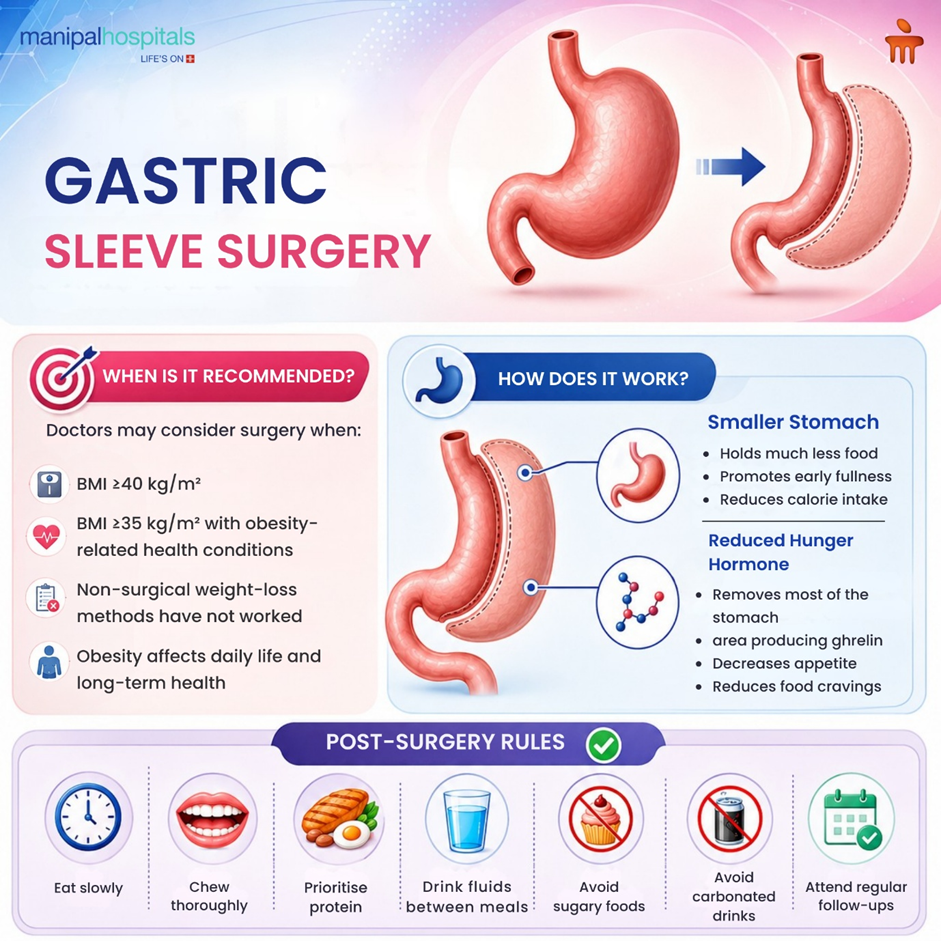
Bariatric surgery, including gastric sleeve surgery, alters this internal environment. It is not a cosmetic procedure but a metabolic intervention. Doctors recommend it when:
-
Non-surgical weight loss methods have not led to sustained results
-
Obesity-related conditions like type 2 diabetes, sleep apnoea, hypertension, or severe joint pain are present
-
The person is committed to lifelong dietary and lifestyle changes
Surgery is a powerful beginning, not a standalone fix. The real transformation happens in the months and years that follow.
What Is Gastric Sleeve Surgery?
To answer what is gastric sleeve surgery, imagine a stomach that normally holds about a litre of food. During this procedure, approximately 75 to 80 percent of the stomach is removed, leaving behind a narrow, banana-shaped “sleeve” that holds roughly 100 to 150 millilitres. This smaller stomach restricts how much food can be comfortably eaten. More importantly, the part of the stomach that produces ghrelin, the hunger hormone, is largely removed, leading to a significant and lasting reduction in appetite.
It changes not just volume but also the hormonal signals between the gut and the brain. Many patients notice that their cravings diminish and their sense of fullness arrives quickly and stays longer. This dual effect, restriction and hunger hormone reduction, makes it one of the most effective and commonly performed bariatric procedures worldwide.
What Is a Gastric Sleeve Operation? The Procedure Step by Step
A gastric sleeve operation is typically performed laparoscopically, meaning through several small incisions rather than a large open cut. This minimally invasive approach reduces pain, scarring, and recovery time.
Here is what happens during a gastric sleeve operation:
-
Anaesthesia and preparation: You are given general anaesthesia, so you are asleep and comfortable throughout.
-
Tiny incisions: The surgeon makes 4 to 6 small cuts in the abdomen, each about a centimetre long.
-
Inserting the laparoscope: A thin tube with a camera and light is inserted, giving the surgical team a magnified, high-definition view of your abdominal cavity on a screen.
-
Dividing the stomach: Using advanced stapling devices, the surgeon divides the stomach vertically, sealing the edges simultaneously. The larger, removed portion is taken out through one of the incisions.
-
Final checks: The new sleeve is tested for leaks, the instruments are removed, and the incisions are closed with dissolvable sutures.
The entire procedure usually takes 60 to 90 minutes. Most patients stay in the hospital for one to two nights for observation and pain management. Understanding what is a gastric sleeve operation helps many people approach their surgery date with a sense of calm rather than dread.
Benefits That Extend Beyond the Scale
Weight loss is the most visible outcome, but the benefits of gastric sleeve surgery run far deeper. The health improvements often begin within days or weeks, even before significant weight is lost, due to hormonal changes.
Expected benefits include:
-
Significant, sustained weight loss: Most patients lose 50 to 70 percent of their excess body weight within 12 to 18 months.
-
Resolution or improvement of type 2 diabetes: Many experience normal blood sugar levels soon after surgery, sometimes reducing or eliminating medication.
-
Better cardiovascular health: Blood pressure and cholesterol profiles often improve markedly.
-
Relief from sleep apnoea: As weight decreases, breathing during sleep often normalises.
-
Reduced joint pain: Less load on knees, hips, and the lower back leads to greater mobility and less discomfort.
-
Enhanced quality of life: Increased energy, greater ease in daily activities, and improved self-esteem are commonly reported.
These benefits depend on adhering to nutritional guidelines and regular follow-up. The sleeve is a tool, not a magic wand, but it is a remarkably effective one.
Gastric Sleeve Surgery Complications and Side Effects: An Honest Look
No major surgery is without risk. Discussing gastric sleeve surgery complications and side effects of gastric sleeve surgery openly is essential for making a fully informed decision. Fortunately, serious complications are uncommon, and choosing an experienced surgical team reduces risks substantially.
The table below distinguishes between manageable side effects and more serious complications that require prompt attention:
|
Category |
Examples |
What to Know |
|
Common short-term side effects |
Nausea, vomiting, pain at incision sites, fatigue |
Often managed with medication and resolve as the body heals. Small, frequent sips and walking help. |
|
Nutritional side effects |
Vitamin deficiencies (B12, iron, calcium, vitamin D), hair thinning |
The reduced stomach size limits food intake. Lifelong vitamin supplementation and regular blood tests prevent deficiencies. |
|
Dumping syndrome |
Nausea, cramping, diarrhoea, sweating after eating sugary or high-fat foods |
Food moves too quickly into the small intestine. Avoided by adhering to the prescribed diet. |
|
Gastric sleeve surgery complications |
Staple line leak, bleeding, infection, blood clots, stricture (narrowing of the sleeve) |
Rare but serious. Leaks require immediate treatment. Your team monitors you closely in the initial days. |
|
Long-term considerations |
Acid reflux, weight regain if lifestyle habits slip |
Reflux may require medication. Weight regain is not inevitable; consistent eating habits and activity prevent it. |
Side effects of gastric sleeve surgery are often temporary and manageable. The key is following your team’s guidance, attending all follow-ups, and reporting concerns early. A problem caught early is almost always easier to resolve.
Post Gastric Sleeve Surgery: Your Recovery and New Normal
The period post gastric sleeve surgery is a gradual, structured journey. Understanding the stages helps you prepare mentally and practically.
Recovery unfolds in distinct phases:
-
Hospital stay (1–2 days): Pain is controlled with medication. You will be encouraged to walk gently to prevent blood clots and aid circulation. You start with sips of clear liquids.
-
First two weeks at home: A liquid diet continues, focused on hydration and protein intake. Rest is important, but light walking increases daily. Driving is usually restricted.
-
Weeks 3–4: Transition to puréed and soft foods. Portions are tiny, often just a few tablespoons per meal. Eating slowly and chewing thoroughly become essential habits.
-
Months 1–3: Soft solid foods are introduced. Energy levels rise, and many return to work. Weight loss is rapid during this phase.
-
Beyond 3 months: A regular, high-protein, low-sugar diet with normal textures is established. Exercise becomes a regular part of life.
A successful life post gastric sleeve surgery depends on these daily commitments:
-
Eating protein first at every meal
-
Drinking fluids between meals, not with them
-
Taking prescribed vitamin and mineral supplements without fail
-
Avoiding carbonated drinks, straws, and sugary snacks
-
Walking and gradually building up physical activity
-
Attending all scheduled check-ups and support groups
The first year is a period of profound change. With the right habits, the sleeve continues to support a healthier weight for life.
Conclusion
Gastric sleeve surgery represents a turning point for many who have struggled with severe obesity and its related health problems. By understanding what gastric sleeve surgery is and how a gastric sleeve operation works, you can make informed decisions about your health. Being aware of the potential gastric sleeve surgery complications and expected side effects helps you prepare for the recovery journey, while adopting the necessary lifestyle changes after surgery lays the foundation for long-term success. If you are considering post gastric sleeve surgery care in Doddaballapur, consult the specialists at Manipal Hospital Doddaballapur, counted among the top gastroenterology hospitals in Doddaballapur, for comprehensive guidance, personalised support, and ongoing care throughout your weight-loss journey.
FAQ's
Yes, but “normal” will have a new definition. Over time, you will be able to eat most foods, just in much smaller portions. You will need to prioritise protein, avoid sugar and high-fat items, and eat slowly. The sleeve helps you feel satisfied with less, and this becomes your new normal.
Most patients lose 50 to 70 percent of their excess body weight within the first 12 to 18 months. Individual results vary based on age, starting weight, and adherence to dietary and exercise recommendations. The surgery is a powerful tool, but your habits shape the final outcome.
No, the portion of the stomach that is removed is gone permanently. This is why the decision is taken seriously and why commitment to lifelong vitamin intake and follow-up is essential. It is a one-way metabolic change that requires readiness.
Yes, but it is strongly recommended to wait at least 12 to 18 months after surgery, during the period of most rapid weight loss, before trying to conceive. Pregnancy after this stabilisation period is generally safe. Close monitoring by an obstetrician and bariatric team is essential to ensure proper nutrition for both mother and baby.
Nutritional deficiencies can develop, leading to problems like anaemia, osteoporosis, nerve damage, and chronic fatigue. The reduced stomach size and altered digestion mean you absorb less from food alone. Lifelong daily supplementation is non-negotiable and is a key part of safeguarding your long-term health.
Share this article on: