7 Min Read
Sometimes, symptoms alone don’t give clear answers. In such cases, doctors may suggest a closer look inside the colon using a colonoscopy. A thin, flexible tube with a small camera is gently passed through the rectum to examine the colon lining. This is the basic colonoscopy meaning.
A colonoscopy is not only done for symptoms like bleeding or bowel changes. It is also used as a screening test to detect early changes such as polyps or colorectal cancer. In this blog, a leading gastroenterologist in Doddaballapur, Bangalore, explains what the test is, why it is done, and why it is important.
Synopsis
What Is a Colonoscopy?
So, what is a colonoscopy? It is a type of endoscopy, where a camera is used to look inside the body. The device used is called a colonoscope. It is basically a long, thin, flexible tube with a camera and light at the end. As it moves forward, the light illuminates the inside of the colon, and the camera captures an image on a screen in real time.
A few key things happen during the procedure:
-
The colonoscope is passed through the anus and slowly guided through the rectum into the colon.
-
The camera sends continuous images, so any changes in the lining can be noticed.
-
If something looks abnormal, tools can be used through the same tube to take a sample or remove a small growth.
Why Is a Colonoscopy Done?
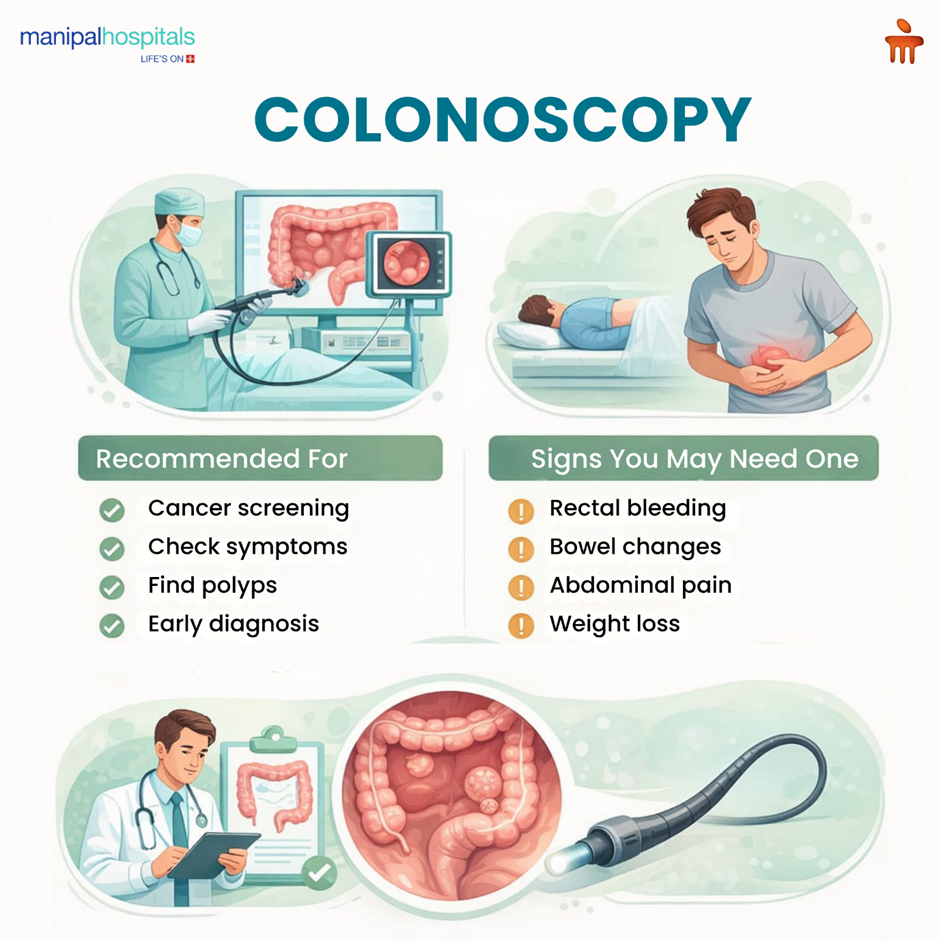
A colonoscopy is done for several reasons, including screening, diagnosis, and sometimes treatment during the same test. One of the main reasons is screening for colorectal cancer. From around the age of 45, doctors may recommend it even if there are no symptoms, as it helps detect early changes before they become serious.
It is also advised when certain symptoms need to be checked. Common colonoscopy indications include:
-
Bleeding from the rectum
-
Changes in bowel habits, such as ongoing constipation or diarrhoea
-
Persistent abdominal pain
-
Anaemia without a clear cause
A colonoscopy can help identify conditions such as polyps, colorectal cancer, inflammation, or narrowing of the bowel. In many cases, small growths can also be removed during the same test.
How the Colonoscopy Procedure Works
If you have a test scheduled, it helps to know what to expect during the colonoscopy procedure. It is usually done in three simple stages.
-
Before the procedure: You will be asked to follow a bowel preparation plan, which includes a clear liquid diet and laxatives to clean the colon.
-
During the procedure: You are given sedation to help you relax. A thin, flexible tube with a camera is gently passed through the rectum to examine the colon. If needed, small samples can be taken or growths removed. The test usually takes about 30 to 60 minutes.
-
After the procedure: You will be observed until the sedation wears off. Mild bloating or gas is common, and most people go home the same day with someone accompanying them.
Preparation Before a Colonoscopy
Getting ready for a colonoscopy procedure is not complicated, but it does need attention. Most of the work happens before the test day.
-
A day or two before the test, food changes are recommended. Solid food is usually stopped, and you move to clear liquids. Water, clear soups, coconut water, plain tea, these are usually allowed.
-
You will be given a bowel prep medicine. It is a laxative. It will make you pass stools multiple times until the colon is empty. You can expect frequent bathroom visits with the syrup.
-
The colon should be completely clean so the camera can see the lining properly. Small food particles or faecal matter can hide important findings.
-
You may feel tired or slightly dehydrated. Keep sipping fluids as instructed.
-
If the preparation is not done properly, the test may not be accurate. In some cases, it has to be repeated.
Importance and Benefits of Colonoscopy
Colonoscopy has numerous benefits:
-
Helps detect problems early: Changes inside the colon do not always cause symptoms in the beginning. A colonoscopy can pick up early signs of disease before they become serious. That includes small growths, inflammation, or early-stage cancer. Detecting issues at this stage often makes treatment simpler and more effective.
-
Plays a role in cancer prevention: One of the biggest advantages is prevention. Polyps are small growths that can slowly turn into cancer over time. Around 30% of routine screenings may find polyps. Removing them early reduces the risk of colorectal cancer developing later.
-
Useful even without symptoms: You may feel completely fine and still have early changes in the colon. Screening colonoscopy is done for this reason. It helps catch silent problems that would otherwise go unnoticed until they progress.
-
Allows treatment during the same procedure: A colonoscopy is not only for diagnosis. If a polyp is found, it can often be removed during the same procedure. Tissue samples can also be taken if needed. This avoids the need for separate procedures and speeds up further care.
Risks and Safety
Every colonoscopy procedure carries some risk, but serious problems are uncommon. Most people go through it without any major issues.
-
Mild effects are more common. You may feel bloated, gassy, or slightly uncomfortable for a few hours because of the air used during the test.
-
Sedation is a worry for some, but it goes well in most cases. But some people may still feel drowsy or lightheaded for a short time after.
-
Rare risks include bleeding, especially if a polyp is removed. In a rarer condition, a small tear in the colon wall (perforation) can happen.
-
Reactions to sedation medication can happen in very rare instances as well. But they are uncommon and monitored closely during the procedure.
When Should You Get a Colonoscopy?
A colonoscopy is not always done only when there are symptoms. In many cases, it is advised as a routine screening to catch problems early. You may be asked to get one in situations like these:
-
When you are around 45 or older, even if you feel fine
-
If there is a family history of colorectal cancer or polyps
-
If you notice bleeding from the rectum
-
When bowel habits change and don’t return to normal
-
If you have ongoing abdominal discomfort
-
In cases of unexplained weight loss or anaemia
Conclusion
Colonoscopy is a frequently performed procedure, especially on older people. People who are undergoing it for the first time might experience some anxiety, but there is nothing to worry about.
If you have been advised to undergo the test or are noticing symptoms that need attention, it is imperative to get it checked at the right time. For those looking for a colonoscopy procedure in Doddaballapur, our experienced gastroenterologists at Manipal Hospital Doddaballapur provide the required expertise, facilities, and clinical support to guide you through the process safely and clearly.
FAQ's
Colonoscopy is used to examine the inside of the colon. It helps find the cause of symptoms like bleeding or bowel changes and is also used to screen for polyps and colorectal cancer.
No, the procedure is not painful because sedation is given. You may feel slight pressure or bloating during or after. Most people do not experience anything more than a little bit of discomfort.
It is usually advised every 10 years starting around age 45, if results are normal. Frequency may change based on family history or any findings of abnormalities.
Recovery can be expected to be soon. Most people feel normal within a few hours. However, it is advised to rest for the day due to sedation. Normal activities can resume the next day.
There are stool-based tests and imaging tests available. They can help with screening. But they do not allow direct viewing or removal of polyps.
Share this article on: