7 Min Read
Many women grow up thinking painful periods are "just part of life." They put up with the pain, change their routines, and keep going. But what if that pain is your body telling you to pay attention?
If you've just heard about the condition of "adenomyosis," the first thing that comes to mind is, "Can it be cured?" The honest answer is that it depends. But the most important thing is that it can be handled. But there is no denying that many women are relieved to receive proper treatment.
This blog features expert insights from experienced obstetrics and gynaecology experts in Doddaballapur, Bangalore, who understand the signs and symptoms and the corresponding treatment. It will help you understand the relationship between diet, behaviour, and proper medication, which can help you maintain good health by following the adenomyosis diet plan near Doddaballapur.
Synopsis
- What Is Adenomyosis?
- Common Adenomyosis Symptoms
- Adenomyosis vs Endometriosis: What’s the Difference
- Can Adenomyosis Be Cured
- Adenomyosis Treatment Options
- Role of Diet in Managing Adenomyosis
- Diet Tips for Managing Adenomyosis
- Living with Adenomyosis: Small Changes That Help
- When Should You See a Doctor
- Conclusion
What Is Adenomyosis?
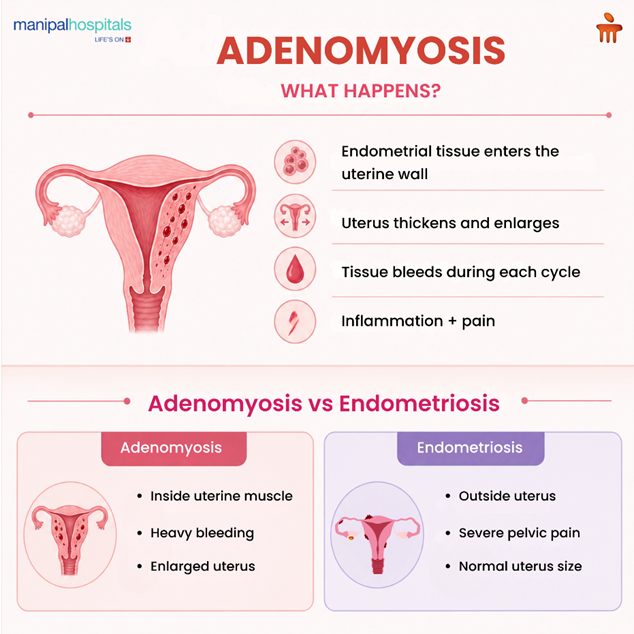
Adenomyosis is a medical condition characterised by the displacement of the endometrial tissue, which normally lines the interior of the uterus, into the myometrium, or the muscular wall of the uterus. This infiltration causes the uterine wall to thicken and become inflamed. During each menstrual cycle, this displaced tissue continues to function as it would normally, thickening, breaking down, and bleeding, which results in an enlarged uterus and significant physical distress.
The development of the condition is closely associated with circulating estrogen levels, which explains why it is most frequently diagnosed in women between the ages of 30 and 40. Because the symptoms often emerge gradually, they are sometimes misidentified as general signs of ageing or typical menstrual changes until the clinical impact becomes severe.
Common Adenomyosis Symptoms
Adenomyosis affects everyone in its own way. If you’ve ever had to adjust your plans because of period pain, some of these symptoms might sound familiar:
-
Heavy bleeding can sometimes cause weakness or even anaemia.
-
Cramps may get worse with each period.
-
Your lower belly may always feel heavy or like there is pressure there.
-
Intercourse-related pain could impact their emotional state.
-
You may feel tired more often than before, particularly when you’re on your period.
Some people have mild adenomyosis symptoms, while others find that they make it difficult to work, sleep, and go about their daily lives.
Adenomyosis vs Endometriosis: What’s the Difference
It is common for these two conditions to be confused because they both involve the growth of endometrial-like tissue outside of its normal location. Below are the common differences:
|
Feature |
Adenomyosis |
Endometriosis |
|
Location |
Within the uterine muscle |
Outside uterus |
|
Common symptom |
Heavy bleeding |
Severe pelvic pain |
|
Uterus size |
Often enlarged |
Usually normal |
|
Pain pattern |
Linked to menstruation |
Can be continuous |
Knowing the difference between adenomyosis and endometriosis can help you choose the best treatment plan because the ways to manage each condition may be different.
Can Adenomyosis Be Cured
Diet won’t cure adenomyosis, but it can make a noticeable difference. Many women report feeling less bloated, less fatigued, and more in control when they make small changes to what they eat.
Surgery (removal of the uterus) is the only way to completely cure adenomyosis, but it isn't always necessary or right for everyone. It is common for many women to cope with the symptoms and make themselves feel better when dealing with adenomyosis. This illness not only impacts the body but also interferes with daily activities and job performance.
The good news is that today’s treatments for adenomyosis can often help reduce pain and heavy bleeding. Many women do not need major surgery.
Adenomyosis Treatment Options
The treatment depends on things like the person's age, how bad their symptoms are, and whether they want to get pregnant in the future.
1. Medications
Doctors may prescribe:
-
Pain relievers to ease cramps
-
Hormonal therapy to help control heavy bleeding
-
Birth control pills or intrauterine devices
These kinds of adenomyosis treatments are often the first step and work well for many people.
2. Minimally Invasive Procedures
Some procedures can help lessen symptoms without removing the uterus. These are:
-
Uterine artery embolisation, which reduces blood flow to affected areas
-
Endometrial ablation, used in selected cases
These methods are effective for treating adenomyosis and keeping the uterus intact.
3. Surgical Treatment
A hysterectomy is currently the only definitive cure for adenomyosis, but many women can effectively manage symptoms without surgery.
The procedure is considered when:
-
Symptoms are severe and persistent
-
Other treatments have not provided relief
-
Family planning is complete
Surgery is a permanent solution, but it should be thought about carefully.
Role of Diet in Managing Adenomyosis
Though it is not a cure for adenomyosis, a well-balanced diet will help them treat their medical problem effectively. Dieting will reduce inflammation, which will help you have better health conditions.
Some basic guidelines that should be followed when eating are the following:
-
Eating more fruits and vegetables
-
Including anti-inflammatory foods like nuts and seeds
-
Limiting processed foods and excess sugar
-
Staying hydrated
A balanced diet may support overall hormonal health and reduce inflammation.
Diet Tips for Managing Adenomyosis
Choosing simple, locally available foods can make it easier to follow a balanced adenomyosis diet. In Doddaballapur, such foods may include:
-
Incorporate Ragi: This local millet is an excellent source of fibre and calcium, which supports both digestive and hormonal health.
-
Prioritise Local Greens: Fresh leafy vegetables from the local market provide magnesium, a mineral that aids in muscle relaxation and reduces cramping.
-
Select Whole Grains: Replacing refined flours with whole grains in your adenomyosis diet helps prevent the insulin spikes that can worsen inflammation.
-
Healthy Fats: Including local seeds and nuts provides the healthy fats necessary for hormone production and inflammatory control.
Using familiar, easily available foods can help you stay consistent with your diet without adding extra cost or effort.
Living with Adenomyosis: Small Changes That Help
Managing adenomyosis is not only about treatment but also about small, everyday habits that can make symptoms easier to handle:
-
Controlled Heat Application: Using a heating pad can alleviate the intensity of uterine muscle contractions during a cycle.
-
Low-Impact Movement: Activities such as walking improve pelvic circulation, which can reduce the feeling of heaviness.
-
Cycle Documentation: Recording the frequency and severity of your adenomyosis symptoms provides essential data for your medical team to adjust your care plan.
These simple steps, along with the right treatment, can make day-to-day life more manageable.
When Should You See a Doctor
If you have any of the following, you should see a specialist:
-
Period pain worsens or becomes severe
-
Menstrual flow is heavy and interferes with your activities
-
You experience constant pelvic pain
-
Pain interferes with your ability to carry out your duties
Early diagnosis ensures proper treatment of adenomyosis and prevents complications such as anaemia.
Conclusion
Adenomyosis is more common than most people think, and many people don't understand it. An appropriate therapy for adenomyosis can be very helpful, even if complete recovery is not possible all the time. You will feel more confident if you understand your symptoms, know how adenomyosis differs from endometriosis, and adopt some changes in your life, such as an adenomyosis diet in Doddaballapur. At Manipal Hospital Doddaballapur, every woman gets different care because every woman's situation is different.
FAQ's
Common signs of adenomyosis include heavy menstrual bleeding, painful cramps, pelvic discomfort, bloating, and ongoing fatigue. Some women may also experience longer or more frequent menstrual cycles.
No, surgery is not always required. Many cases can be managed with medications, hormonal therapy, or minimally invasive procedures, depending on symptoms, severity, and individual health needs.
Adenomyosis occurs within the muscular wall of the uterus, while endometriosis involves tissue growing outside the uterus, often affecting nearby organs and causing different patterns of pain.
Yes, eating right may be helpful in reducing inflammation in the body. Although it cannot be treated with just eating healthy food, it will help you manage your condition better.
Ragi is a high-fibre, nutrient-dense local staple that helps the body regulate estrogen levels and provides the minerals necessary for healthy muscle function, making it an ideal component of an adenomyosis diet in Doddaballapur.
Share this article on: