6 Min Read
Many women expect pregnancy to be smooth, but in some cases, it may be labelled as a high-risk pregnancy, even when things seem normal at first. This simply means there is a higher chance of health concerns for the mother, the baby, or both. While the term can feel worrying, it does not mean something will definitely go wrong.
The high-risk pregnancy definition depends on medical factors that call for closer care. Doctors keep an eye on both the mother’s health and the baby’s growth so any issues can be picked up early. If needed, you may be advised to undergo additional tests, check-ups, or specialist support.
In this blog, a top obstetrician and gynaecologist in Doddaballapur, Bangalore, discusses the causes, warning signs, and management of high-risk pregnancy so you can better understand what to expect without unnecessary worry.
Synopsis
Understanding High-Risk Pregnancy
The high-risk pregnancy definition refers to a pregnancy where certain medical factors increase the chances of complications for the mother or baby. It is based on overall health, medical history, and how the pregnancy is progressing.
Some common factors include:
-
Factors related to the mother: Existing health conditions, age, or past pregnancy history can affect how the body responds during pregnancy.
-
Changes during pregnancy: New conditions may develop during routine check-ups, requiring closer monitoring and care.
-
Concerns related to the baby: Growth, development, or scan findings may need more observation.
Doctors use this classification to monitor and provide timely care for both mother and baby.
What Causes a High-Risk Pregnancy?
A high-risk pregnancy may not always have a single clear cause. In some cases, the risk is already present before pregnancy begins. In others, it develops gradually and is noticed during routine check-ups.
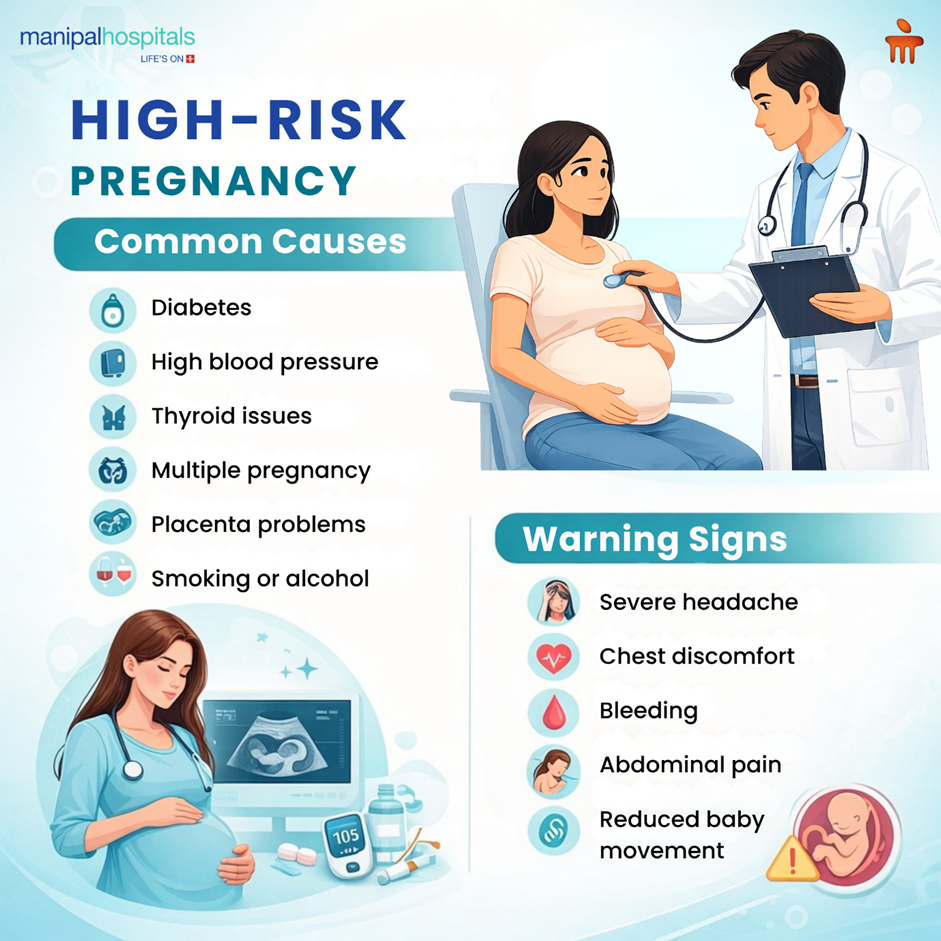
Pre-existing conditions—Some women start pregnancy with certain health conditions that need extra attention:
-
Diabetes: Blood sugar levels can become harder to manage and may affect the baby’s growth.
-
High blood pressure: Can reduce proper blood flow to the placenta.
-
Thyroid disorders: May influence the baby’s development if not balanced.
-
Kidney or autoimmune conditions: Can affect how the body adjusts during pregnancy.
-
Obesity: Adds extra strain on the body and increases the risk of complications.
-
Mental health conditions: Can impact routine care, sleep, and overall well-being.
Conditions that develop during pregnancy
Some conditions appear only after pregnancy begins and are usually picked up during tests:
-
Gestational diabetes: Blood sugar rises due to hormonal changes.
-
Preeclampsia: High blood pressure that may also affect organs like the liver or kidneys.
-
Multiple pregnancy: Carrying twins or more increases the chances of early delivery.
-
Placenta-related issues: May affect how the baby receives oxygen and nutrients.
Lifestyle and past history
Daily habits and past experiences can also play a role:
-
Smoking and alcohol: Can affect the baby’s growth and oxygen supply.
-
Previous pregnancy complications: May increase the chances of similar issues again.
High Risk Pregnancy Symptoms
Some high-risk pregnancy symptoms can appear suddenly, and others show up slowly. Watch out for these:
-
Severe headache: A persistent or intense headache, especially after mid-pregnancy, should not be ignored. If it does not settle with rest or is linked with blurred vision, it can point to rising blood pressure.
-
Chest pain or breathing difficulty: A feeling of tightness in the chest or difficulty in breathing needs attention. Pregnancy does cause mild breathlessness, but sudden or worsening symptoms can suggest strain on the heart or lungs.
-
Vaginal bleeding or unusual discharge: Any bleeding during pregnancy needs evaluation. Light spotting may happen in early pregnancy, but heavier bleeding or fluid-like discharge can indicate a problem that needs immediate care.
-
Abdominal pain: Mild stretching pain can be normal as the uterus grows. Sharp, persistent, or cramping pain is different. It may be linked to conditions that need closer assessment.
-
Reduced fetal movement: As the pregnancy progresses, the baby’s movements become more regular. A noticeable drop in movement or long gaps without activity should be checked without delay.
If any of these symptoms appear suddenly, feel severe, or do not improve, it is imperative to contact your doctor.
How High-Risk Pregnancy Affects Mother and Baby
A high-risk pregnancy can influence how the mother’s body responds and how the baby grows over time. The effects vary from person to person.
Effects on the mother
-
Blood pressure changes: Some women develop rising blood pressure during pregnancy. It may cause symptoms like swelling, headaches, or vision changes and needs close observation.
-
Blood sugar imbalance: Changes in insulin response can lead to higher blood sugar levels. This may affect energy levels and require regular monitoring through pregnancy.
-
Labour and delivery concerns: Labour may need to be planned differently. In some situations, doctors may advise an earlier delivery or a surgical approach based on the mother’s condition.
Effects on the baby
-
Preterm birth: The baby may be born before full term if continuing the pregnancy becomes unsafe. Early care after birth may be needed in such cases.
-
Slower growth: Some babies grow at a slower pace and need closer tracking through scans during pregnancy.
-
Developmental impact: In certain situations, ongoing medical conditions can influence how the baby develops, both before and after birth.
How Is a High-Risk Pregnancy Managed?
Managing a high-risk pregnancy mostly comes down to regular monitoring and timely care. Doctors keep a close watch through check-ups and follow-ups to spot any concerns early and reduce risks for both the mother and the baby.
Medical monitoring
-
Frequent ultrasounds: Help check the baby’s growth, fluid levels, and placenta position.
-
Blood tests and fetal monitoring: Used to track blood sugar, haemoglobin, thyroid levels, and the baby’s heart rate and movements.
-
Specialist care: In some cases, a specialist may be involved for more focused care and regular reviews.
Lifestyle and home care
-
Diet and medications: Diet is adjusted based on the condition, and medicines may be given to control blood pressure, sugar levels, or other concerns.
-
Rest and activity: Daily activity may need to be limited depending on the condition.
-
Monitoring vitals: Checking blood pressure, sugar levels, or weight at home may be advised.
Delivery planning
-
Timing of delivery: Doctors may plan an early delivery if it is safer for the mother or baby.
-
Mode of delivery: The choice between vaginal delivery and caesarean depends on the situation at the time of labour.
Conclusion
A high-risk pregnancy needs closer follow-up. The good news is that a high number of women go on to have safe deliveries and healthy babies. With early identification and regular check-ups, it is possible to mitigate risks to mother and baby.
If there are concerns during pregnancy or if you have been advised closer monitoring, it helps to stay in touch with your doctor and not miss scheduled visits. If you are looking for management of high-risk pregnancy in Doddaballapur, our expert obstetricians and gynaecologists at Manipal Hospital Doddaballapur, Bangalore, provides access to specialist care, monitoring, and support through each stage of pregnancy.
FAQ's
A pregnancy is called high-risk when the mother, baby, or both have complications. This may be due to existing health conditions or changes during pregnancy.
In some cases, risk levels may improve if the condition is controlled well. Doctors will still continue closer follow-up to track any changes, even when pregnancy starts progressing as normal.
There may not be clear early symptoms, as they can differ from one condition to another. Some women may notice headaches, swelling, bleeding, or reduced fetal movement later in pregnancy.
Regular check-ups, scans, blood tests, and monitoring of both mother and baby are done. Care and recommendations are adjusted based on findings at each visit.
Consult a doctor if there is bleeding, severe pain, reduced baby movement, or any sudden change in how you feel during pregnancy. Early review helps manage concerns better.
Share this article on: