8 Min Read
Bariatric surgery is a group of medical procedures used to help with weight loss by changing how the digestive system works. It is also called weight-loss' or 'metabolic surgery'. Doctors use it when obesity starts affecting overall health and other methods to decrease weight have not worked.
The surgery works in two main ways. It reduces the size of the stomach, so you feel full with smaller portions. It can also change how the body absorbs calories and nutrients. Because of these factors, it is not a cosmetic procedure. It is a medical treatment for obesity and also related conditions like diabetes or high blood pressure. Long-term follow-up, food changes, and regular check-ups are needed after surgery. This blog will help you clearly understand bariatric surgery's meaning in detail through clear, expert-led guidance from top general surgery experts at Doddaballapur, who are experienced and highly skilled in performing bariatric surgeries.
Synopsis
What Is Bariatric Surgery and How Does It Work
Understanding what is bariatric surgery starts with knowing how it affects the body. It is a medical procedure that helps with weight loss by changing the size of the stomach and, in some cases, the path of digestion. Calorie intake is reduced by how much you can eat and how your body processes food. Therefore, it involves both physical and hormonal changes that support long-term weight control.
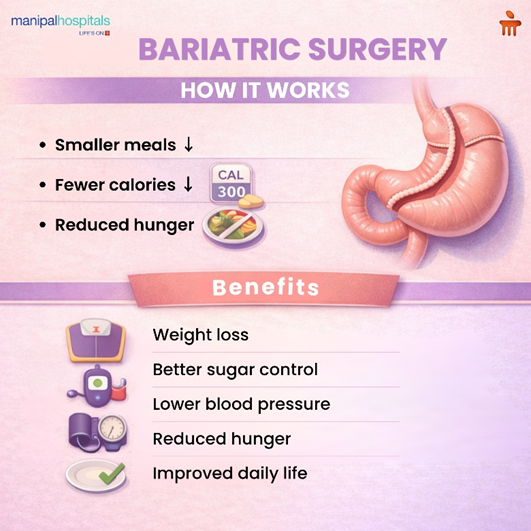
It works in three main ways:
-
Restriction: The stomach is made smaller, so you feel full after eating a small amount of food
-
Malabsorption: In some procedures, part of the intestine is bypassed, so fewer calories and nutrients are absorbed
-
Hormonal changes: Surgery affects gut hormones that control hunger, fullness, and blood sugar levels
Because of these changes, appetite reduces and metabolism improves. Many patients notice better control over hunger and cravings, which is difficult to achieve with diet alone.
Eligibility is based on body weight and health risks. Surgery is usually considered when:
-
Body Mass Index (BMI) is 40 or higher, or
-
BMI is 35 or higher with conditions like diabetes, high blood pressure, or sleep apnea
Types of Bariatric Surgery
There are different types of bariatric procedures, and the choice depends on the individual’s health and weight-related conditions.
-
Sleeve Gastrectomy: In this procedure, a large portion (about 70 to 80 percent) of the stomach is removed. The remaining part becomes narrow and tube-like, so you feel full after eating smaller amounts. It also affects hunger hormones, which can reduce appetite. Food continues to follow the normal digestive path, so nutrient absorption is mostly unchanged.
-
Gastric Bypass (Roux-en-Y): This procedure creates a small pouch at the top of the stomach. Food passes from this pouch directly into the lower part of the small intestine, bypassing part of the digestive tract. As a result, you eat less and absorb fewer calories. Many people also notice early improvements in blood sugar levels. Hormonal changes further help control hunger and metabolism.
-
Biliopancreatic Diversion with Duodenal Switch: This is a more complex and aggressive procedure for weight reduction that combines sleeve gastrectomy with intestinal bypass. A portion of the stomach is removed, and a large part of the small intestine is also bypassed. Therefore, food intake is reduced, and calorie absorption is significantly limited. Weight loss is usually more pronounced. However, careful follow-up is needed since there’s a higher chance of nutritional deficiencies.
-
Benefits of Bariatric Surgery: Doctors usually consider surgery when weight is already affecting health in a clear and measurable way. Benefits are not limited to weight loss alone, because several internal changes begin to happen after the procedure. That is an important part of understanding what is bariatric surgery in real terms.
-
Significant Weight Loss: Weight loss is steady and clinically meaningful in most patients. On average, people lose about 50 to 70 per cent of their excess body weight. The maximum change usually happens within the first year, after which the body stabilises with proper follow-up.
-
Improvement in Obesity-Related Diseases: Blood sugar levels often improve early, especially in people with type 2 diabetes. Some patients even reduce or stop medications under medical supervision. Blood pressure and cholesterol levels also come down. Sleep apnea symptoms reduce as breathing improves during rest.
-
Hormonal and Metabolic Changes: Changes are not only physical. Hormones that control hunger and fullness start behaving differently. Appetite reduces, and fullness lasts longer after meals. Blood sugar control becomes more stable because of these metabolic shifts.
-
Better Quality of Life: Physical activity becomes easier with reduced body weight. Walking, climbing stairs, and doing daily tasks feel less tiring. Breathing improves, and many patients are able to return to routine activities with better energy levels.
Bariatric Surgery Risks and Side Effects
Like any surgery, there are some risks to be aware of. Knowing about bariatric surgery risks can help you make a more informed decision.
Surgical risks: These can happen soon after the procedure.
-
Bleeding
-
Infection
-
Blood clots
-
Leaks where the stomach or intestine is joined
Long-term side effects: As the body adjusts, some bariatric surgery side effects may develop over time:
-
Dumping syndrome, which can cause nausea or loose motions
-
Low levels of certain nutrients
-
Vitamin and mineral deficiencies if supplements are missed
-
Gallstones linked to rapid weight loss
-
Bile reflux, which may cause upper abdominal discomfort
Recovery and Life After Surgery
Recovery can feel different for everyone, and the first few weeks may take some time to adjust. Most people stay in the hospital for 2 to 3 days if there are no complications. After going home, it usually takes a few more weeks to get back to normal, with energy levels improving little by little. Eating also changes, as the body starts reacting differently to food.
Weight loss becomes more noticeable over time, especially during the first year. Regular follow-ups are important, as they help track progress and manage any bariatric surgery side effects early.
-
The diet slowly moves from liquids to soft foods and then to small, regular meals.
-
Blood tests are done to check vitamin and mineral levels.
-
Nutrition is monitored to avoid deficiencies.
-
Portion control becomes part of the daily routine.
-
Light physical activity helps with recovery and long-term results.
Conclusion
Bariatric surgery is recommended when excess weight starts affecting health in a serious way and other weight loss methods have failed. Since the procedure can bring about a significant loss of weight over a year, it’s essential to prepare for it mentally as well. Discuss your expected changes with your doctor and counsellor.
If you are considering this step or if you have been recommended the surgery by your physician, speak to our experienced general surgeons at Manipal Hospital Doddaballapur. We offer excellent bariatric surgery treatment in Doddaballapur and post-operative advice for long-term weight management and health.
FAQ's
Bariatric surgery is used to treat morbid obesity and when excess weight starts affecting health. Doctors recommend it when diet and exercise have failed, and when the patient also has conditions like diabetes or high blood pressure.
Risk is present, like any surgery, but overall safety is good when done in experienced centres. Serious complications are uncommon, and the risk is often lower than continuing with severe obesity.
Most people lose around 50 to 70 per cent of their excess weight. The major change happens in the first year, and maintaining it depends on diet and follow-up.
Some people experience nausea, dumping syndrome, or vitamin deficiencies. Long-term follow-up helps manage these issues early before they become serious.
If your BMI is 40 or higher, or above 35 with health conditions like diabetes or sleep apnea, then you are eligible for the surgery. Furthermore, eligibility also depends on overall health and surgical risk.
Share this article on: