7 Min Read
Most people associate alcohol with short-term effects, but the long-term impact on the liver is often overlooked. The liver quietly handles toxins every day, including alcohol, until it simply cannot keep up. That is usually when problems begin to show. Alcoholic liver disease develops over time. It does not appear overnight, and that is what makes it tricky. Early stages may not cause much discomfort, so people continue their routine without realising damage is building. By the time liver cirrhosis symptoms start appearing, the condition may already have advanced.
This is why awareness matters. Understanding how the disease progresses, recognising changes in the body, and adjusting early can change outcomes.
In this blog, we bring you clinical insights from top gastroenterologists in Doddaballapur, Bangalore, liver cirrhosis stages, available liver cirrhosis treatment options, and how diet and lifestyle actually influence recovery in day-to-day life.
Synopsis
- What Is Alcoholic Liver Disease?
- Progression of Alcoholic Liver Disease
- Common Liver Cirrhosis Symptoms
- Understanding Liver Cirrhosis Stages
- Liver Cirrhosis Stages and Their Impact
- Liver Cirrhosis Treatment Options
- Diet for Alcoholic Liver Disease
- Lifestyle Changes That Support Recovery
- When to Seek Medical Advice
- Conclusion
What Is Alcoholic Liver Disease?
Alcoholic liver disease is not a single condition. It is a term used to describe a range of conditions involving liver injury caused by excessive alcohol consumption. It begins as a build-up of fat within the liver cells and can progress to severe inflammation and permanent scarring. Alcoholic liver disease is diagnosed through medical history, physical exams, and clinical imaging.
If the condition progresses to the stage of permanent scarring, it is referred to as cirrhosis. At this point, the liver can no longer repair itself, and the primary focus shifts to liver cirrhosis treatment. Understanding the different liver cirrhosis stages helps medical professionals determine how much functional tissue remains and which medical interventions are necessary to stabilise the patient.
Progression of Alcoholic Liver Disease
The development of alcoholic liver disease occurs gradually and is dependent upon the amount of alcohol taken and the frequency of intake.
In the early stage, fat builds up in the liver, often without noticeable symptoms. Over time, inflammation may develop, and the liver starts to function less effectively. Continued drinking can lead to scarring, which in turn causes further damage to the body.
Scarring does not affect the liver evenly. While some parts may be working normally, other parts have sustained damage. This is where liver cirrhosis staging becomes important.
Recognising liver cirrhosis symptoms during this progression can help in seeking timely care and managing the condition more effectively.
Common Liver Cirrhosis Symptoms
Symptoms are not always obvious in the beginning. Some people only notice small changes.
-
Having excessive tiredness
-
Loss of appetite without any specific reason
-
Yellowness of the skin and eyes
-
Abdominal swelling
-
Easy bruising
-
Poor concentration
All these liver cirrhosis symptoms might appear unconnected initially. However, together, they may indicate underlying liver dysfunction.
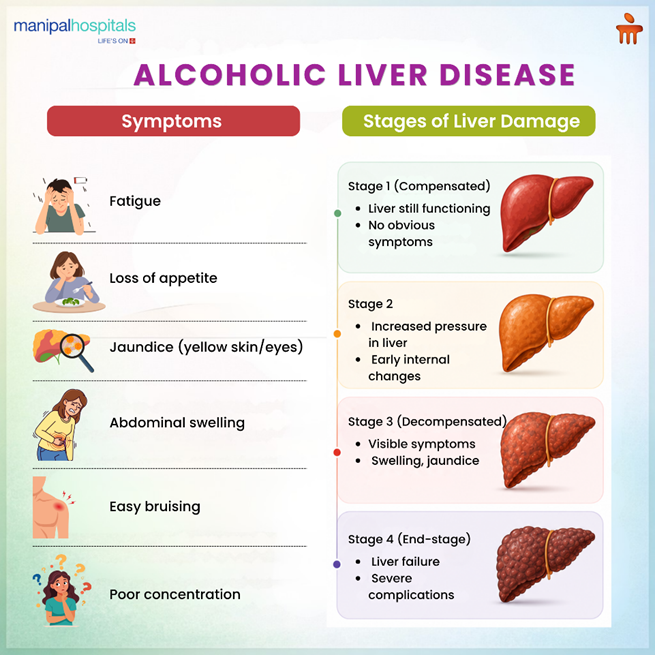
Understanding Liver Cirrhosis Stages
Recognising how the liver changes over time helps you and your care team stay ahead of the condition. Instead of focusing on complicated medical terms, it’s easier to think of these stages as how well the liver is still managing its workload.
Stage 1: Compensated
At this point, the liver has significant scarring but is still able to do its daily job. Because it's still functioning well, you likely won't notice any clear symptoms or feel unwell.
Stage 2: Compensated with Varices
Scarring has increased, and it’s becoming harder for blood to flow through the liver. This starts to build up pressure in the nearby veins, even though the liver is still working.
Stage 3: Decompensated
The liver is now struggling to keep up with the body’s needs. This is when you’ll start to see more obvious signs, such as a swollen abdomen or a yellow tint to the skin and eyes.
Stage 4: Advanced Decompensation
This is the most advanced level of damage. The liver is nearing failure, and serious complications can happen quickly, requiring urgent medical care.
Liver Cirrhosis Stages and Their Impact
Categorising the progression allows your medical team to move from general advice to a specific, actionable plan. The following table outlines the physical state of the liver and the required medical response:
|
Stage of Cirrhosis |
State of the Liver |
Symptoms |
Primary Medical Approach |
|
Early (Compensated) |
Significant scarring is present, but the liver still performs its essential chemical tasks |
Often no visible signs; perhaps mild, occasional fatigue |
Focus on the liver cirrhosis diet and absolute abstinence from alcohol |
|
Moderate |
Functional tissue is decreasing as the scar network becomes more widespread |
Noticeable exhaustion, loss of appetite, and easier bruising |
Frequent monitoring and specific management of symptoms |
|
Advanced (Decompensated) |
The liver can no longer keep up with the body's needs; toxins begin to build up in the blood |
Jaundice (yellowing), abdominal swelling (ascites), and confusion |
Active clinical medical care to manage complications and prevent infections |
|
End-Stage |
The liver has reached a state of total functional failure |
Severe internal bleeding, profound confusion, and kidney issues |
Intensive treatment or evaluation for a liver transplant |
Liver Cirrhosis Treatment Options
Treatment is not one size fits all. It depends on the stage of the disease, but stopping alcohol completely is the most important step. The first and most important step is stopping alcohol completely. Without this, no treatment is effective.
Medicines can be prescribed for managing symptoms and preventing further complications. Sometimes, interventions become necessary for controlling fluid accumulation. Liver transplantation becomes an option in severe cases of liver cirrhosis. However, changes in lifestyles are still necessary even after that.
As the condition progresses, complications such as fluid build-up, infections, or bleeding risks may require additional monitoring and care.
Diet for Alcoholic Liver Disease
Eating a healthy diet will ensure that the liver remains healthy and does not get put under further pressure. Healthy diets involve having simpler meals as opposed to restrictive ones.
A healthy diet may include:
-
Protein-rich foods such as lentils and dairy products
-
Fresh fruits and vegetables
-
Whole grains
-
Reduced salt intake
-
Minimal processed foods
Following a simple diet with home-cooked meals, fresh produce, and limited oil can make it easier to stay consistent.
Lifestyle Changes That Support Recovery
Treatment does not work in isolation. Daily habits play a major role.
-
Stop Alcohol: This is non-negotiable in alcoholic liver disease management.
-
Stay Active: Light physical activity supports overall health.
-
Maintain Routine: Regular meals and sleep patterns help stabilise the body.
-
Follow Medical Advice: Skipping check-ups can delay necessary treatment adjustments. These changes support liver cirrhosis treatment and improve long-term outcomes.
-
Managing Complications: In cases where the condition is advanced, some complications might emerge. These must be carefully managed. Fluid buildup will necessitate changes in diet. The possibility of bleeding will need to be watched for.
Recognising liver cirrhosis symptoms helps in addressing these complications quickly.
When to Seek Medical Advice
It’s important to consult a doctor or visit a gastroenterologist if you notice symptoms that do not improve or begin to affect your daily life. Early evaluation can help identify the condition and prevent it from getting worse.
You should consider seeking medical advice if you experience:
-
Ongoing fatigue that does not improve with rest
-
Swelling in the abdomen or yellowing of the skin and eyes
-
Loss of appetite or unexplained weight changes
-
Confusion, poor concentration, or changes in mental clarity
-
A history of heavy or prolonged alcohol use
Getting medical advice at the right time can help manage the condition more effectively and reduce the risk of complications.
Conclusion
There is a possibility that alcoholic liver disease is life-threatening; however, it does not necessarily have to affect patients in a similar manner. Early detection and intervention, as well as adherence to a healthy lifestyle, might prevent further deterioration of the illness. Understanding liver cirrhosis stages, recognising the symptoms, and following a balanced liver cirrhosis diet are all part of managing the condition.
Consult our top gastroenterologists at Manipal Hospital Doddaballapur, Bangalore, if you are looking for guidance on a liver cirrhosis diet in Doddaballapur or need expert care; consult specialists at Manipal Hospitals for personalised support and treatment.
FAQ's
Alcoholic liver disease is liver damage that happens when you drink too much alcohol for a long time. It includes fatty liver, inflammation, and cirrhosis, depending on severity and duration.
Fatigue, decreased appetite, and mild pain are early symptoms associated with liver cirrhosis. However, people tend to easily miss these indications.
Early stages may improve with lifestyle changes, but advanced cirrhosis is usually irreversible. Liver cirrhosis treatment focuses on slowing progression and managing complications.
A suitable diet includes proteins, fruits, vegetables, and whole-grain meals and avoids salty meals and highly processed foods.
The diet is crucial for a patient with alcoholic liver disease. This is because the diet helps the body recover and boosts energy levels in the body.
Share this article on: